Words Hoard & Heath
Illustrations Hoard & Heath
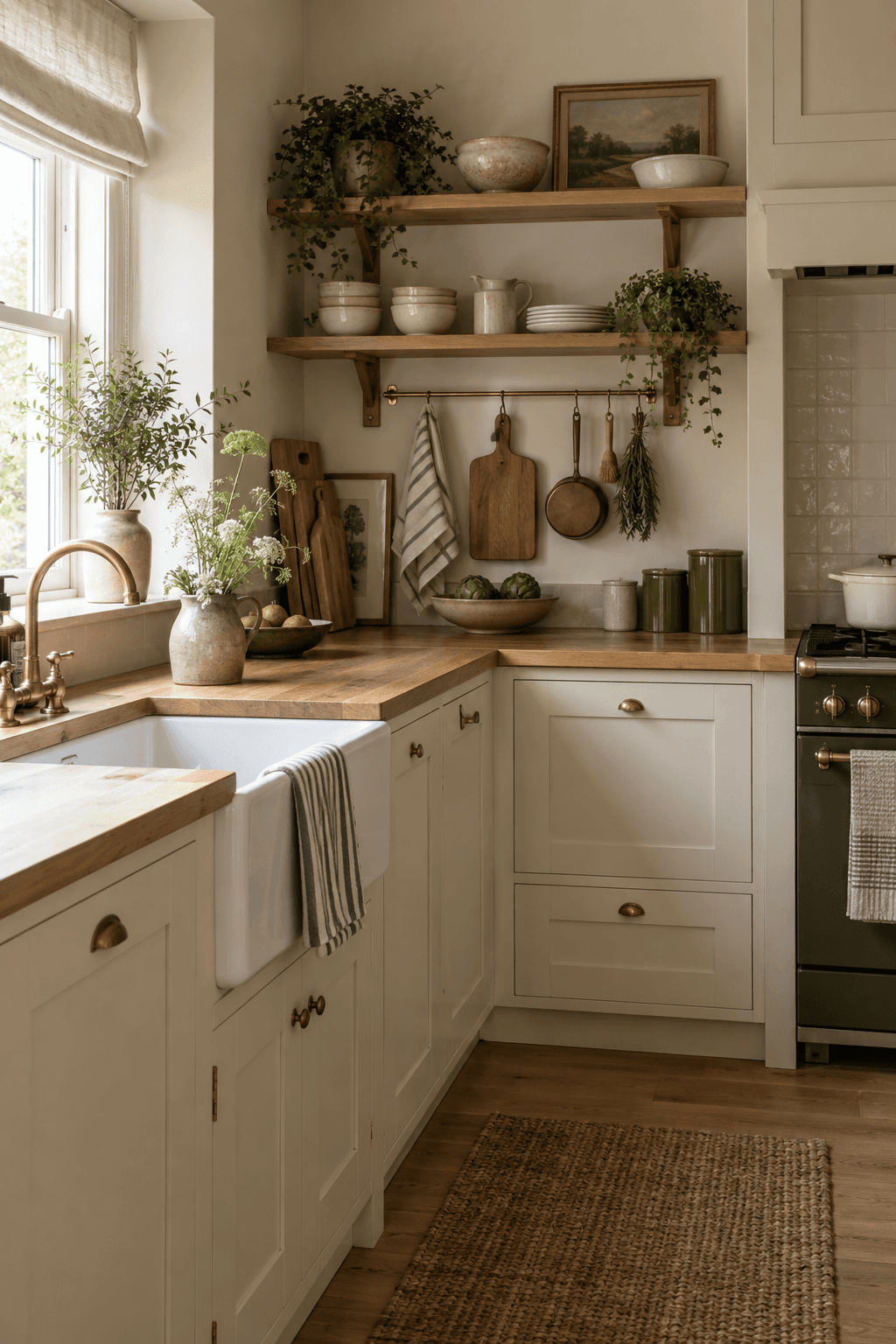
Open shelves, a wall rail and a clear stretch of worktop give this imagined kitchen its structure. The useful question is how each of those elements would serve a daily routine. We start with the kettle, then look at preparation space, exposed storage and the cupboards behind it.
Follow your daily routine
Make a cup of tea and notice each cupboard you open. If mugs, tea and teaspoons live in three different places, try grouping them near the kettle. Apply the same idea to preparing lunch or washing up: keep the tools for a task close to where you use them.
Avoid reorganising everything at once. Choose one drawer or a short stretch of worktop. Empty it, clean it and put back only what earns a place there. Keep uncertain items in a separate box while you decide whether you miss them.
Give worktops breathing room
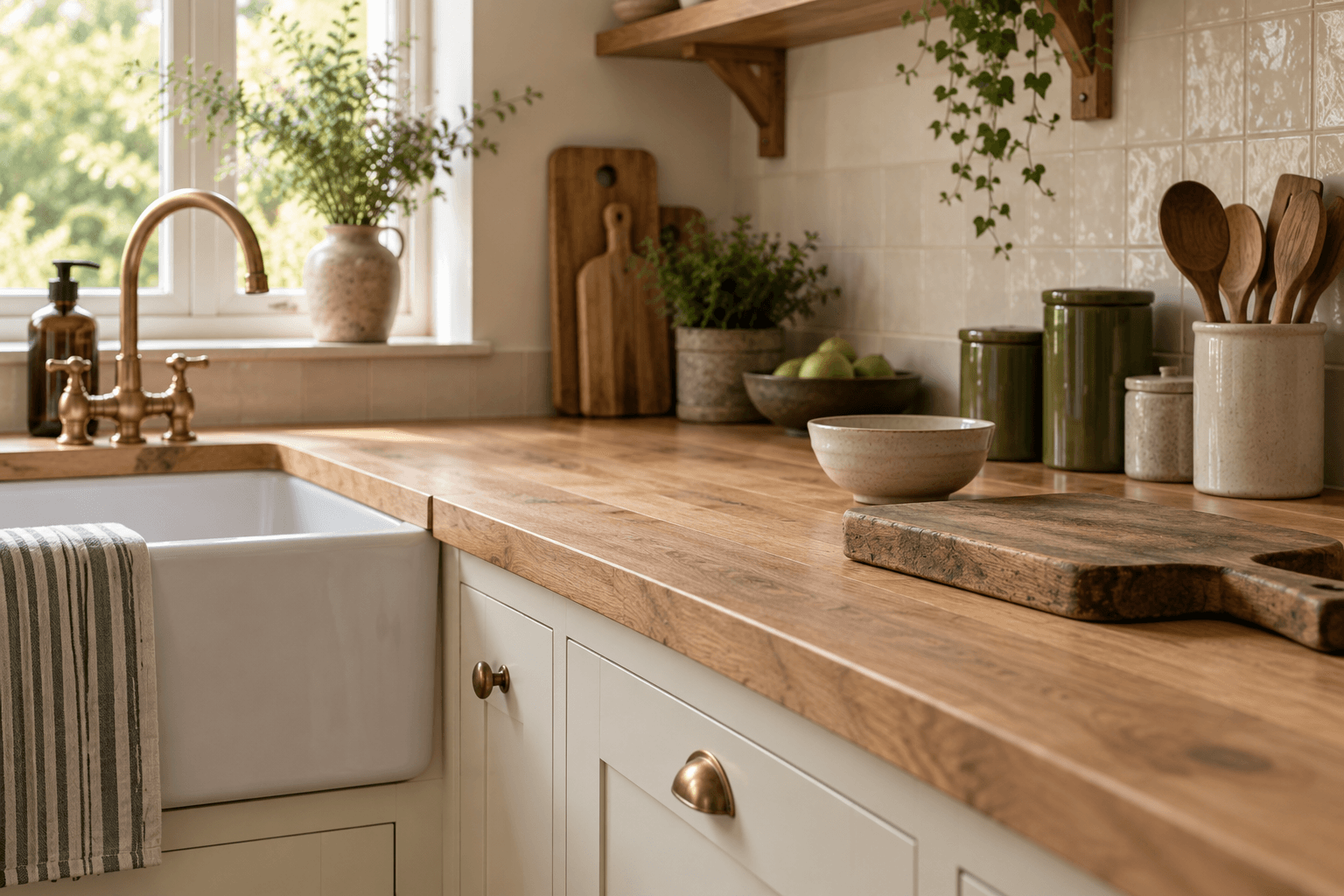
Choose a clear area for preparing food, then protect that space from becoming a landing spot. Move occasional appliances into a cupboard if lifting them in and out is comfortable for you. Keep everyday appliances where their cables and surfaces can be used safely.
A small tray can gather a few frequently used items into one place. It also makes wiping the surface easier. There is no need to decant every ingredient or buy a matching set of containers before you begin.
Use open storage selectively
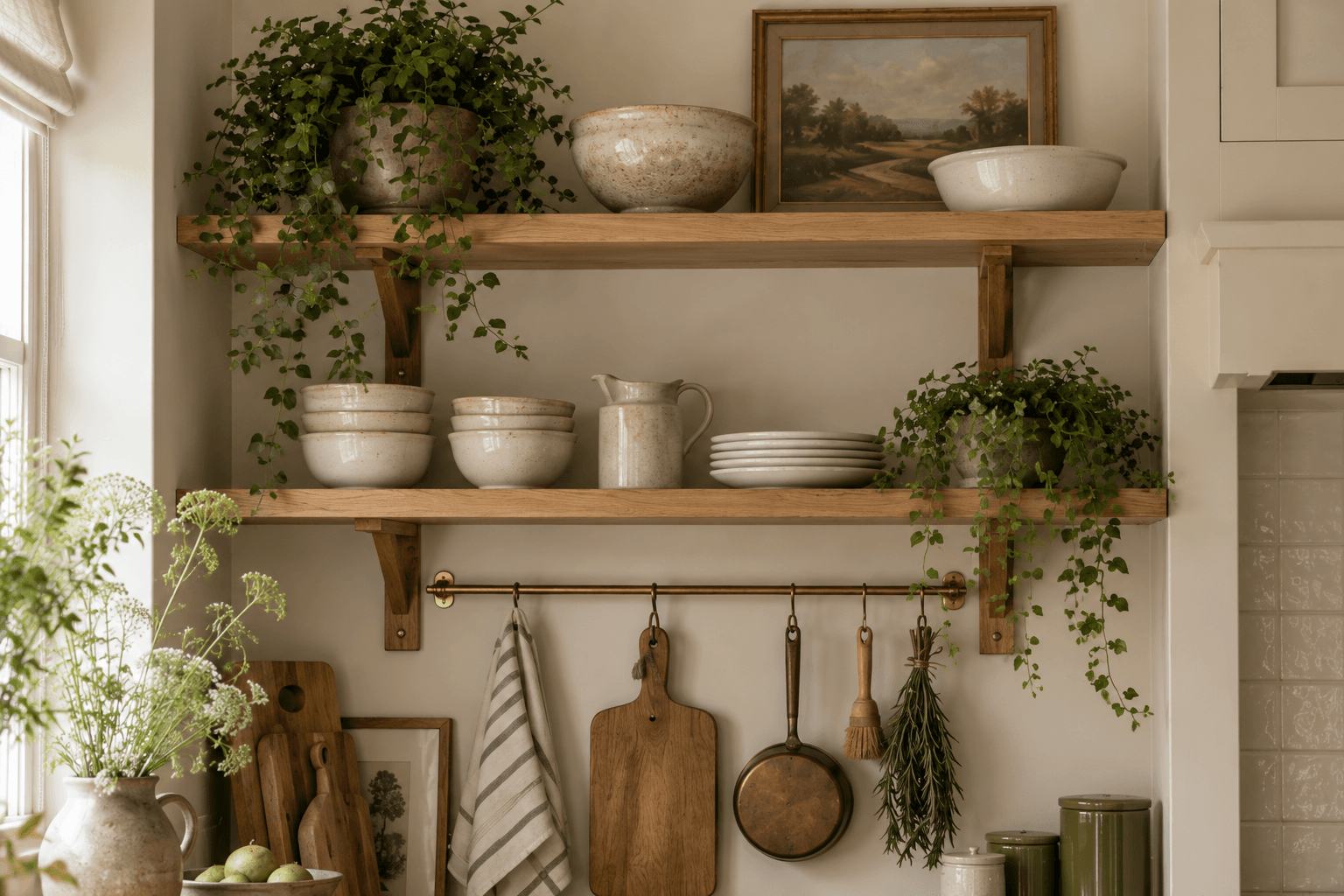
In the imagined kitchen, open shelves hold a small collection of ceramics rather than every piece of crockery. In your own kitchen, consider dust, splashes and how often you use an item before giving it an exposed home.
Measure shelves and cupboards before buying baskets or dividers. Leave space to lift things out without scraping your hands. If a wall rail or shelf needs fixing, choose fittings suitable for the wall and the weight it will carry, and get help if you are unsure.
Make it easy to maintain
The best arrangement is one you can put back without thinking. Labels may help with shared cupboards, but an obvious place for each item often matters more. Leave a little spare room so one new packet does not undo the system.
After a week, change anything that still feels awkward. Organisation is a way to support everyday life, so it should be allowed to change with your habits.