Words Hoard & Heath
Illustrations Hoard & Heath
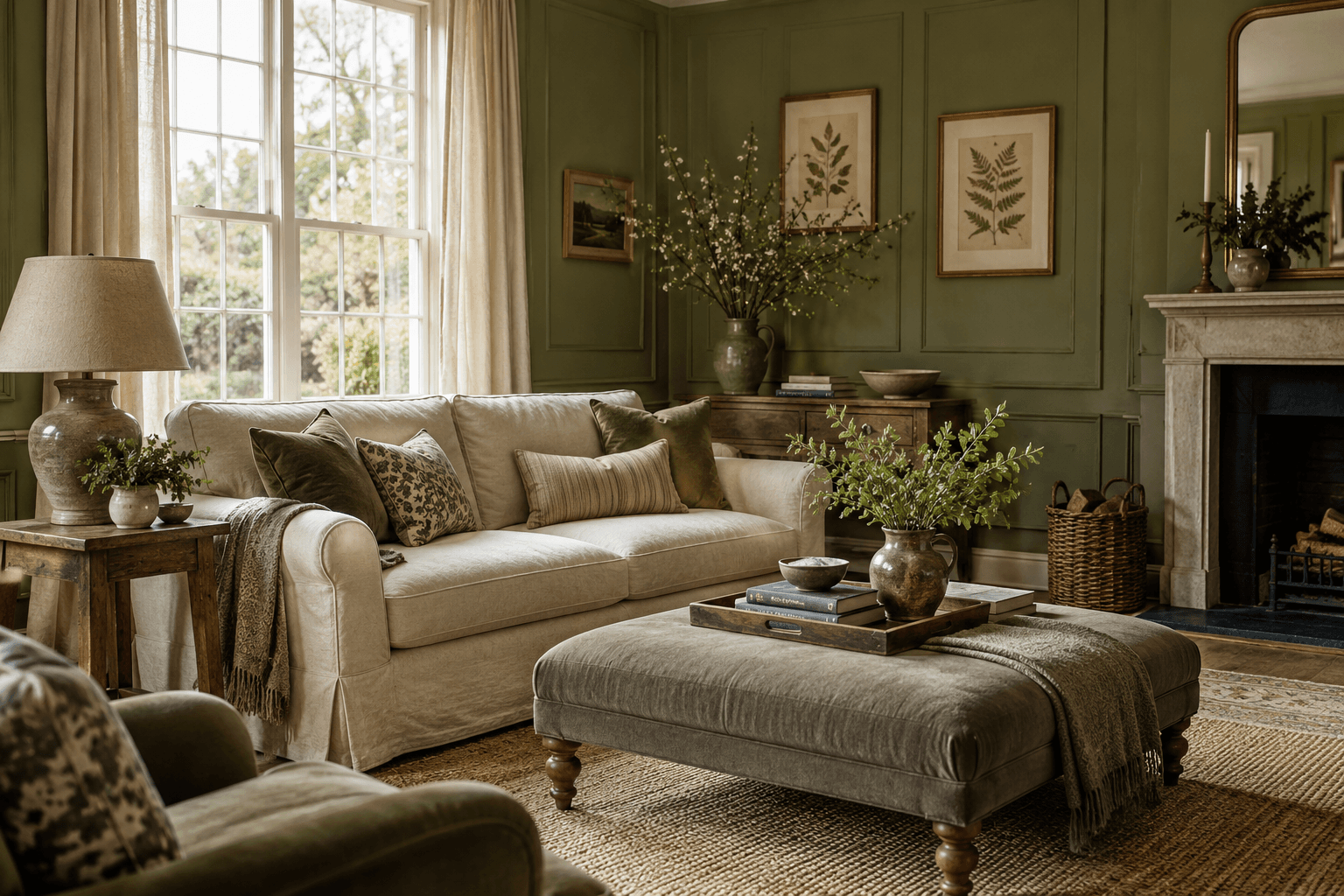
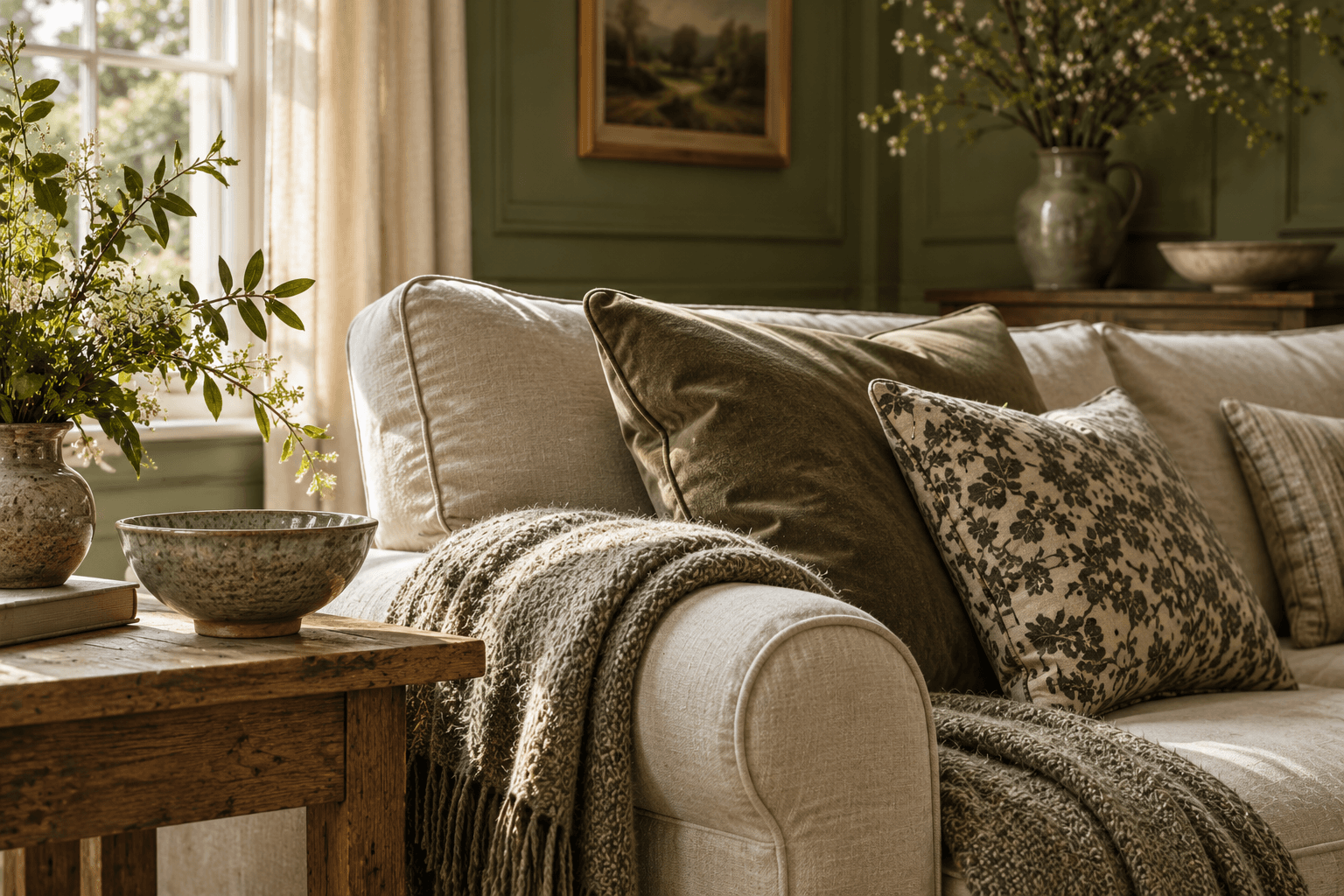
Olive-green walls provide the backdrop for this imagined sitting room. A pale linen sofa catches the window light; oak furniture and glazed ceramics add texture. Here, we look at how colour, furniture placement and lighting can make a room comfortable to use.
Begin with the way you live
Before choosing a paint colour, look at where you actually sit. Is there a place to put a cup down? Can you reach a reading light without getting up? Does the room leave a clear path between the door and the window? These small questions are often more useful than a shopping list.
Try moving what you have first. Pull a chair into a brighter corner, bring a side table within reach, or take away the piece you always have to walk around. Live with the change for a few days before deciding what the room needs next.
Let colour settle into the room
Olive, warm white and natural wood make a gentle starting point for the imagined room shown here. Their appeal is in the relationship between them: a darker wall makes pale upholstery feel lighter, while wood brings warmth to both.
Test paint on more than one wall and look at it in morning light, evening light and with your lamps on. A colour you love in a photograph may feel quite different beside your floor or curtains. Keep the pieces you intend to retain nearby when comparing samples.
Mix textures before adding more things
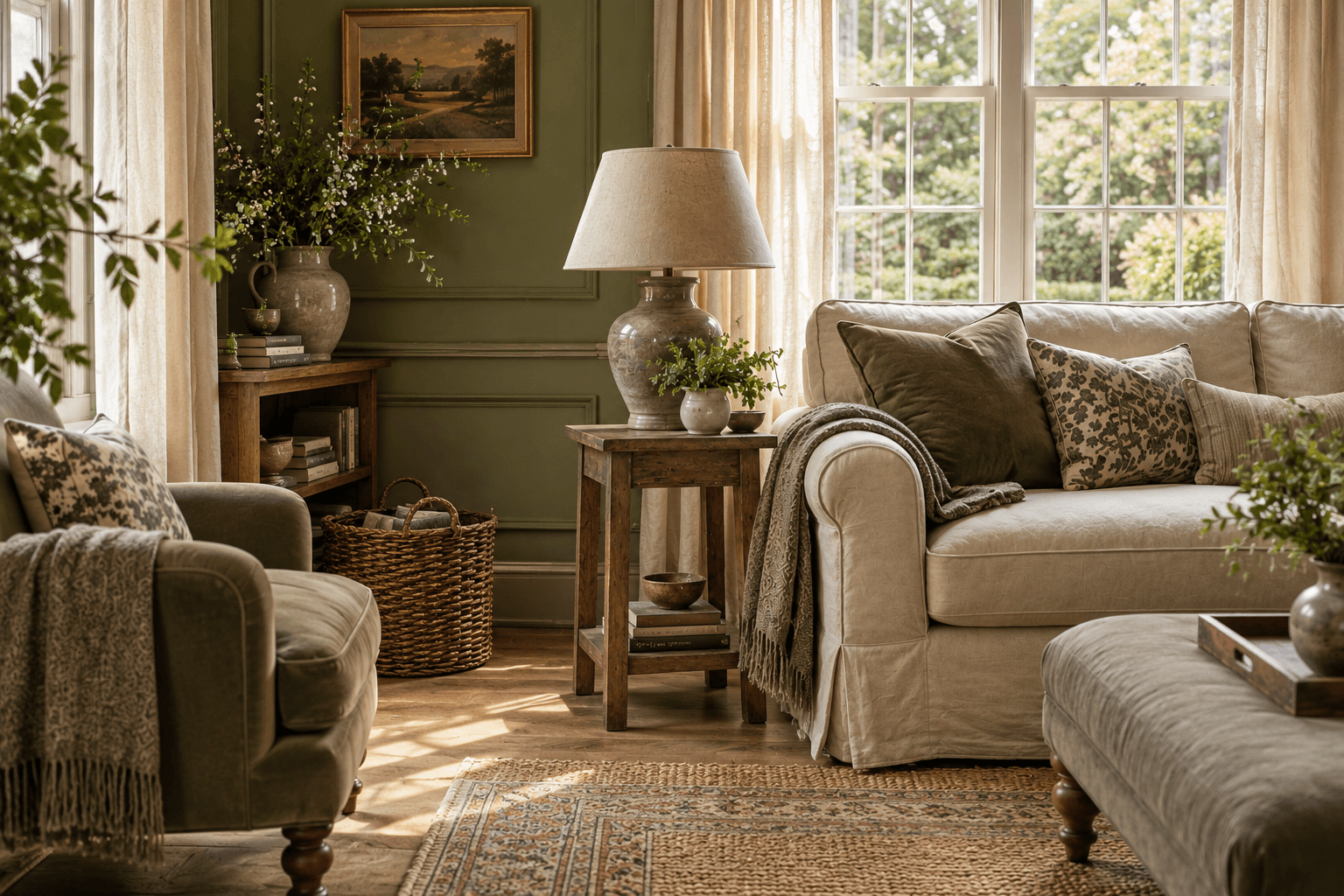
A linen cushion, a wool throw, a glazed ceramic lamp and a worn wooden table can bring depth to a restrained palette. They do not need to match. A little variation helps a room feel collected over time.
Choose a few objects you enjoy seeing every day and give them space. Books can sit beside a bowl brought home from a trip; a favourite print can hang slightly away from the furniture below it. Leave room for the ordinary things that arrive during the week.
Finish with an evening ritual
At the end of the day, switch off the brightest overhead light and see which corners feel inviting. A lamp beside your favourite seat may do more for the room than another decorative object.
Comfort is a useful measure of a decorating decision. A room succeeds when it makes reading, conversation or a quiet cup of tea a little easier. Start there, then let the rest follow.