Words Hoard & Heath
Photography cottonbro studio and Thủy Papaya / Pexels
Red and green ornaments hang in front of a pale sofa, with a dark-green cushion continuing the colour behind them. Cottonbro studio’s tree makes a companion to the furniture rather than a separate display. Before choosing a Christmas tree for a small living room, decide which part of the room it can borrow — and what you still need to do there.
Decide what can move
A Christmas tree need not squeeze into the last unoccupied corner. If a side table can spend December elsewhere, it may release a better position than pushing the tree between an armchair and the curtains. Decide where the displaced piece will go. Moving a table into the passage has merely moved the problem, and losing the only surface beside the sofa may be too much to give up.
Measure the tree’s spread as well as its height, including its stand or pot and any topper. The widest branches may sit well above the base, where an elbow or a curtain needs to pass. Mark the proposed outline, then try the seats and the walk through the room. Use the dimensions of the tree you are considering; a label saying “slim” does not tell you where its branches will end.
The presents need a place too. Beneath cottonbro’s tree, wrapped parcels and open boxes spread across the yellow rug towards the sofa. We would keep the everyday route outside that patch of floor, rather than treat the gifts as a temporary obstruction that everyone can step over. A tree that fits on its own may feel quite different once the parcels arrive.

Borrow a tabletop
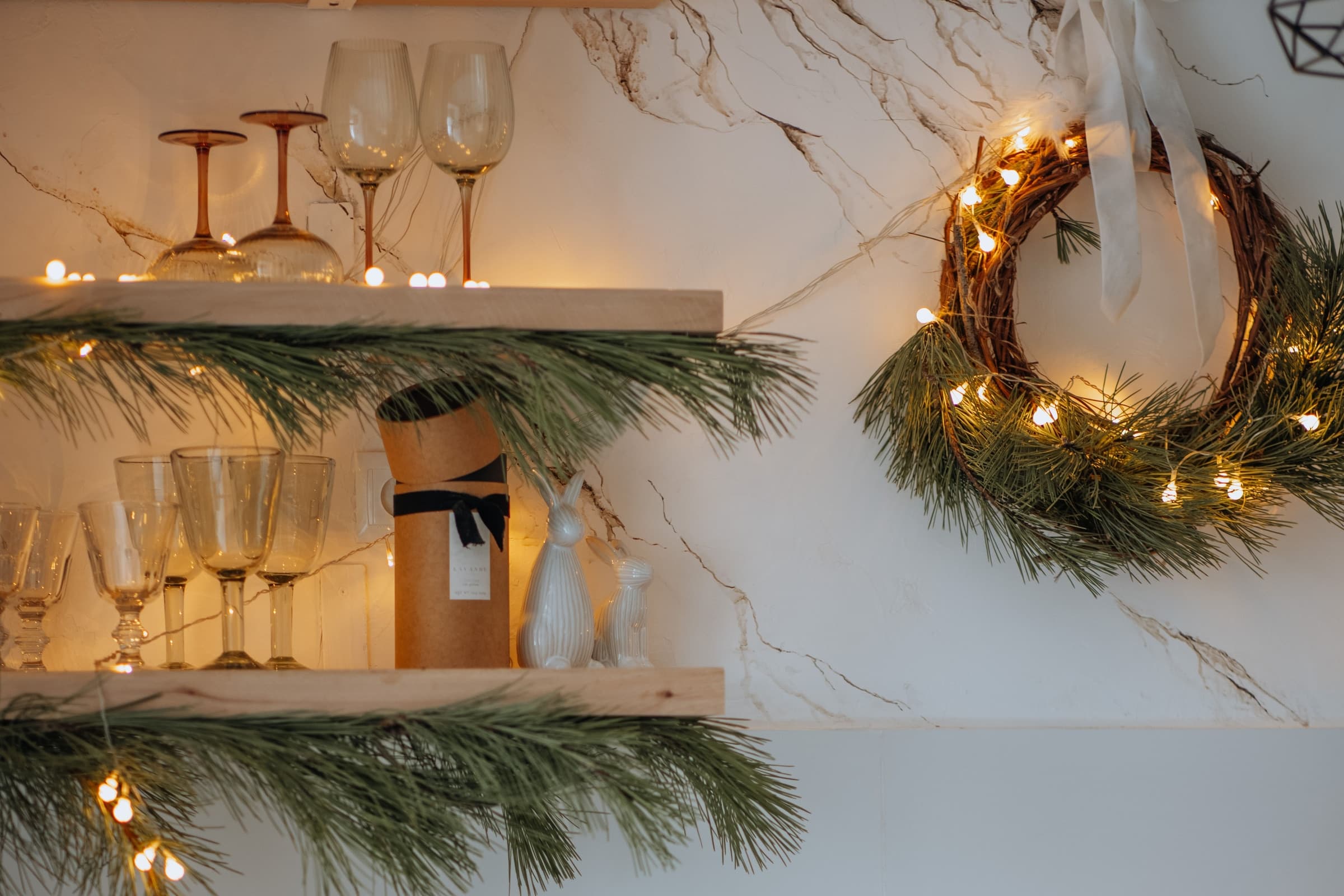
Thủy Papaya’s smaller tree sits on a pale veined surface, with a wrapped base, miniature animal ornaments and a gift beside it. The tabletop supplies the height, bringing the small decorations into view. This is the advantage of a raised tree: it can be modest in size without disappearing below the furniture around it.
A raised tree still uses the surface beneath it. Clear the place you have in mind and decide what you will miss. A sideboard used mainly for display may lend the space more readily than a coffee table used every evening. Count the gift boxes and decorations around the base as well as the base itself. The wrapping in Papaya’s photograph conceals how the tree is supported; choose a suitable stand or pot for your own tree and check that the table can carry the whole arrangement steadily.

The place and the season
Check heat and access before settling on the prettiest position. London Fire Brigade advises keeping Christmas trees away from heat sources and open flames, using a sturdy stand and leaving escape routes clear. A corner beside a fireplace may fail that first test even when it fits the furniture.
Plan the lights from the socket to the tree, including how you will switch them off. London Fire Brigade recommends LED lights, checking for damaged wiring, avoiding overloaded sockets and turning the lights off before going out or going to sleep. Follow the light set’s instructions; the glow in a photograph cannot establish its specification or condition.
The display period matters when choosing a living tree. The RHS advises bringing potted living trees inside as late as possible, keeping them cool and limiting their indoor stay to no more than 12 days, or less if the tree looks unhappy. Cut trees need a water-holding stand and daily water checks. A decorative cover does not tell you which kind is inside, so ask before buying. If your plan depends on a living potted tree beside the sofa from November until January, change the plan first.