Words Hoard & Heath
Photography Osmany Mederos, Karola G and Charlotte May / Pexels
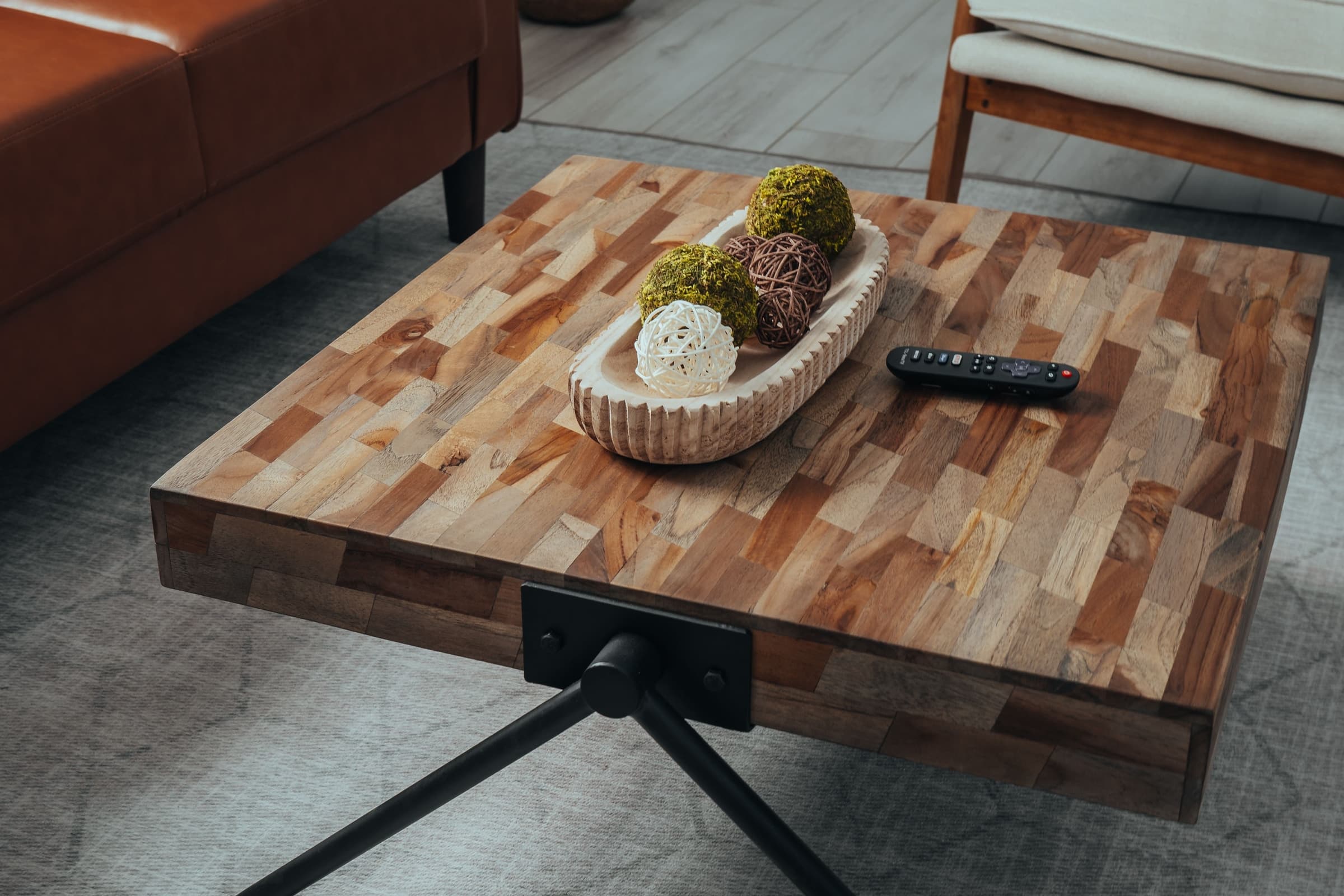
A remote control sits beside a long dish of decorative balls on Osmany Mederos’s coffee table. The dish keeps the ornaments in one group; the remote occupies a separate patch of the top.
The dish occupies the middle, with timber visible all around it. We would try moving it towards one side before adding anything else. A continuous patch of clear surface can be more useful than several small gaps between objects. Check that the space left over is on the side you use; an empty corner beyond a vase may still be awkward to reach from the sofa.
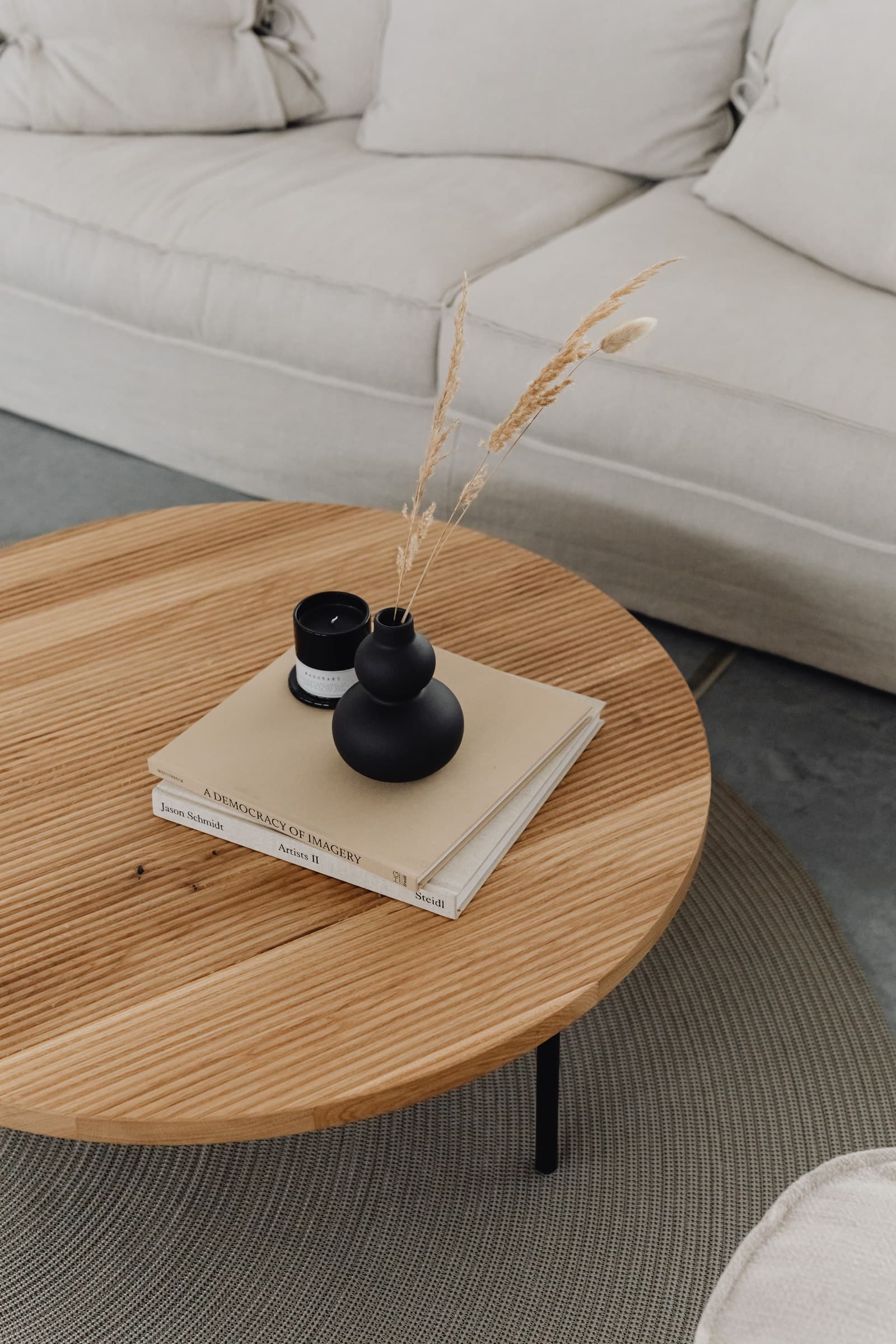
The book underneath
Two pale books make a base for a black vase and an unlit candle on a round table. Their rectangular edges give the group a clear boundary against the curved top. The arrangement leaves a wide border of the tabletop visible, without a separate tray.
We would move the vase and candle off a book being read regularly. The stack looks tidy, but opening the upper book means clearing two objects first. Leave a book clear on top if you want it available for browsing. A decorative object can stand beside the stack instead.

A lower shelf moves the books off the top altogether. The glass-topped table has an upright close to the thick book beneath it; the gap between posts matters as well as the shelf’s size.
Try taking your largest book off a lower shelf before deciding that it will solve the clutter above. Check whether you can get a hand around it without lifting the whole stack or shifting the table.
Move the objects
Lift objects clear when rearranging a glass top. Ashley’s care guide warns against sliding rough objects across glass. Check your own table’s care instructions before adding anything beneath a tray or pot; the finish matters as well as the shape of the display.
Set the table up for an ordinary evening before adding another ornament. If the display occupies the only patch you can reach comfortably, move the display.