Words Hoard & Heath
Photography Arina Krasnikova, Los Muertos Crew and Skylar Kang / Pexels
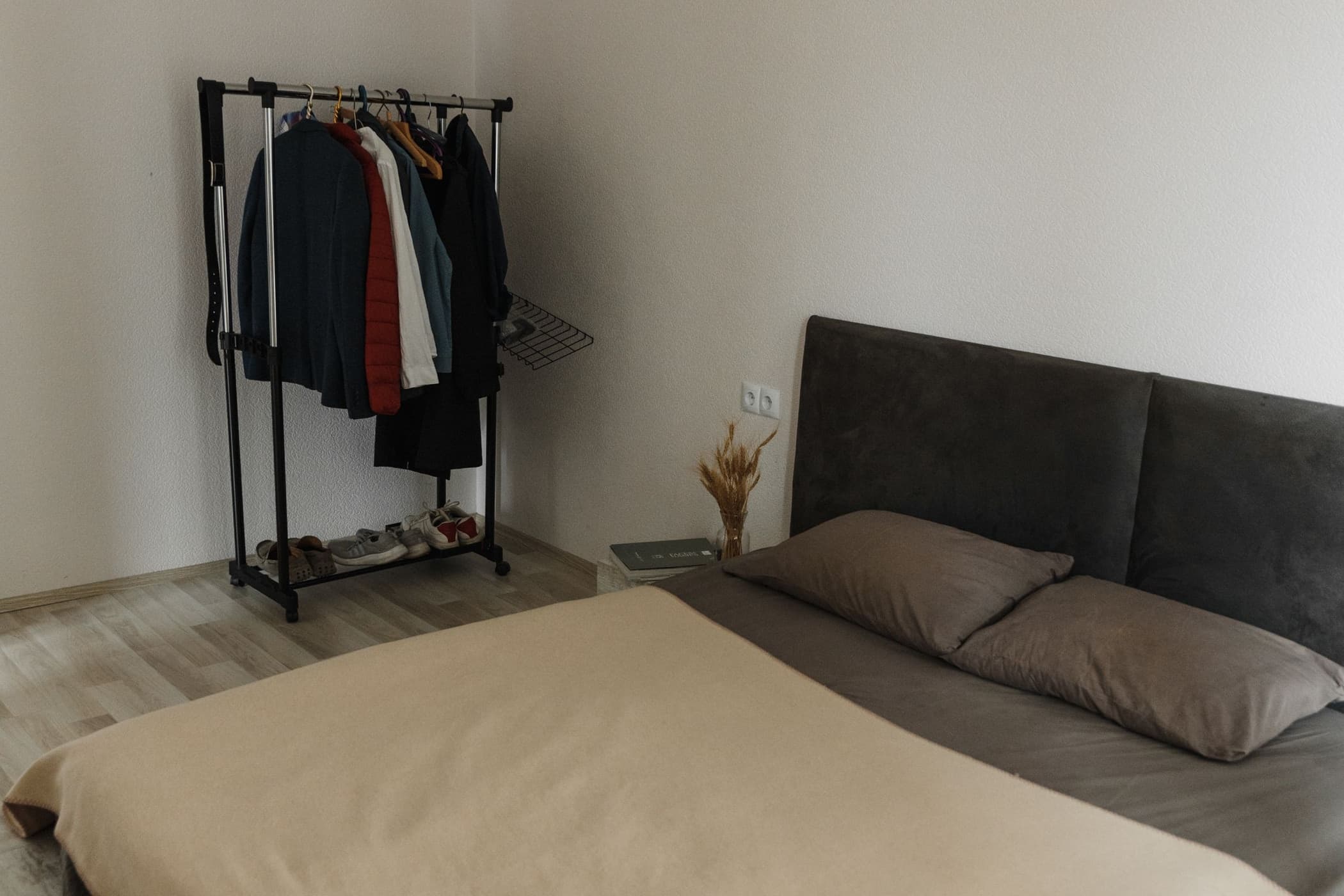
Three pairs of shoes sit beneath the clothes on an open rail. Dark and pale garments hang above them, with a longer hem at one end. The clothes stop above the footwear, using two levels of the frame in a corner beside the bed.
An open rail has no door swing to allow for, but the clothes still need depth. Try your widest hanger with a bulky garment on it before measuring the space against a wall. Include the sleeves and the feet of the frame. The bare frame does not show how far a sleeve will project into the room.
The space beneath is useful only while the hems leave it available. Put your longest hanging garment on the rail before deciding that shoes or a basket will fit below. Reach for a pair of shoes with the clothes in place.
Room between hangers
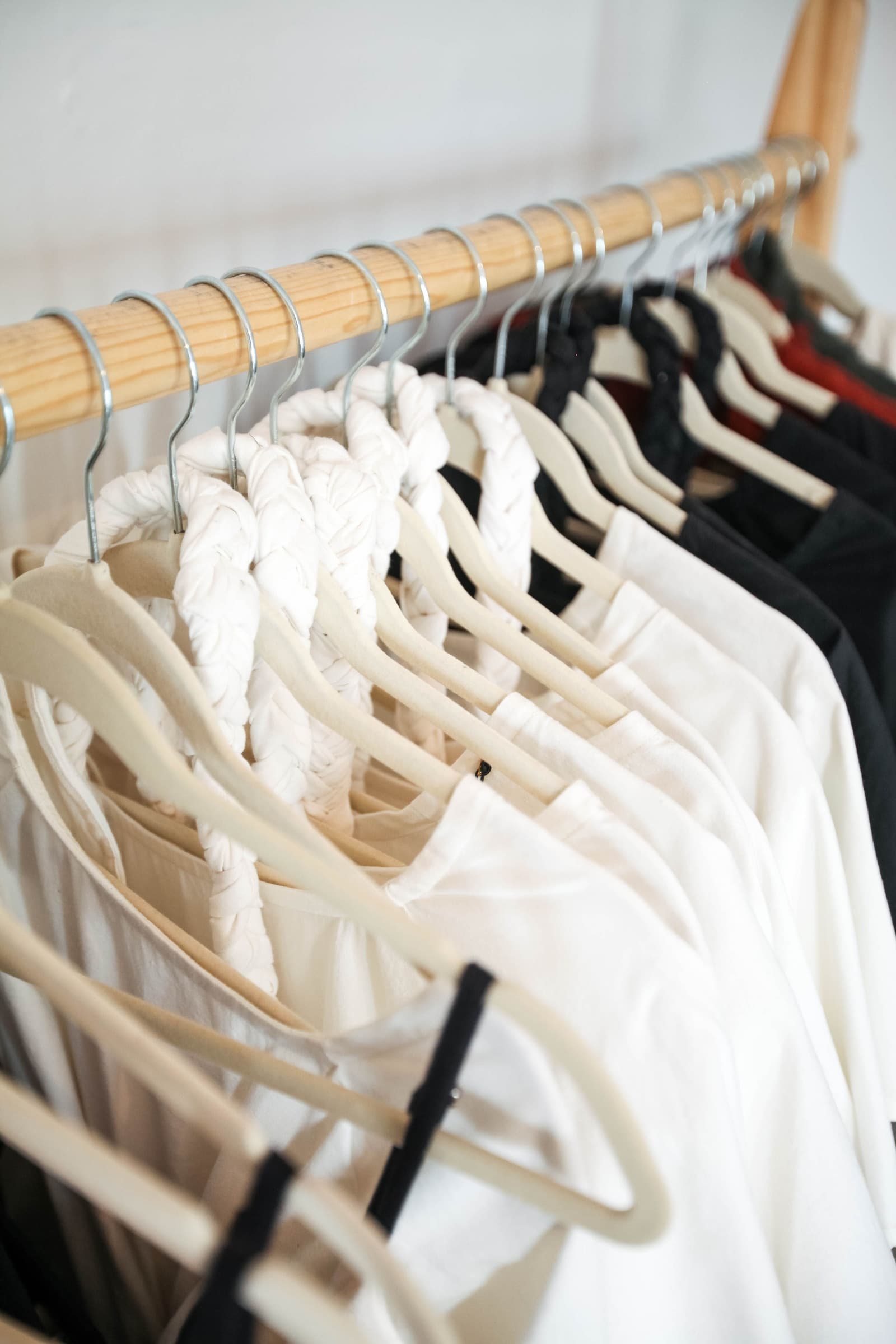
Gaps between hooks do not necessarily leave gaps between clothes. White padded hangers and pale wooden ones sit along the timber rail, with garments overlapping below. Look at the shoulders and sleeves when judging how full it is.
A rail can hold a useful selection without holding every item you own. We would give the most accessible stretch to clothes worn regularly. Take one off and put it back: if its neighbours come with it, move a few pieces elsewhere before adding more hanging space.
Check the maker’s load limit as well as the rail’s measurements. IKEA’s MULIG clothes rack, for example, has a stated maximum load of 20kg. That rating belongs to that model; check the instructions for yours. A limit by weight does not tell you how easily the garments will move along the bar.
Behind a curtain
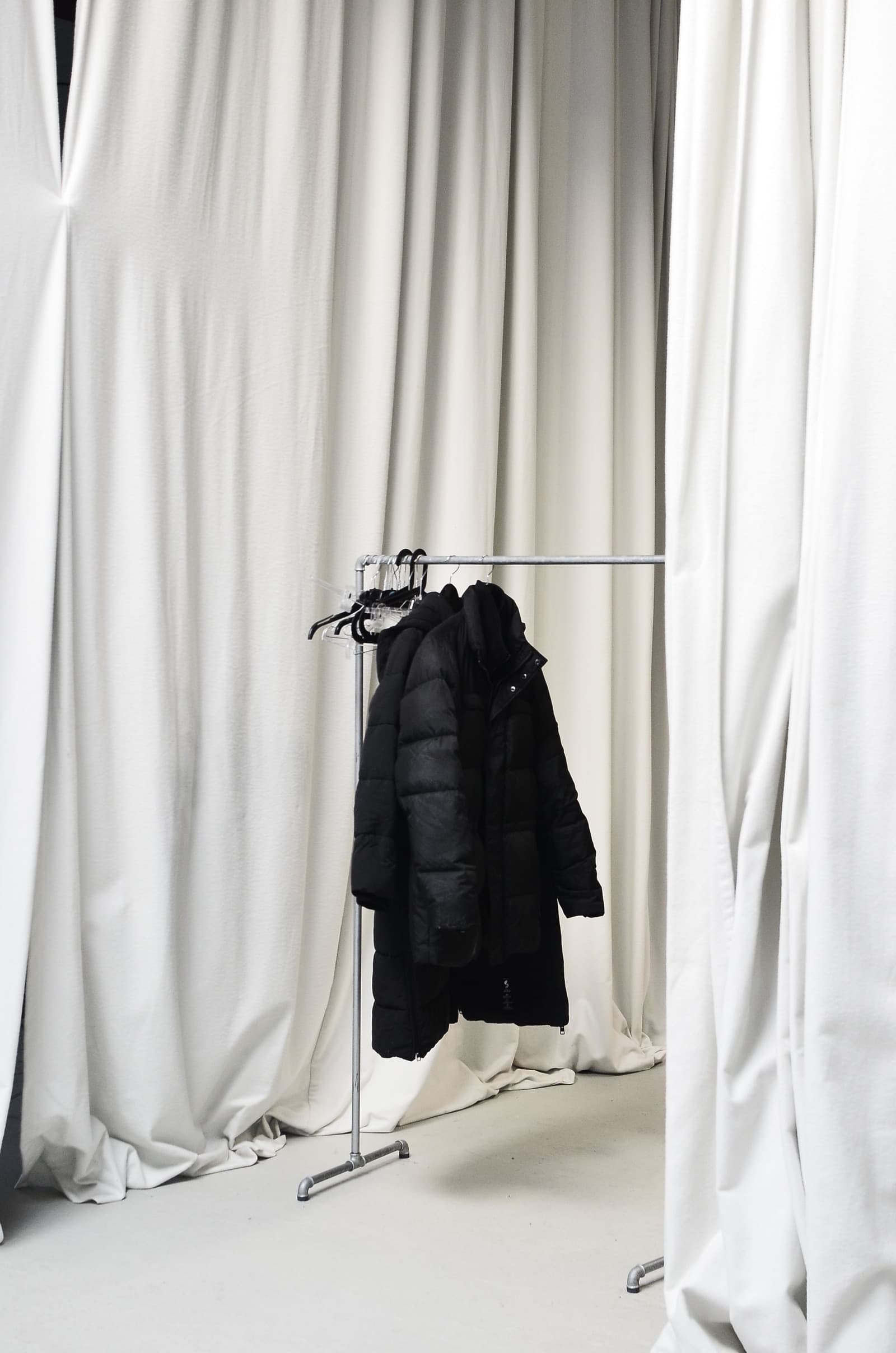
A curtain gives you the option of putting clothes out of view. Pale fabric surrounds the black outerwear on a metal rail, with a second run of curtain across the foreground. The cloth needs room beside the rack as well as in front of it.
We prefer a curtain hem clear of the floor around a rail used every day. These long folds pool beside the base, covering part of its outline. A shorter hem would leave the floor easier to reach. Allow somewhere for the curtain to gather when open, clear of the clothes you need to take out.
Open the curtain fully before deciding that another hanger will fit.