Words Hoard & Heath
Photography Mikhail Nilov, Lisa Fotios, Nadezhda Moryak
A living room can lend you a table quite easily. Lending it for the whole working day is a different arrangement. Before choosing a desk that matches the shelves, decide what you need to do there and how much of the room that work will occupy.
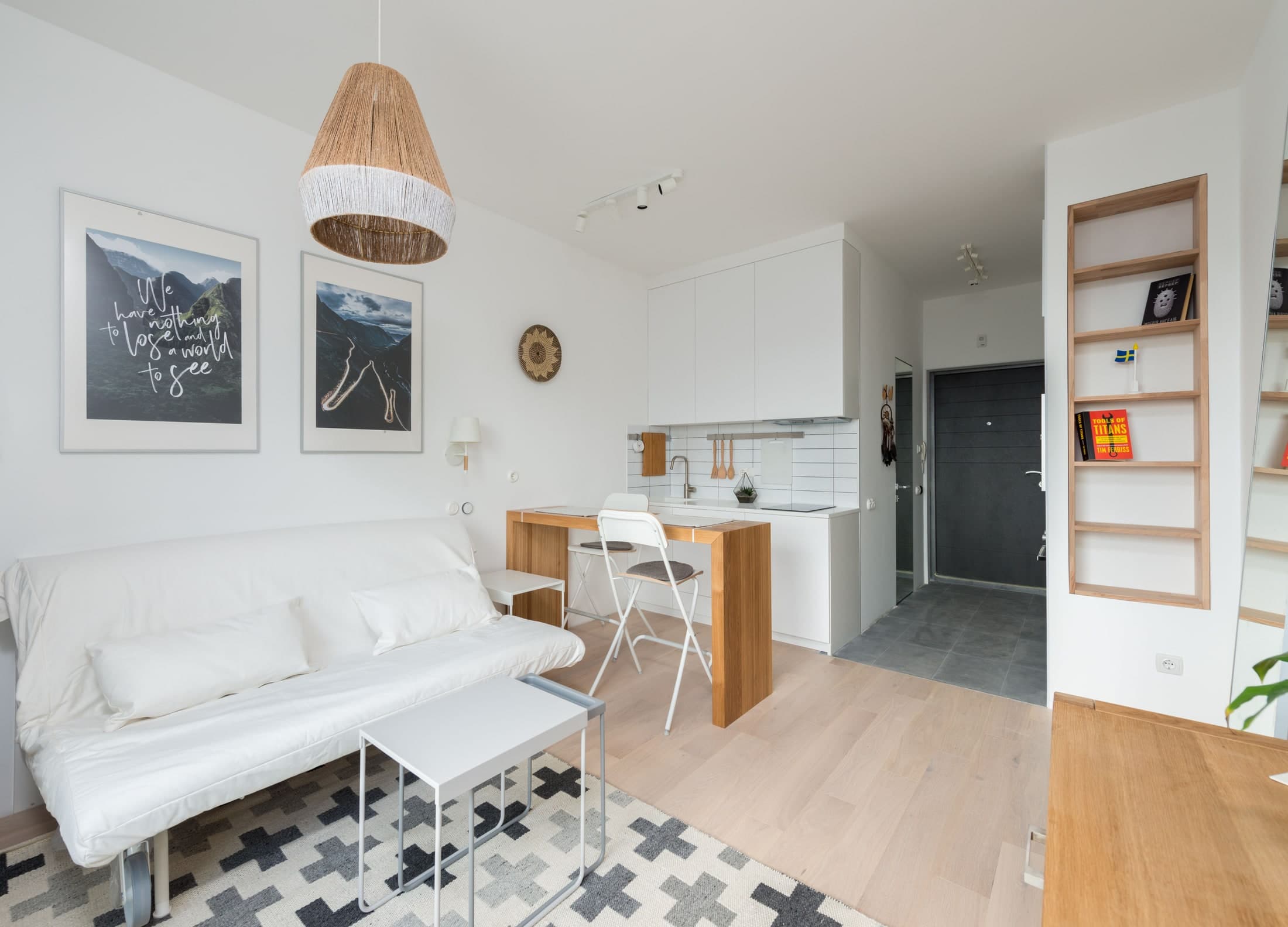
The laptop beside the sofa in Mikhail Nilov’s photograph suggests an occasional task: an email, perhaps, with a cup nearby. For a regular working place, we would start with a table and a chair. The photograph is a picture of a room, not evidence that the arrangement suits a working day.
List what shares the tabletop with the computer. A keyboard, mouse, notes and a screen take up more space than a closed laptop; drawings may need to lie flat. Put the equipment together before measuring for a desk. A narrow console can look unobtrusive until work spreads beyond it.
Try the proposed position with a chair before moving furniture. Pull it out as you would to sit down and leave it there while someone walks past. Check whether the door opens and the route to the sofa still works. Space for the empty desk is only part of the arrangement.
Make room for the chair
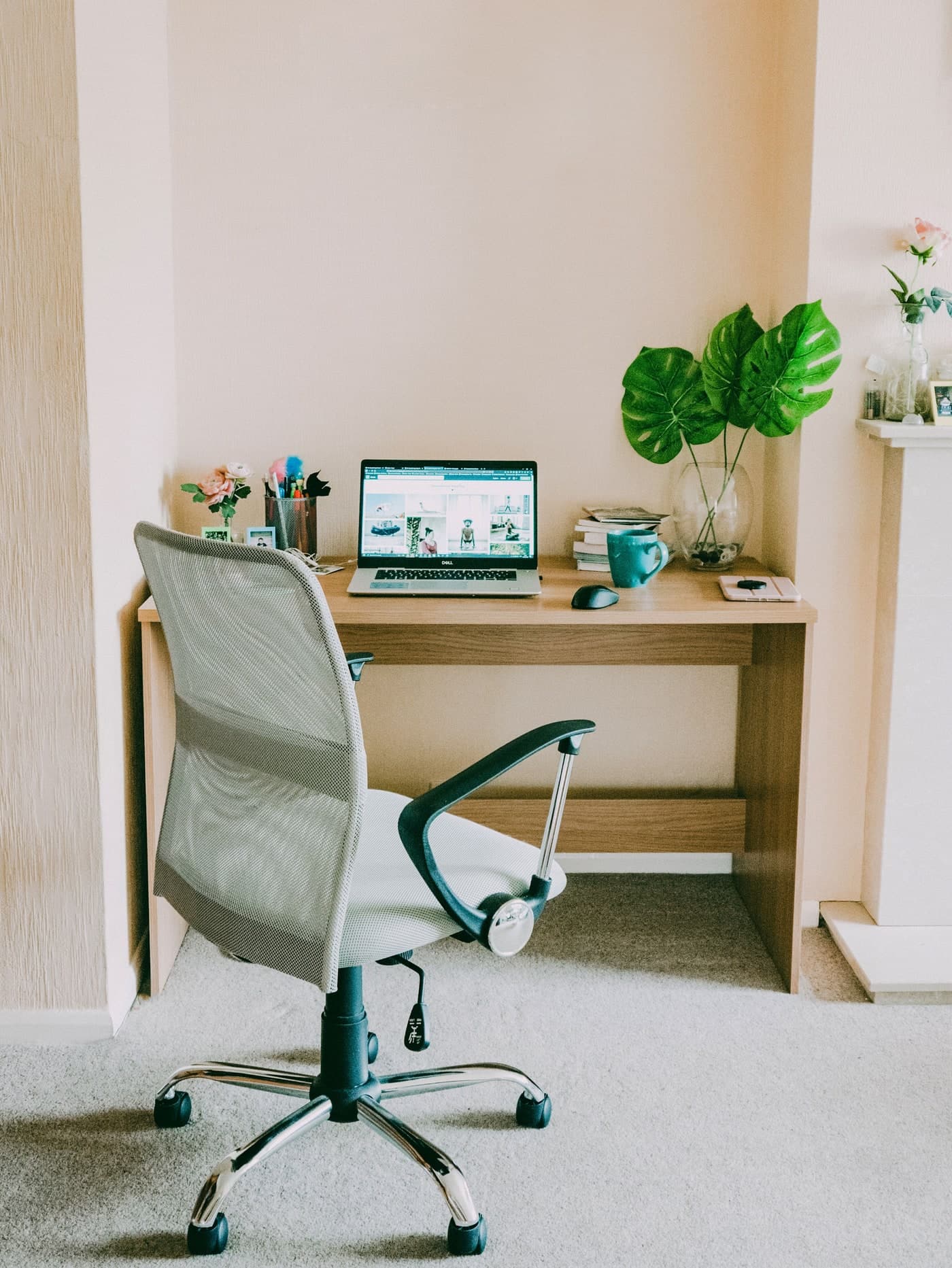
At Lisa Fotios’s modest timber desk, the office chair occupies much of the foreground. Its height and grey mesh give the workspace a presence even when nobody is sitting there. Choose the table with the chair alongside it, including the space needed to pull it out.
The Health and Safety Executive’s workstation guidance places the screen directly ahead, with its top at eye level, and the keyboard just below elbow height. For prolonged laptop use, it describes a separate keyboard and mouse so the screen can be raised. Allow for that equipment when planning the surface, rather than judging its size from the laptop alone.
Use the HSE workstation assessment to consider the whole arrangement: furniture, equipment, conditions and the work itself. If you are working for an employer, involve them in the assessment. A photograph of a tidy desk cannot establish that the setup suits the person using it.
Where the work goes
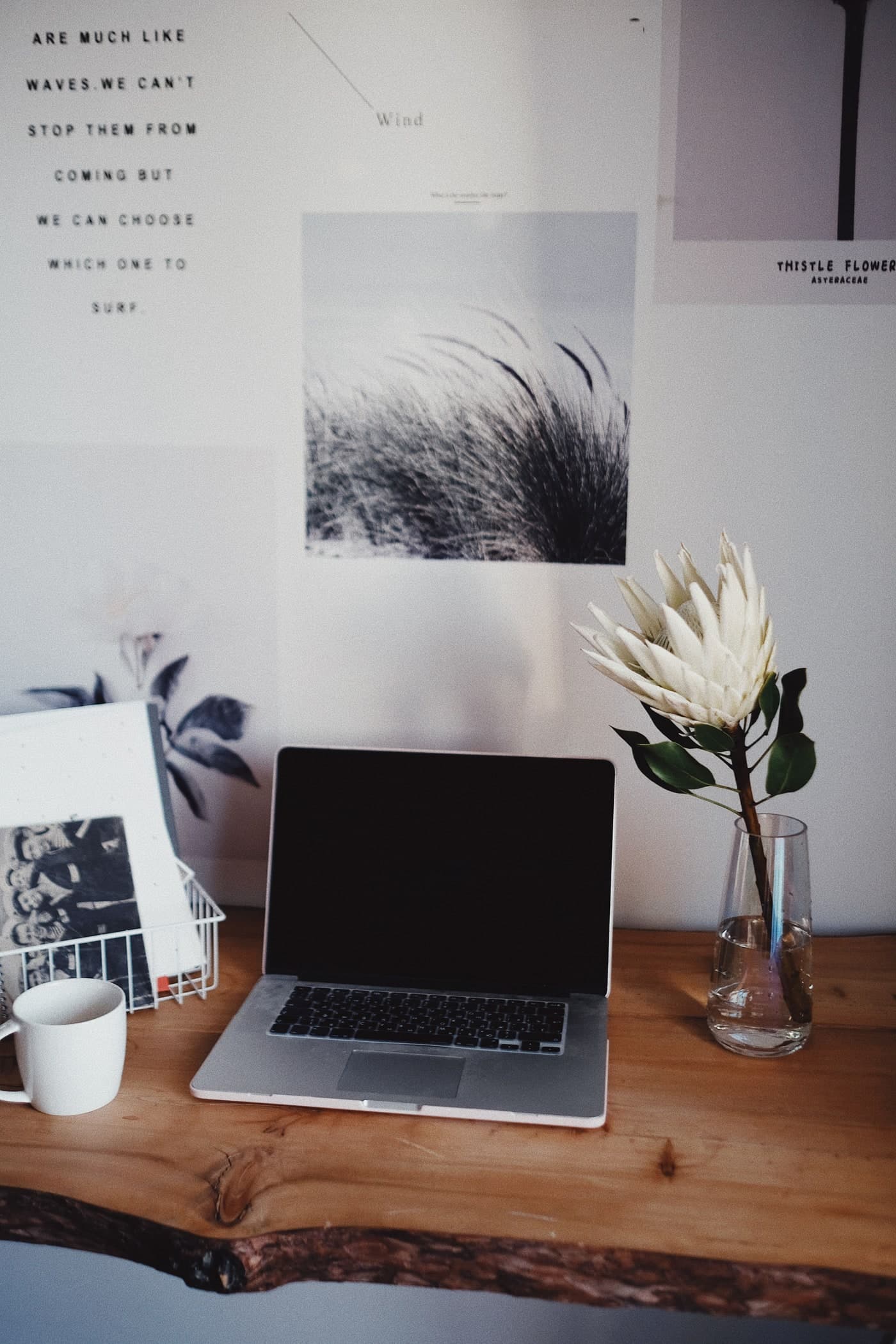
Nadezhda Moryak’s close view of a laptop on timber includes a wire basket for papers, a mug and a flower in a glass vase. In a shared room, decide which objects stay on the table when work finishes. A lamp or vase can remain; tomorrow’s paperwork need not.
Plan the return journey for the whole kit. A cupboard shelf needs to take the keyboard, mouse and papers as well as the laptop; a tray is useful only if it fits that shelf and can be carried without spilling. Leave the charging cable where it can be reached without dragging it across the route through the room.
A permanent desk needs less daily packing, but its contents still need a home. Keep current papers together and give spare cables somewhere specific to go. On a dining table, use a container that can move in one trip; otherwise clearing the surface can become a second task at the end of work.
Lay out the equipment at the intended table before buying anything. Then clear it for the evening. The missing piece may be a better chair, or a cupboard close enough to use, rather than another desk.