Words Hoard & Heath
Photography James Frid, Monica Silvestre, Furknsaglam
The search for reclaimed materials can begin at home. Before visiting a salvage yard, make an inventory of the floor, the doors and the surfaces you already have. Decide what is worth retaining and what needs assessment. It gives the renovation a starting point beyond the search for something older-looking.
The floor you already have
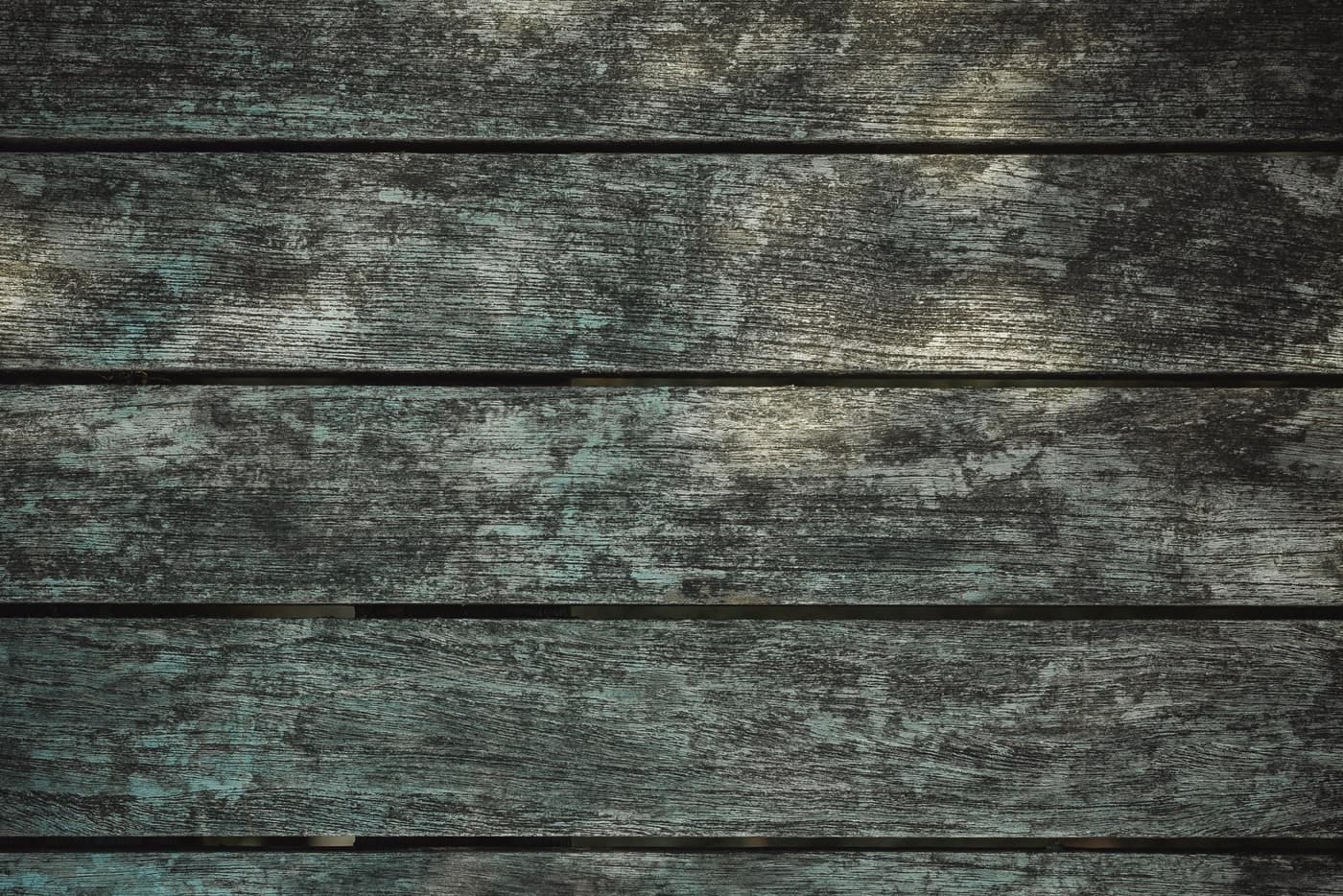
James Frid’s close view of weathered boards shows a surface with dark grain and patches of faded green. The differences between the boards are its interest. We would hesitate before trying to make a surface like that uniform, although a photograph cannot tell us whether these particular boards are fit for a floor.
The Society for the Protection of Ancient Buildings advises retaining old floorboards where possible. Its timber-floorboard guidance distinguishes minor imperfections from active decay or structural problems, whose causes need attention before repairs. A worn appearance, on its own, is not a reason to order a replacement.
Sanding is another decision to make slowly. SPAB cautions that it removes the old surface and can reduce the thickness of boards. Discuss the finish with someone experienced in historic floors before reaching for a machine. The result you want to keep may be the part that sanding takes away.
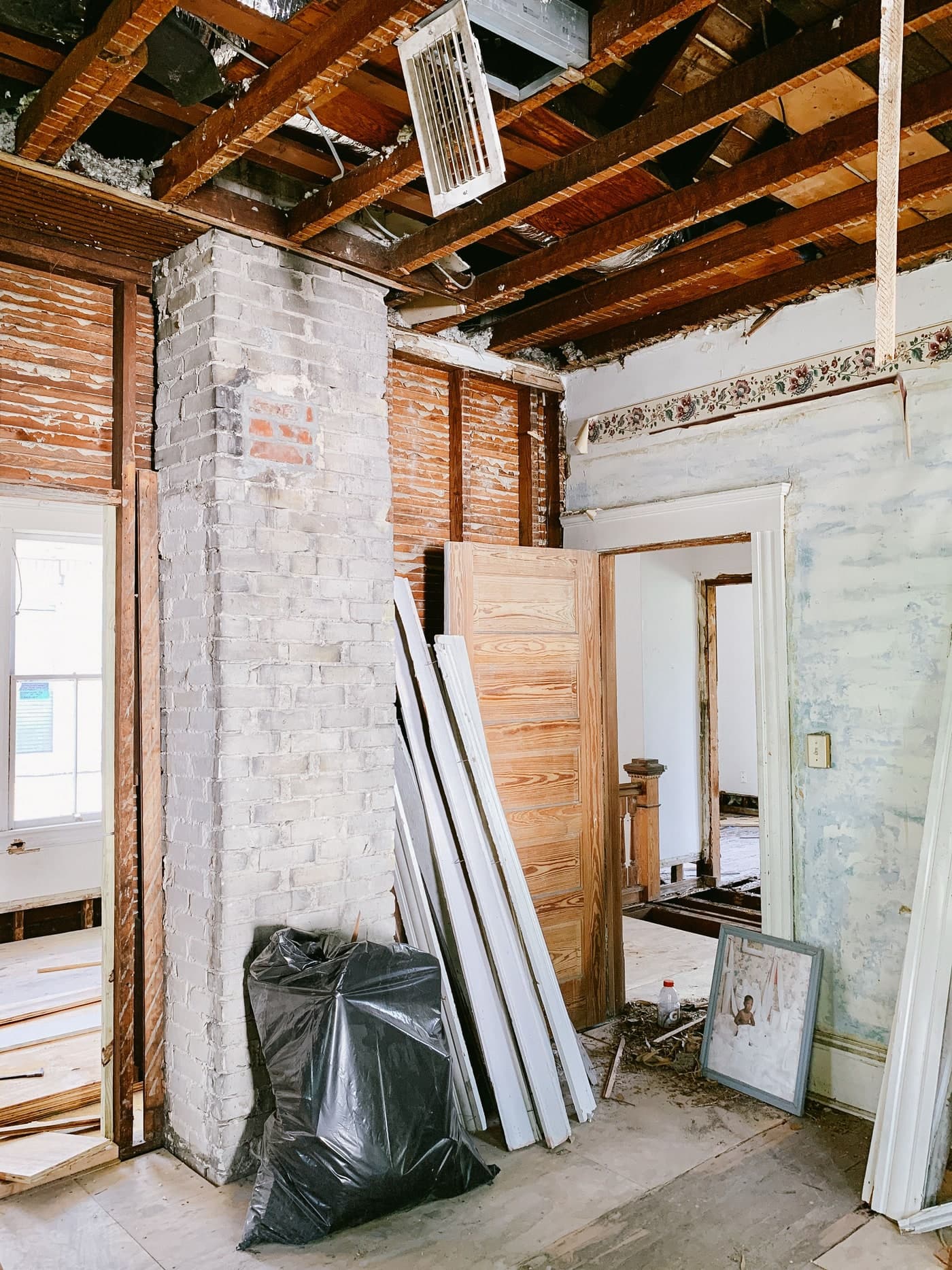
In Monica Silvestre’s renovation photograph, a panelled timber door stands beside painted brickwork, exposed framing and lengths of removed trim. It is the point in a project when several decisions can become one large clearance. Separate them: which pieces belong to the building, which can be repaired, and which have been removed only to give access?
If boards must come up, SPAB recommends numbering them so they can return to their previous positions. Record those positions before lifting. The same habit is useful when you set aside a door or trim: a label saying where it came from is more useful later than a pile of similar pieces.
Condition needs more than a sympathetic eye. For major work on old timber floor structures, SPAB recommends a suitably qualified structural engineer. That is a different question from choosing whether you like a worn surface. Keep the design preference and the assessment of the building separate.
Buying a piece for another room
Give a salvaged piece a job before buying it. Take the measurements of the opening or the proposed floor, including thickness and adjoining levels, to the dealer. For a door, ask a carpenter to assess the leaf and the opening together. A handsome face is only one part of the fit.
Ask where the material came from, what work has already been done to it and what is included in the lot. Count usable pieces rather than relying on the advertised total. Arrange the intended repair, transport and fitting before deciding whether the purchase makes sense. Compare the cost of the fitted result, with those jobs included.
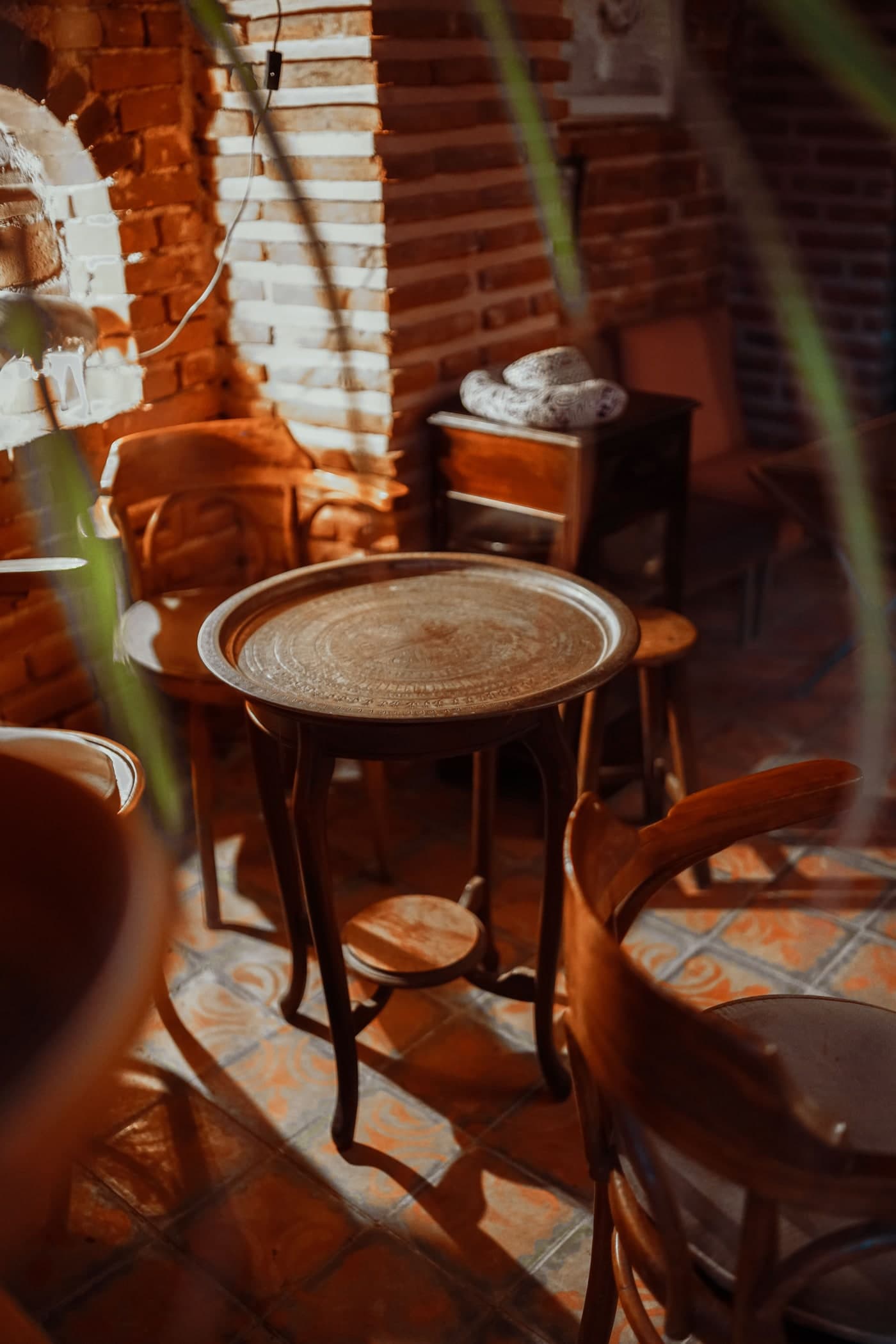
The pub interior photographed by Furknsaglam brings timber furniture, patterned tiles and brick together. Their textures are already quite busy. We would use a quieter new surface beside an expressive salvaged one, rather than trying to make every part of a room look equally aged.
Set the old material beside samples for the rest of the room. Keep the variation you like in view while choosing the new surfaces; there is no need to reproduce it everywhere.