Words Hoard & Heath
Photography Max Vakhtbovych, Maria Orlova, Ezgi Baytar
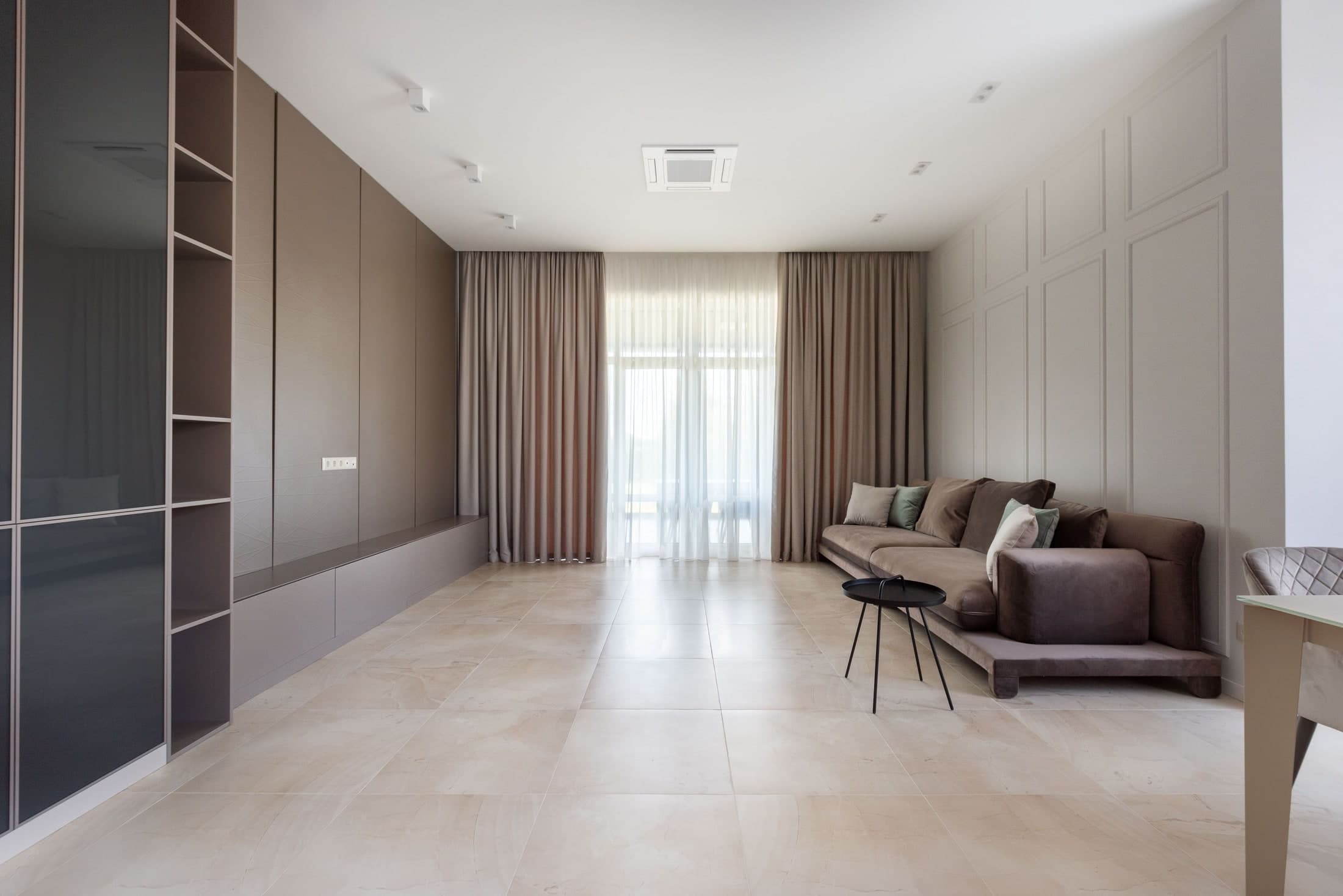
The curtains have almost a wall to themselves. In Max Vakhtbovych’s photograph, pale folds run from near the ceiling to the floor, with a sheer layer across the glazing and heavier-looking panels gathered at either side. The sofa stops short of the window. There is enough room to see the whole fall of the fabric.
The long folds have a place to sit when open, and the sofa’s lower outline leaves them in view. We would favour that clear vertical line here, without adding a border or a large pattern to compete with the cupboard fronts and panelling.
In another room, a chair, a deep sill or a radiator might occupy the same space. Before choosing a drop, look at what already happens beneath and beside the window. Floor-length fabric is a preference, not an obligation to cover whatever is in its way.
Room for the open curtain
An open curtain still takes space. Its folds have to gather somewhere, so a pole or track that ends at the glass can leave much of the window covered. IKEA’s planning guide adds at least 15cm beyond each side when sizing a rod or rail for fabric curtains. Treat that as its starting recommendation; the fullness and heading of your chosen fabric still need to fit.
Look at a sample folded as well as flat. Cloth that seems slight in your hand can make a substantial bundle when gathered. Find somewhere for that bundle to rest without crowding a cabinet or obstructing an opening, then choose the heading with the curtain maker or supplier.
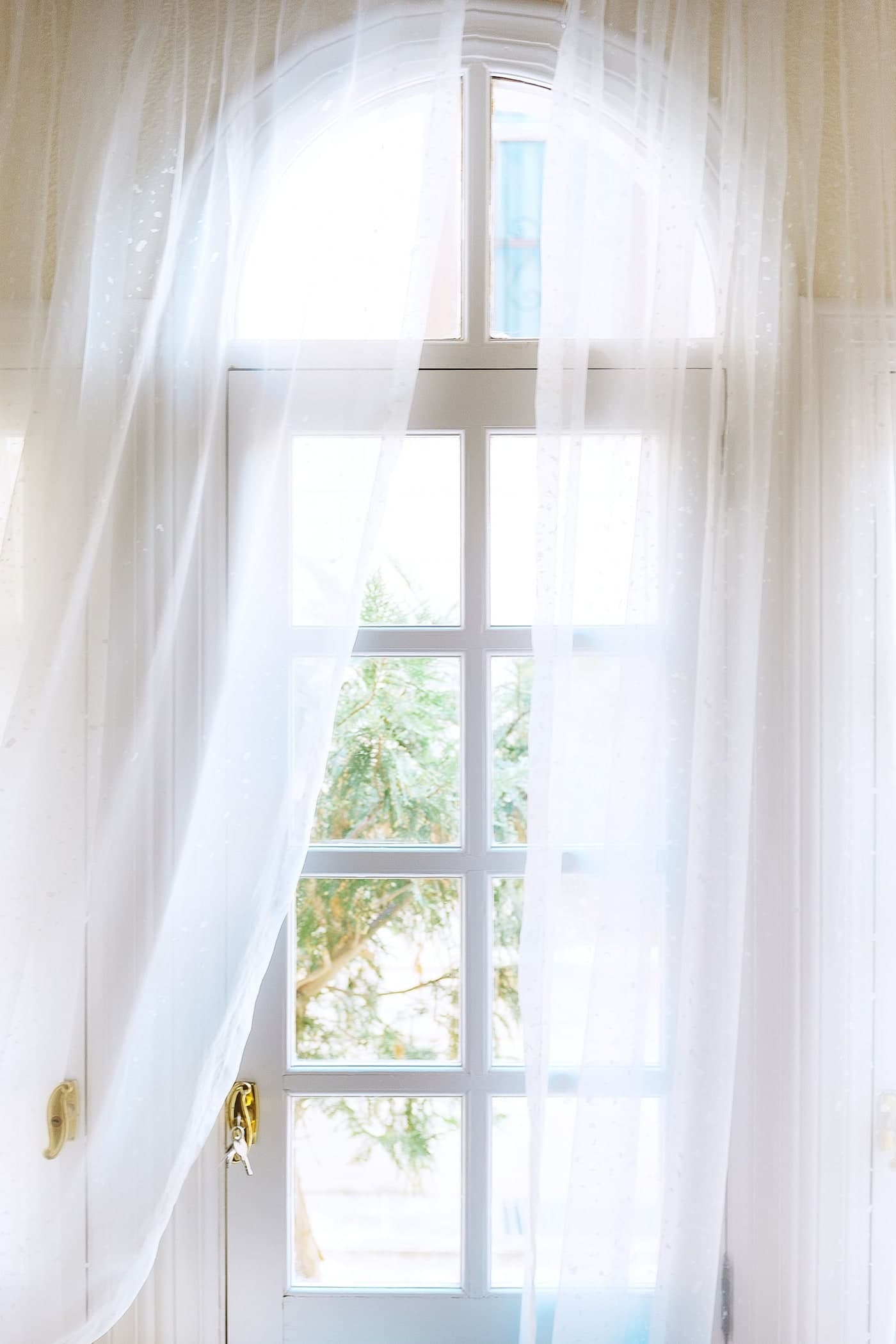
There is no need for the curtain to compete with the shape of the window. Maria Orlova’s photograph leaves the arch visible behind a fine pale layer. The curve of the frame and the straight folds can both be read. For an opening with that much character, we would keep the fabric simple.
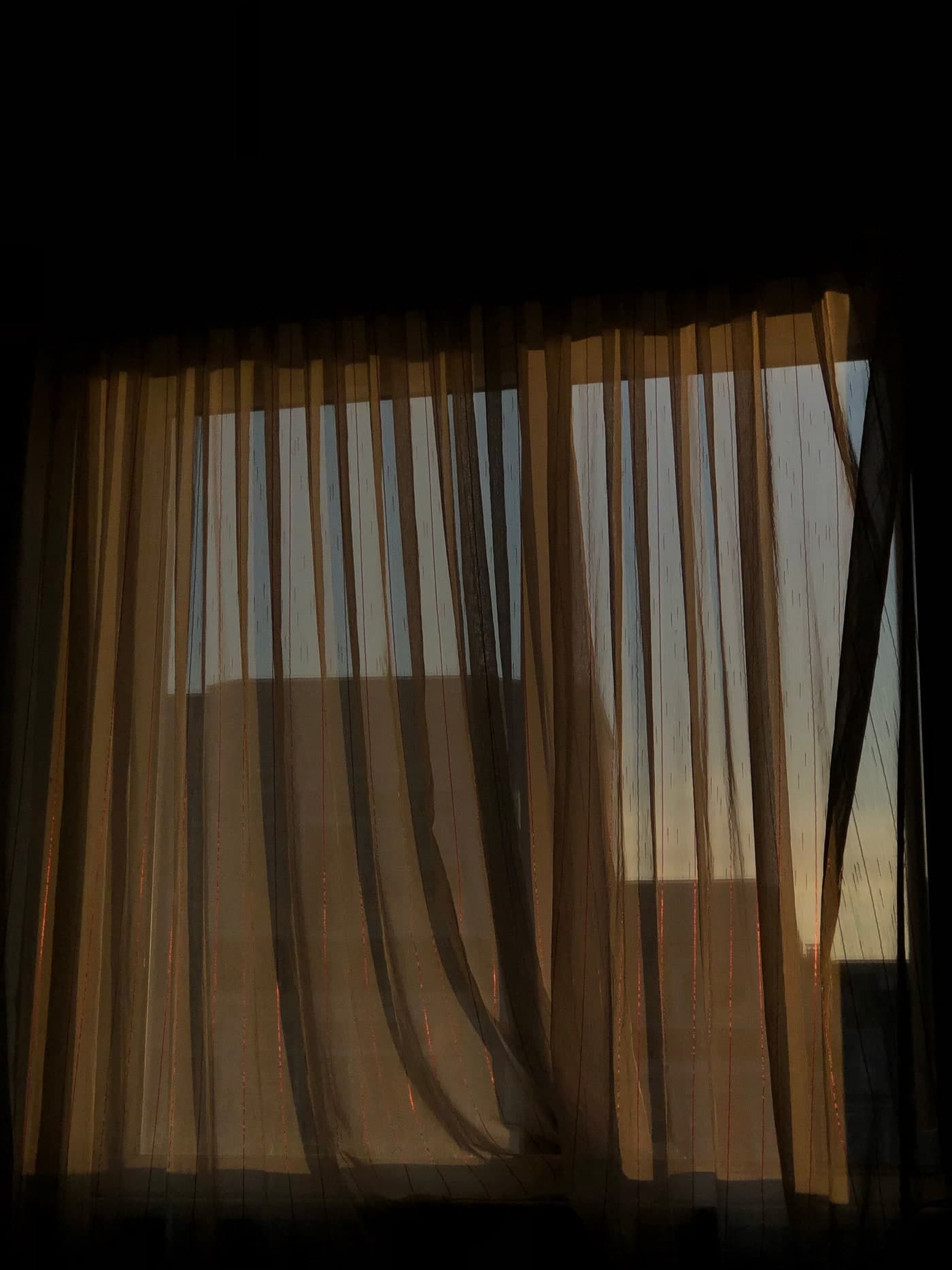
Sheer fabric makes a different decision from a solid panel. In Ezgi Baytar’s photograph, narrow lines in the weave cross a view of the window and the building beyond it. Light catches the folds, while the frame remains visible. This is useful to look at when deciding how much of a view you want to keep.
It is not a guarantee of privacy. Curtain consultant Chris Tebay warns in House & Garden that a sheer’s daytime effect can change when indoor lights are on at night. If screening is the reason for the curtain, judge it under those conditions too. A second, less transparent layer may have a job that the sheer cannot do.
A full drop also has to make sense beside the heating. Energy Saving Trust advises keeping curtains clear of radiators when closed, so heat can reach the room. A shorter drop may be the more useful choice there.
Hold a colour sample at the window, where light passes through the cloth, then beside the sofa. Look at it in a fold: the pale face and the darker crease belong to the same curtain. Both will become part of the wall.