Words Hoard & Heath
Photography Charlotte May
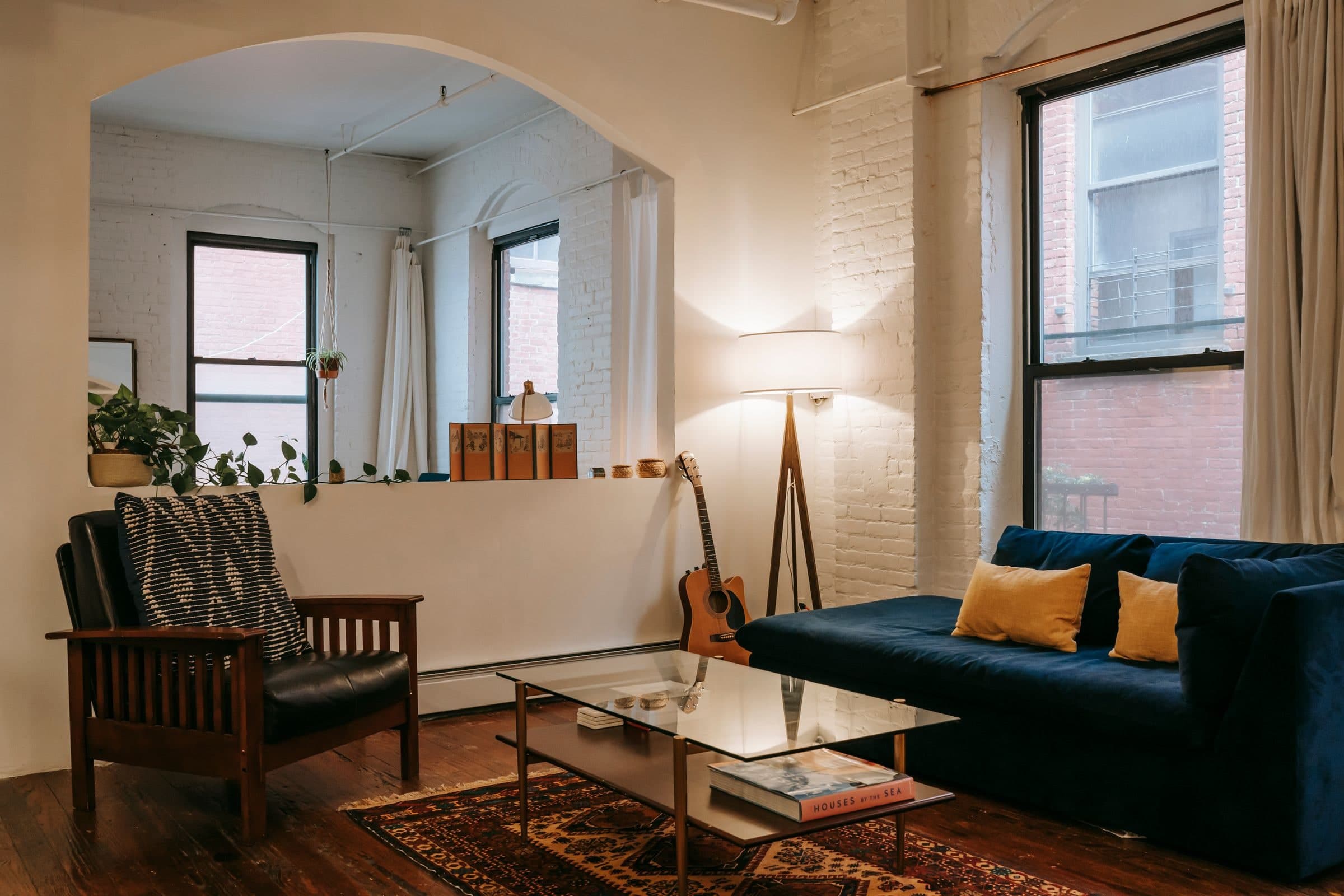
The blue sofa takes the window; a timber armchair sits opposite, with books tucked beneath the glass coffee table. In Charlotte May’s photograph, the place to read is already part of the room. The chair faces the sofa, so the reader can put down a book and join a conversation without rearranging the furniture.
Where the chair goes
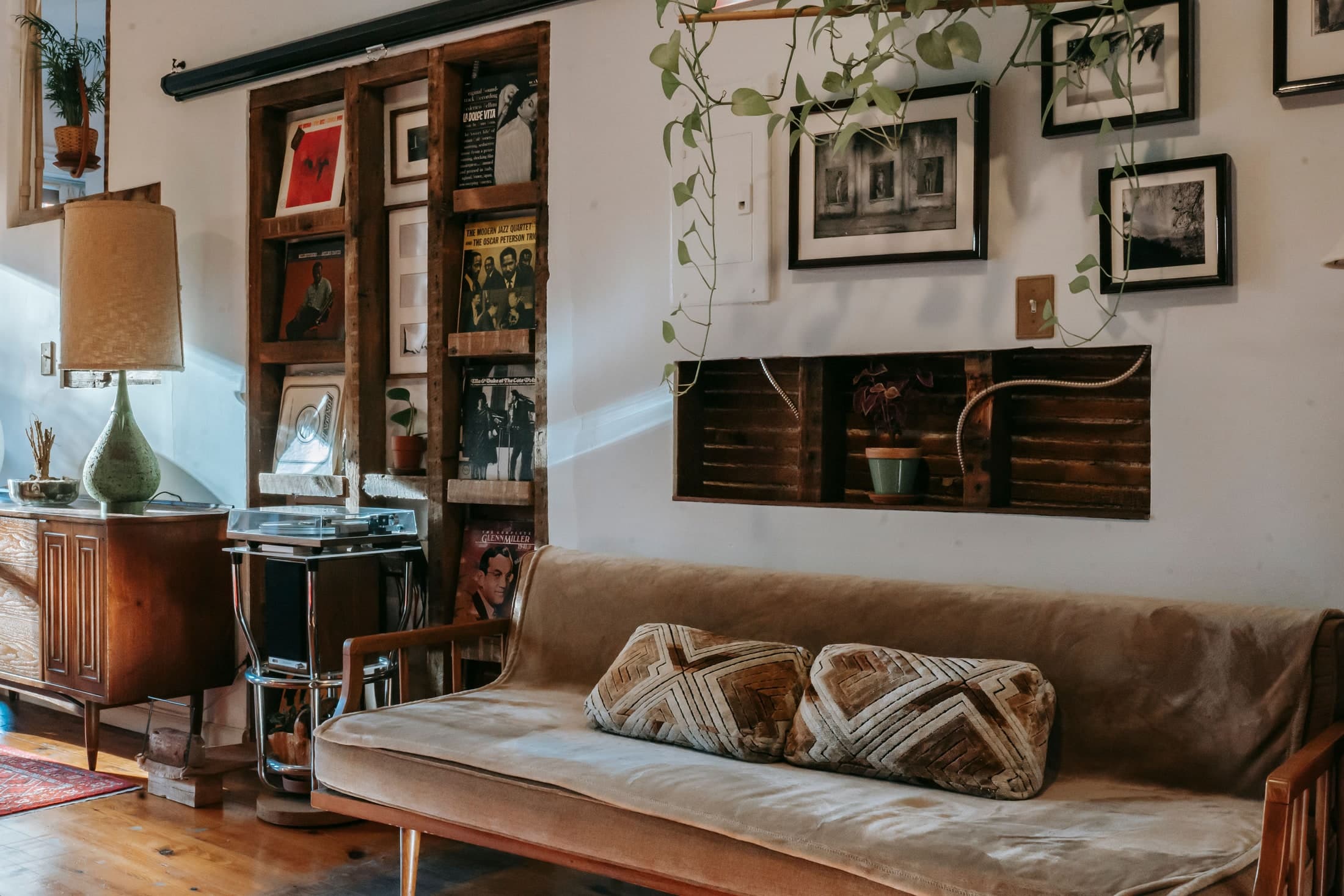
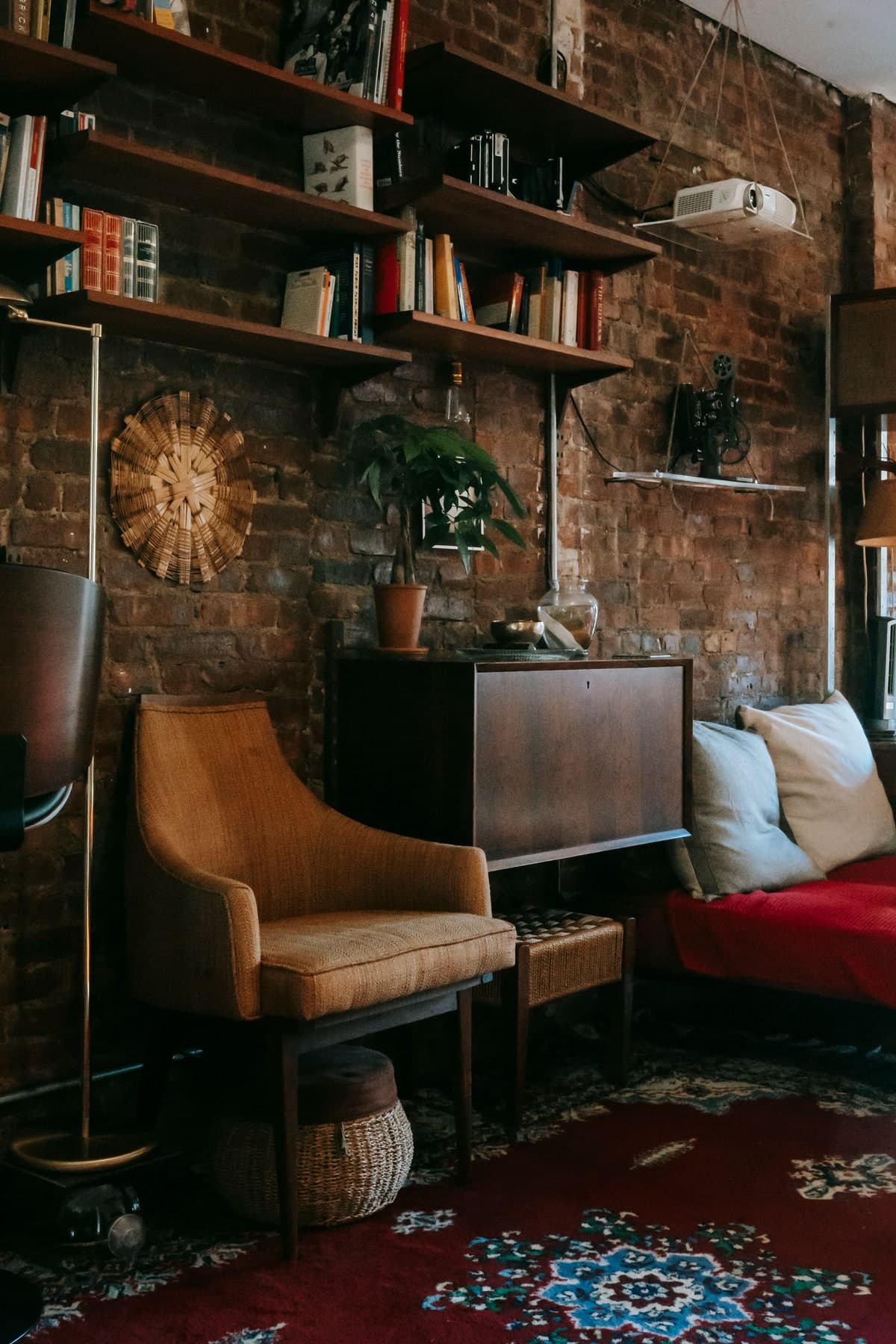
The brown chair beside the sash window takes a short stretch of wall, with a wooden bureau on the other side. Both leave the window clear. A spot like this is easy to miss when the sofa is the first thing to go into a room.
Curtains need to open, doors need to swing and people need to get through. A chair you already own is useful for trying the position before buying anything. Sit there, stretch your legs and see whether someone else can pass. A slight turn towards the sofa can make it easier to talk to someone in the other seats.

Choosing the chair
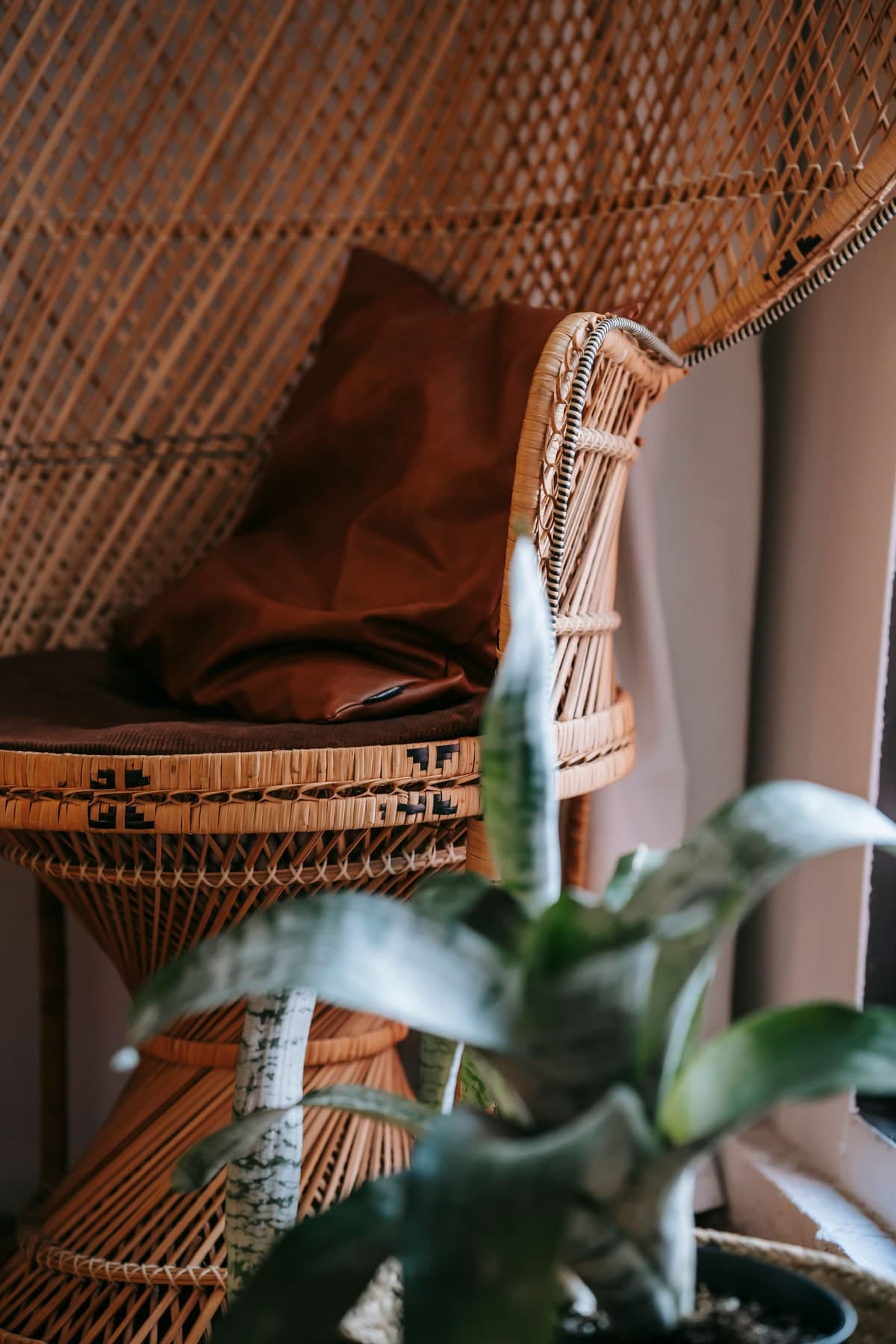
The brown armchair beneath the bookshelves is our favourite here. You can still see the patterned rug through its timber base, even with a cabinet and books close around it. The rattan chair is rounder, with a rust-coloured cushion against its woven back.
Comfort depends on how you read. A deep seat may suit someone who tucks their feet up, while another reader will want to sit upright. Trying the chair with a book, in your usual position, is more revealing than a quick perch in a showroom. Notice whether your feet are supported and whether the arms push your shoulders up.
Allow for getting into the chair as well as its footprint. A recliner needs room to move behind it, and a swivel seat needs space to turn. The route from the door to the sofa is a good test: if it involves edging round the chair, the chair is taking more room than you can spare.
A lamp for the evening
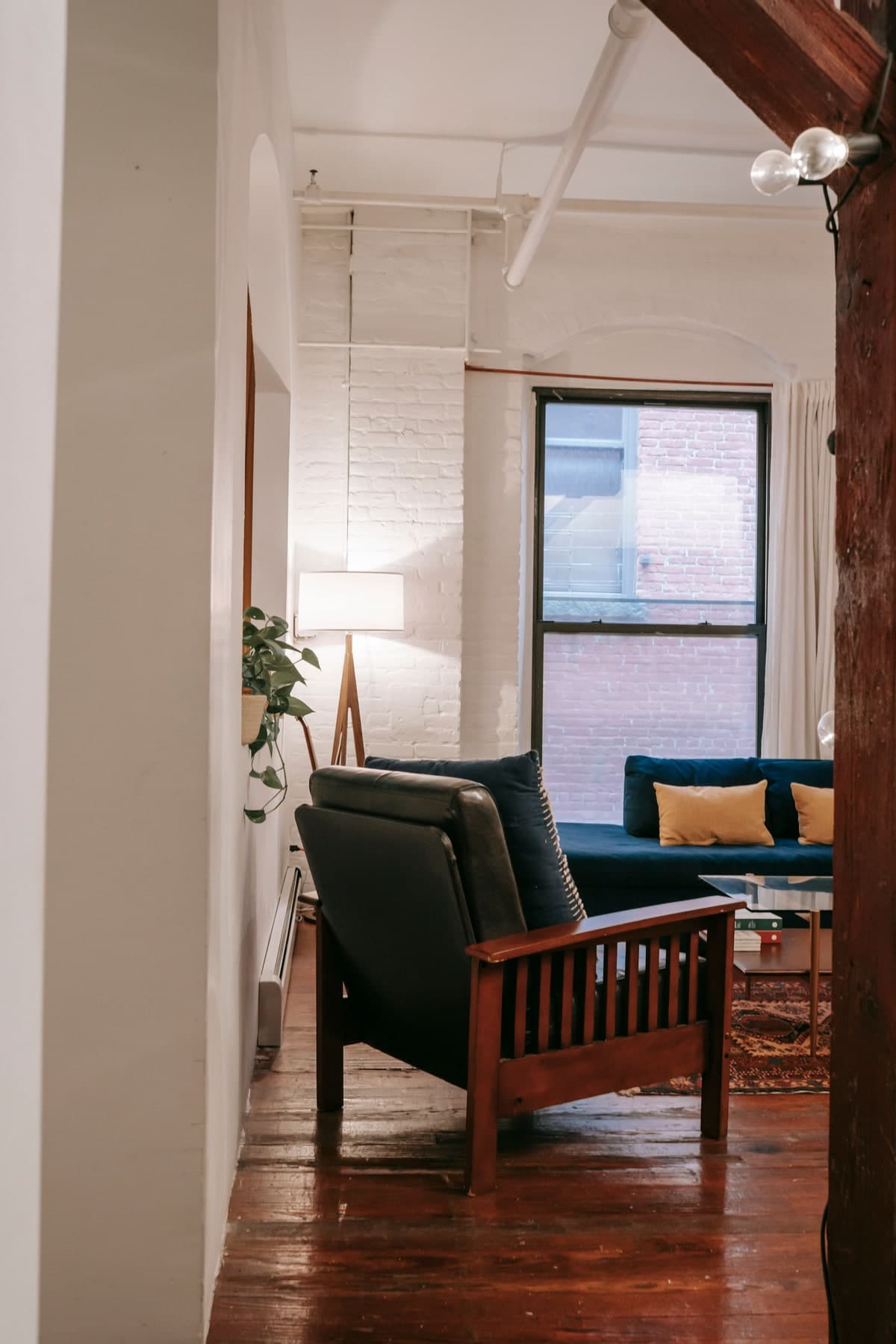
A tripod lamp stands behind the armchair opposite the blue sofa, leaving the glass table free. Its base needs a fair patch of floor, though. A table lamp on an existing cabinet may be easier to fit into a narrow gap, provided it can light the page from there.
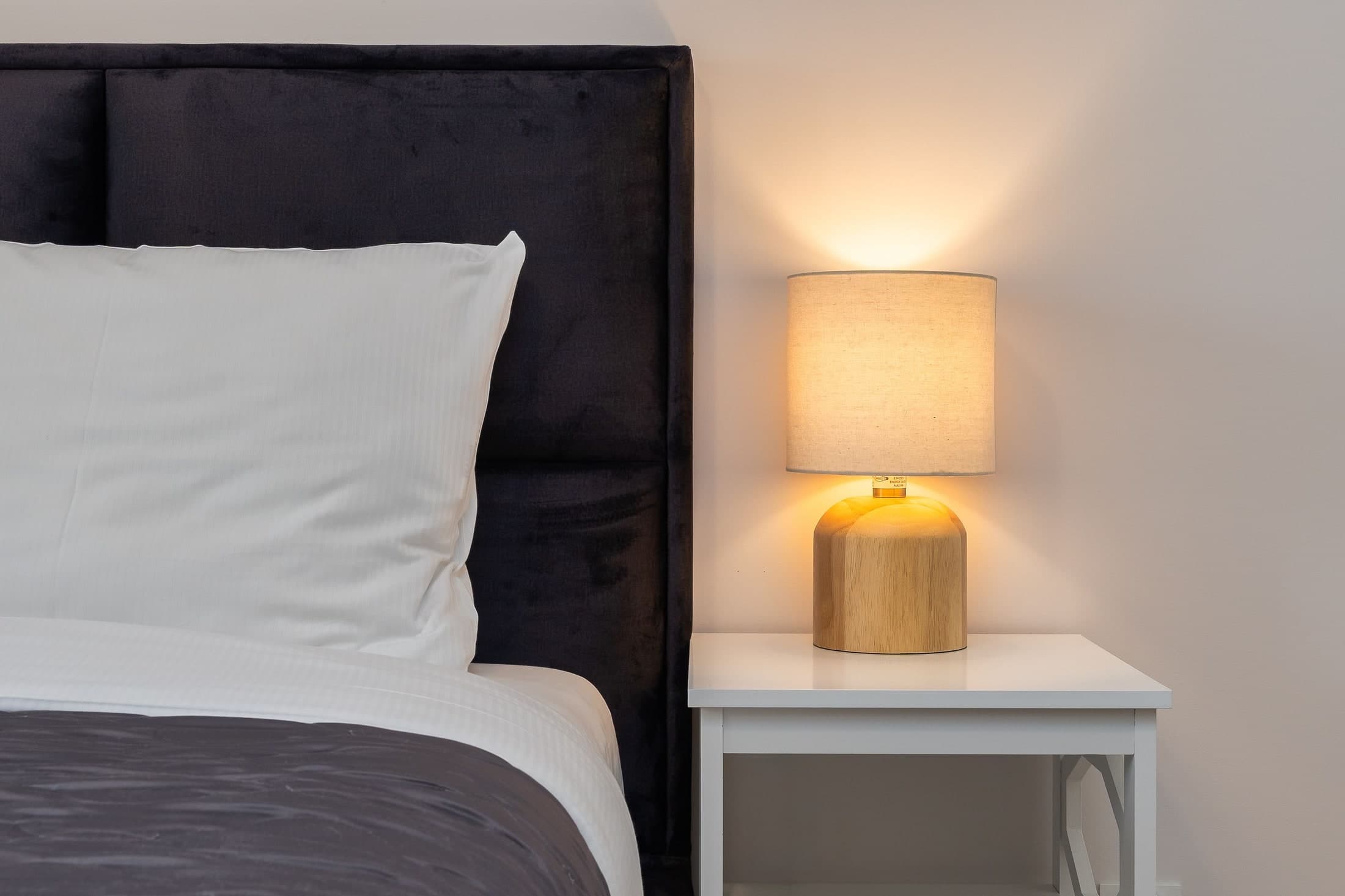
A book open after dark will tell you whether the lamp is in the right place. If your head casts a shadow on the page, move the lamp a little to one side. The shade should screen the bulb from your seated line of sight, and the switch should be within reach.
“Warm white” describes the colour of a bulb, not how much light it gives. Light output is measured in lumens; colour temperature is measured in kelvin. A warm-toned bulb can still be bright, so there is no need to choose a dim light simply to keep the room’s evening atmosphere.
A nearby socket may settle the position before anything else does. Keep the lead beside the wall, clear of the walk through the room.
Within reach
The glass coffee table is doing enough for both seats: books underneath, a surface above. That saves another piece of furniture in a room where the chair and lamp already need floor space. A reading corner does not have to come with its own little table and bookcase.
If the coffee table is a stretch away, a small side table makes sense. Try the reach from the chair before deciding on its height, and keep enough of its top free for a book and a drink. When the doorbell goes, you should be able to put down what you are reading without first finding a home for a vase.