Words Hoard & Heath
Photography Mateusz Pielech, Maria Orlova, Sami Abdullah
Can you reach the switch from bed? It is a rather ordinary question to ask of a beautiful lamp, but one worth settling before it earns a place on the bedside table. The same goes for the light itself: a room can look lovely in a photograph while leaving the page of a book in shadow.
The light on the page
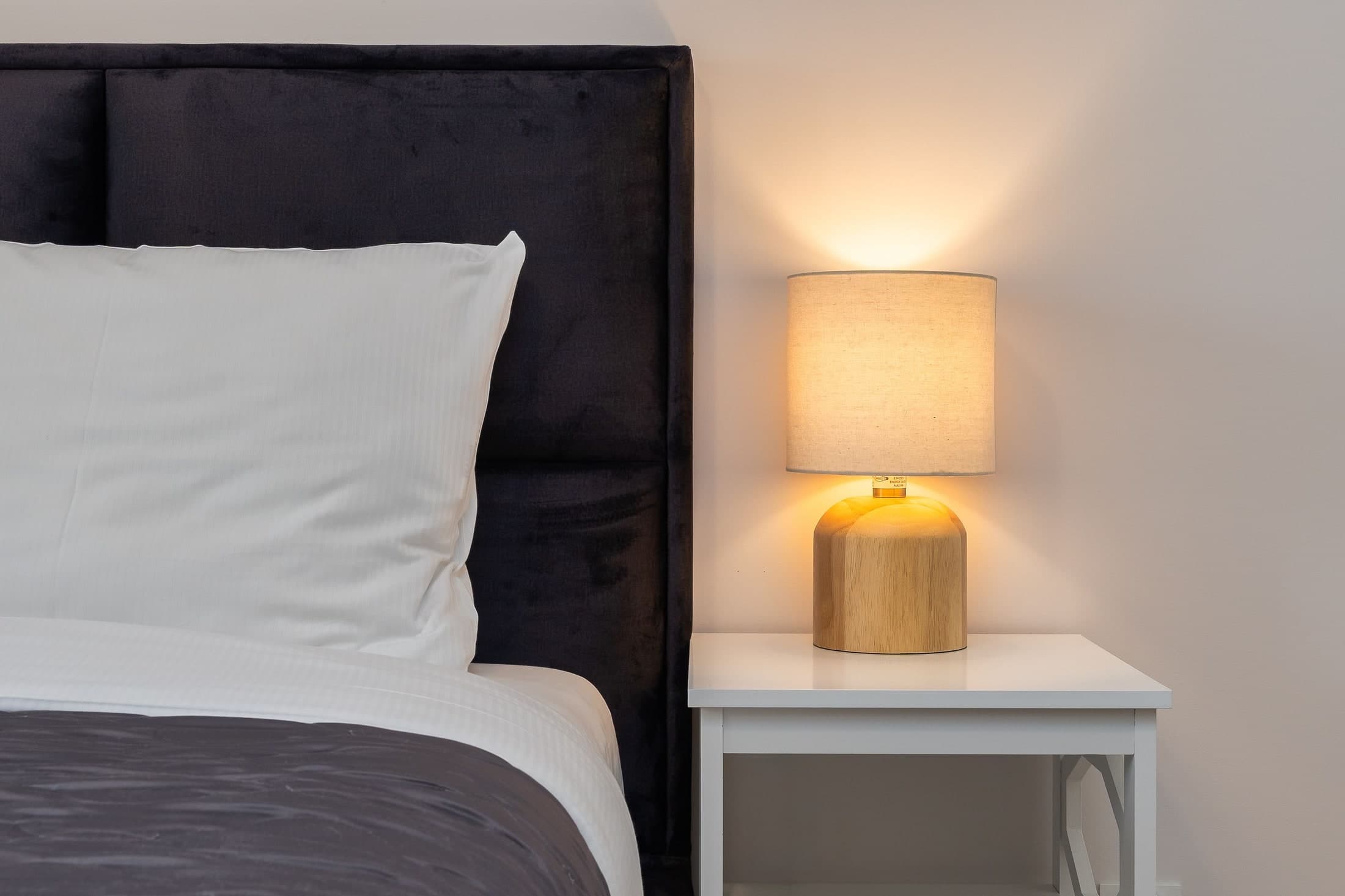
The round shade in Mateusz Pielech’s photograph sends a bright pool up the wall above a pale bedside table. Its broad base and the dark headboard give the lamp a clear outline. There is room around it, though the photograph cannot tell us how well it lights a book held against the pillows.
Make that the test when choosing a reading lamp. Sit where you usually read and hold an open book. Move the light until the page is lit without an exposed bulb in your line of sight. Check the other side of the bed too: a lamp that works for one reader may point directly at the other.
An adjustable light lets you change the direction, but it still needs a useful place to stand or attach. A wall light keeps its base off the table. A table lamp can move when the furniture does. Decide which freedom matters more before choosing a shape.
Light beyond the bed
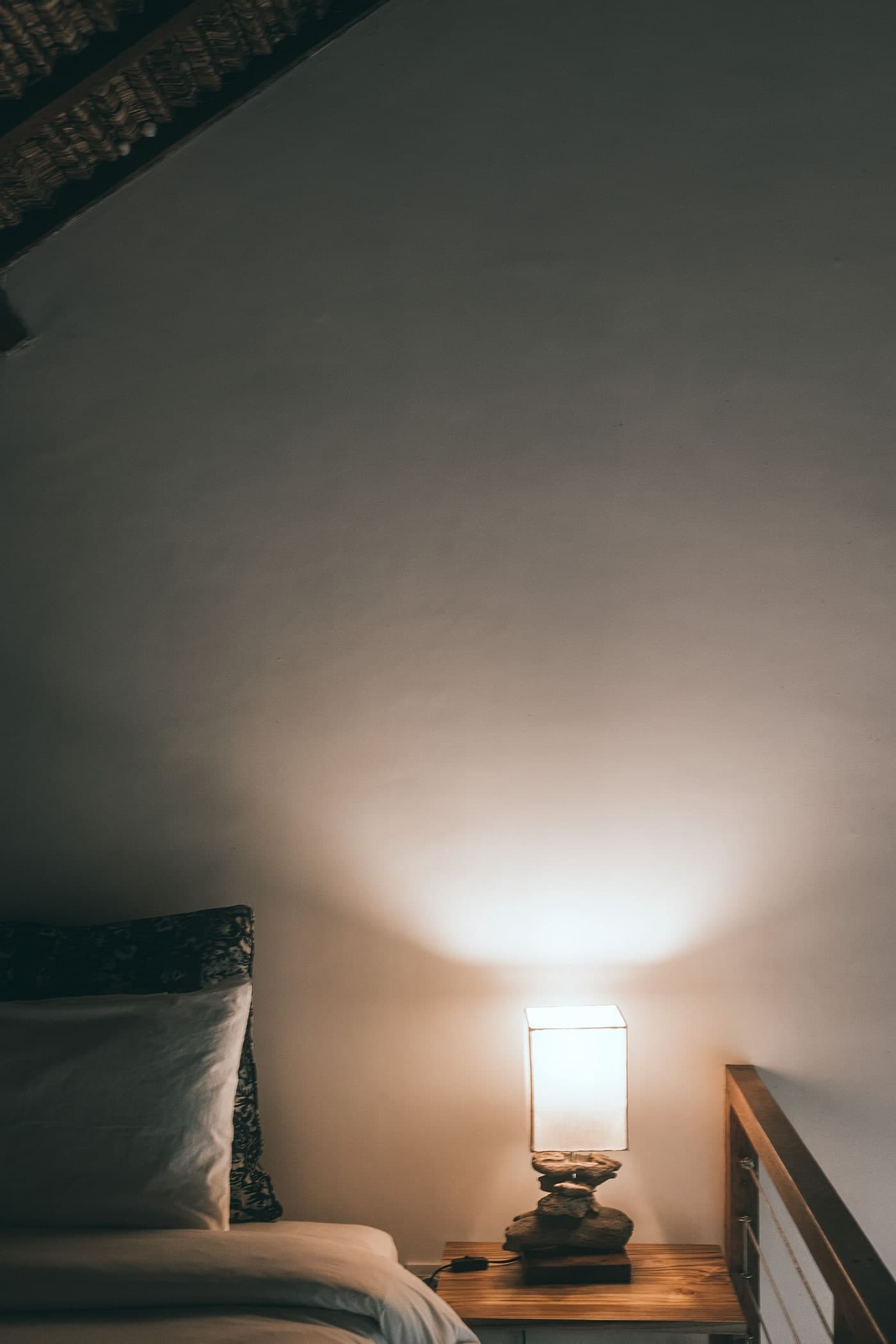
The broad patch of light above Maria Orlova’s small rectangular shade is part of the appeal. The pillows fall into shadow beside it; the bedroom is allowed to have darker areas. For the end of the evening, we would keep that contrast rather than trying to light every surface equally.
Getting dressed asks something else of the room. Light the places where you need to see: inside the wardrobe, at a drawer or beside a mirror. A bedside lamp may leave these in shadow. Make the choice from that position, with the drawer open or standing at the mirror, rather than judging the whole scheme from the doorway.
Keep a bedside light separately controllable, so a reader can turn it off without crossing the room. If a new position requires fixed wiring, plan it with an electrician before decorating; this is not a reason to trail a cable across the route around the bed.
Read the bulb box
Brightness and colour are separate choices. The Australian and New Zealand governments’ Energy Rating guide defines lumens as light output and watts as electricity use. Its warm-white example is 2,700K; lower Kelvin values describe a warmer tone. Choose the output for the task, then the colour you like. A warmer bulb does not necessarily give less light.
For an existing lamp, check the cap, bulb size and the fitting’s instructions. If you want to dim it, match both bulb and dimmer: Energy Rating notes that not all LEDs work with every dimming system.
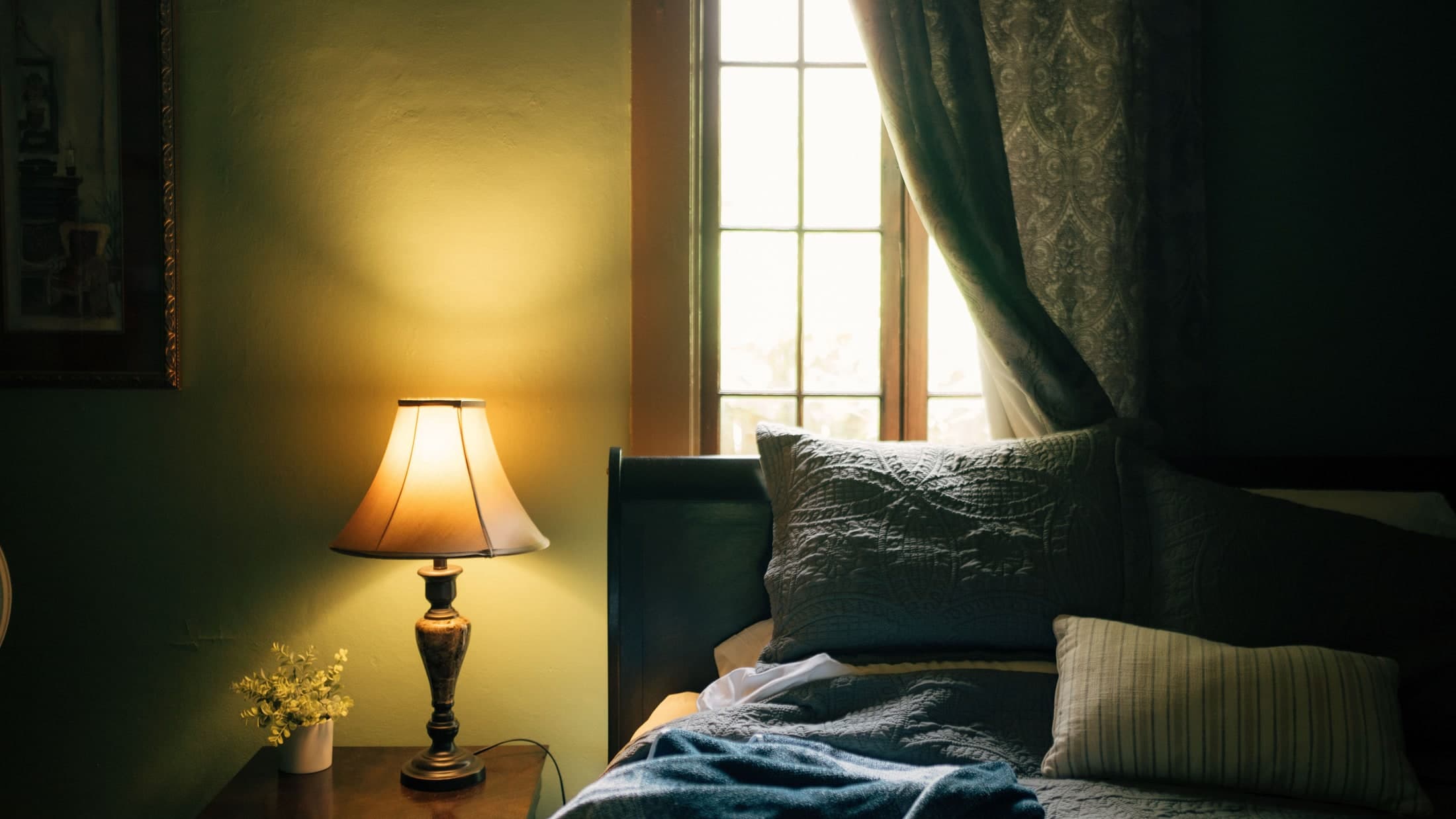
Sami Abdullah’s photograph includes both a lit table lamp and daylight at the window. Its amber-looking shade sits against dark bedding and a patterned curtain. It is an appealing combination, but it cannot show what the room looks like with the curtains closed, or tell us the bulb’s colour temperature.
Try the arrangement after dark with the lights you would actually leave on. Look at the page, the mirror and the route from the door. Then turn off the last light from where you intend to settle. There should be no need to get up again.