Words Hoard & Heath
Photography Charlotte May
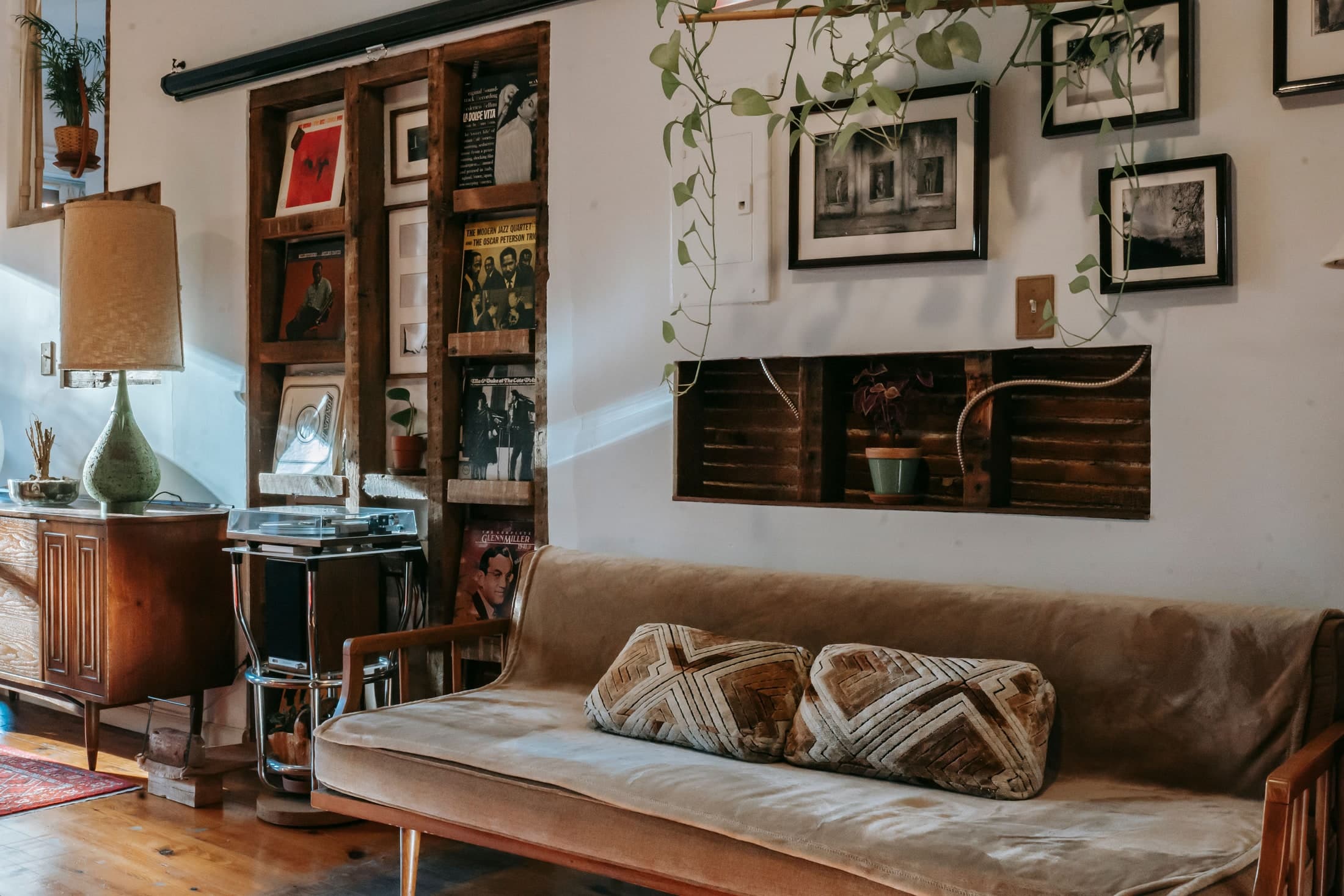
The record player is the odd one out. Its polished metal stand sits between a panelled wooden cabinet and a pale-covered sofa in Charlotte May’s photograph, adding a bright interruption to the brown timber. The open frame leaves the neighbouring pieces in view.
When an old piece is joining a new one, a connection in their shapes can be more useful than a shared style. The cabinet has a broad front divided into panels; the sofa has slender wooden arms and a long base. Both give us rectangles and brown wood to look at. Between them, the stand repeats the upright lines in another finish. The pieces have something in common without becoming a set.
That wood-and-metal pairing is our favourite detail here. Another brown cabinet in the gap would have made a much heavier group. The stand lets the white wall show through, and its bright edges draw the eye towards the record player. A difference in finish has helped one object find its place.
Start with a piece you intend to keep. An inherited cupboard might have a wide, plain front or a carved one; a new sofa can give either a broad area of upholstery alongside it. Look at what the two do together. There is little point ruling out a useful sofa because it does not resemble the cupboard. Equally, a slender chair will not be a helpful choice if its seat is too small for you.
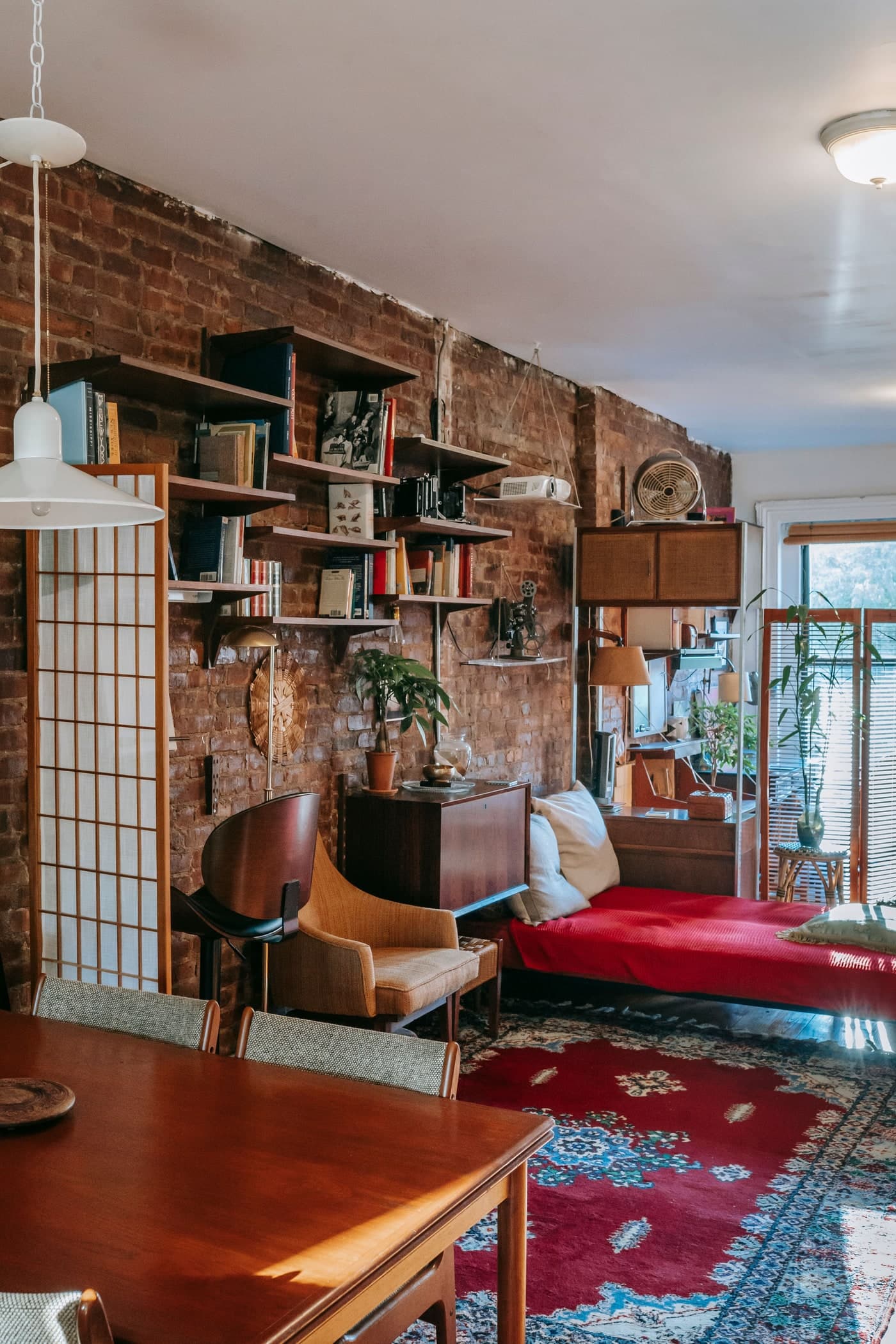
The brick-walled arrangement is fuller. Shelves step across the wall above a low cabinet, with an armchair beside it and a red-covered seat further over. The shelving and cabinet supply long horizontal lines; the chair’s rising sides break into them. The patterned rug and exposed brick bring plenty of detail already. The plain cupboard front is welcome among all that texture.
This is where scale can settle a decision that style alone cannot. A cabinet needs a stretch of wall; a chair needs space to sit and to get into it. Duncan Campbell’s account of furnishing a small cottage is useful on this point: he chose new beds and a new sofa to suit the scale of the rooms, while finding much of the rest second-hand. The things he kept and bought had different jobs.
For a room of your own, keep the actual arrangement in mind when looking at a second-hand piece. A handsome chest may still be too deep beside the sofa. Its measurements, and the route past it, deserve attention before its period does. The photographs here are useful for looking at proportion and finish; they do not establish the makers or ages of the furniture.

Beside the pale sofa, a dark, mottled lamp sits on a red-brown cabinet with an arched glazed door. Its plain shade is a relief among the framed photographs, trailing leaves and cushion patterns. That is another way to make a mixture work: let some things be simpler than their neighbours. A new lamp does not need an elaborate base just because it is going on an elaborate cabinet.
For the next addition, name the job as plainly as possible. A table has to fit where the lamp will go; a sofa has to fit the people who will sit on it. Neither needs to repeat the cabinet’s panels. An old cabinet can remain a favourite without setting the style of everything bought afterwards. Leave it something different to stand next to.