Words Hoard & Heath
Photography Maria Orlova, Tâm Cpr and furkanfdemir
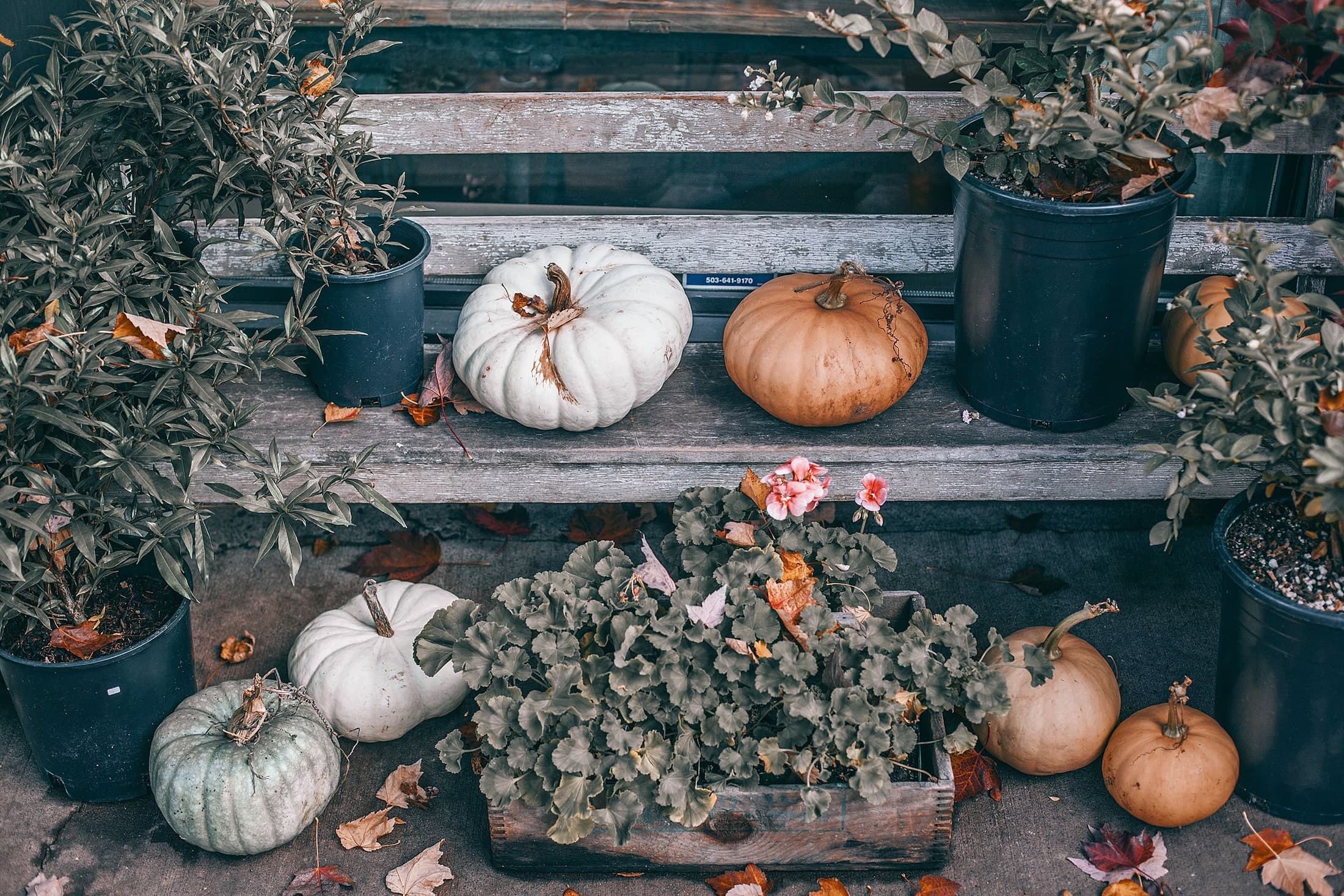
Orange and pale pumpkins occupy the weathered bench, with narrow leaves rising above them and broader foliage spilling from a low timber container. The display is crowded and cheerful. What interests me is the arrangement that would remain after the pumpkins were taken away: pots at different heights, and leaves with quite different outlines.
There is no need to replace every pot for autumn. Keep the plants you still enjoy looking at, then decide where a change would earn its place. I would spend the attention on foliage before assembling an entire harvest display. A darker leaf beside a pale pot can be enough.
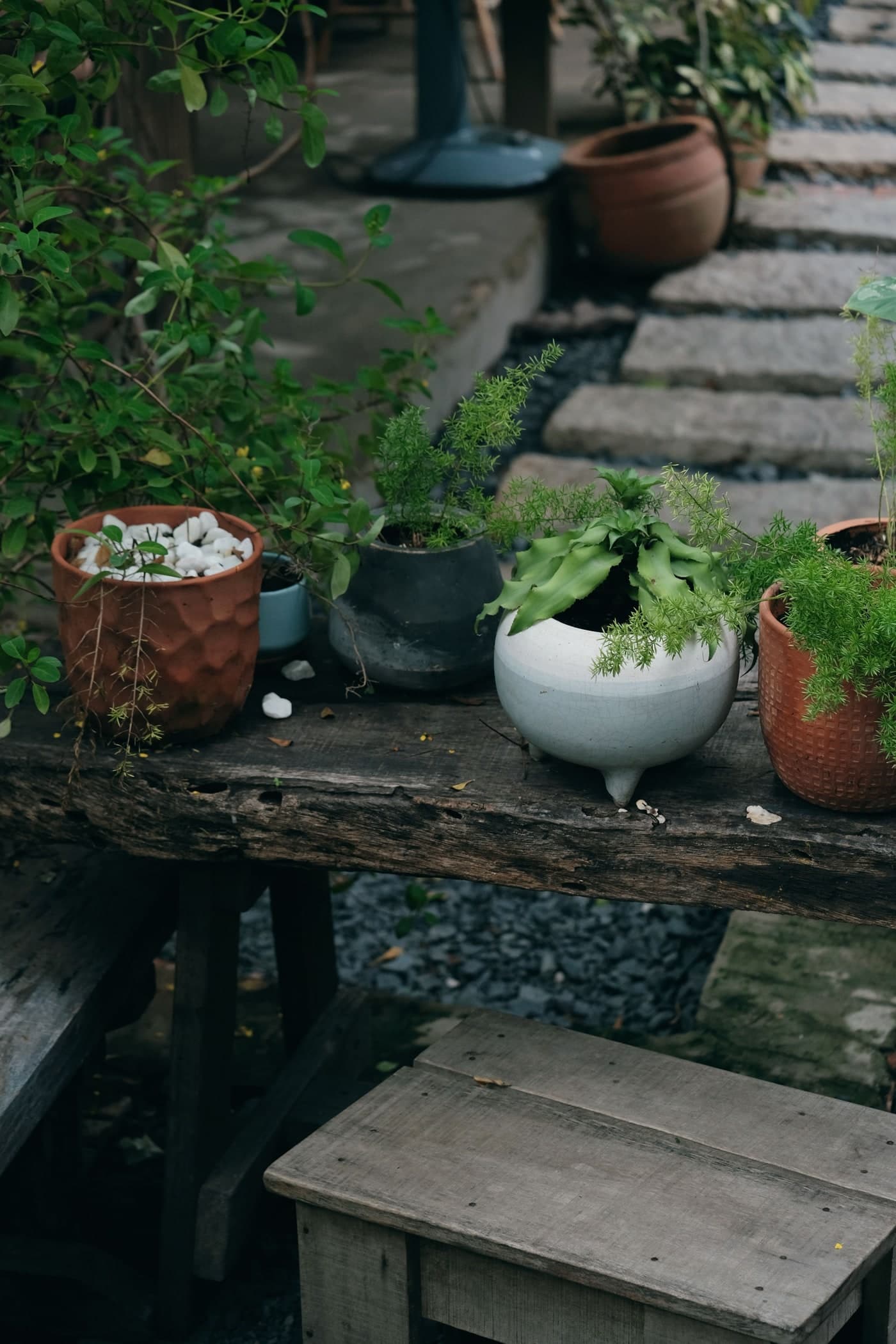
For a small garden, I would choose a few generous pots grouped together rather than a row of little ones around every edge. In Tâm Cpr’s photograph, round leaves sit beside finer sprays of foliage, with dark, pale and reddish pots on an old timber bench. The pots differ, but their close spacing lets you read them as one group. Leave part of the surface bare; there is no obligation to fill every gap.
Choose beyond the first flowers
The RHS winter-container guide suggests heucheras for evergreen or semi-evergreen foliage, small evergreen carexes for contrast, and hardy evergreen ferns such as soft shield fern for shady positions. Winter-flowering pansies and violas can flower in mild spells. Choose the species or variety for your light and conditions, rather than expecting every plant with the same common name to behave alike.
Be particular about cyclamen. The RHS notes that Cyclamen persicum is not hardy, although it may last into the new year in a sheltered position. A pot sold as an autumn display is not a promise that its contents will survive an exposed winter. Read the label before making it the permanent centre of the group.
The RHS advises starting with good-sized plants, since growth is limited in winter. For this display, choose foliage you already enjoy at the nursery rather than counting on it filling a gap later.
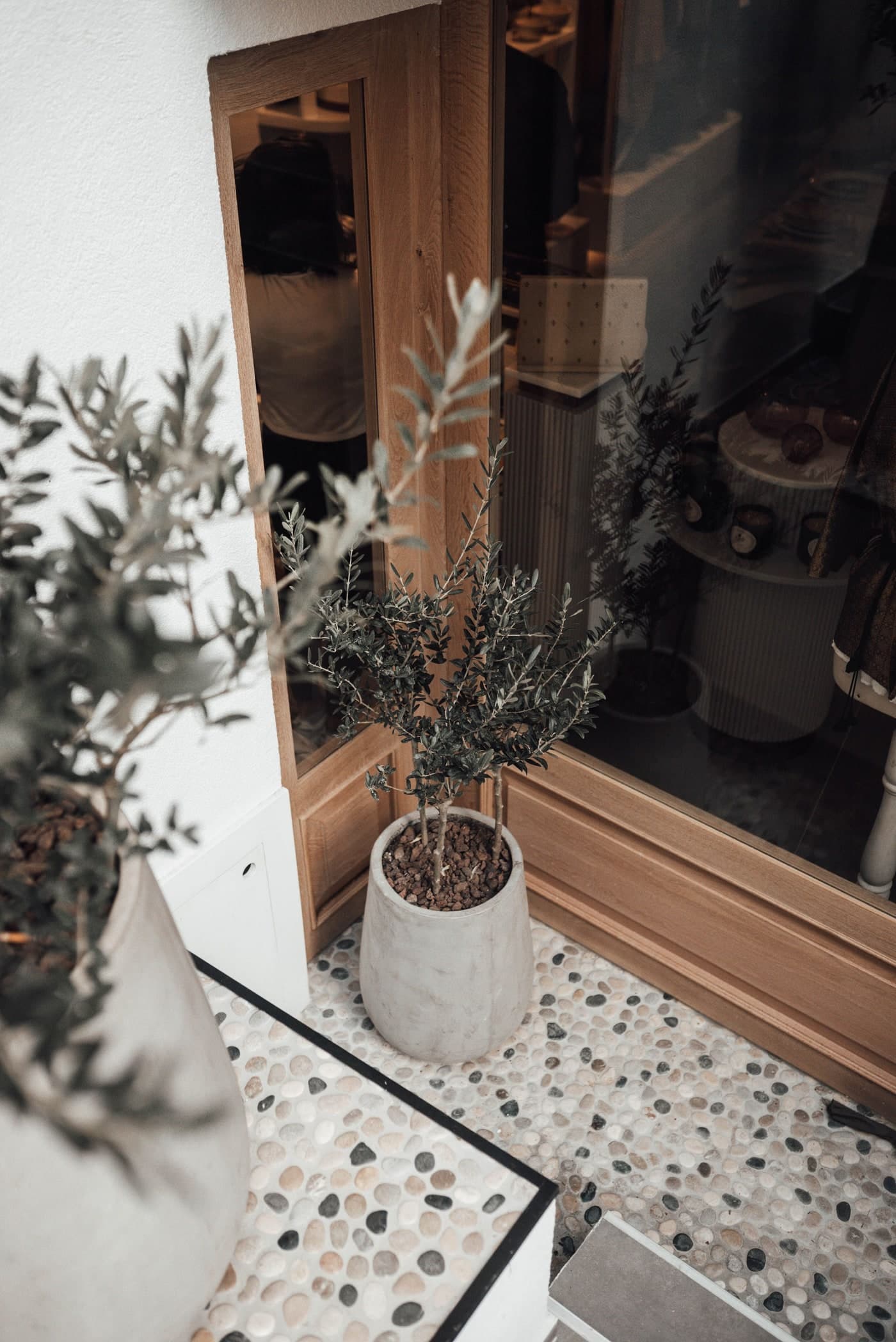
Choose a position you can enjoy from inside as well as from the path. Beside the timber-framed glazing in furkanfdemir’s photograph, a pale rounded pot gives a narrow-leaved plant a clear outline against the darker room beyond. One pot can be sufficient at a doorway. Keep the route clear and judge the plant’s eventual size as well as the pot’s diameter.
Set the pots down before arranging them closely together. Can you still open the door, pass with a watering can and reach the back container? A grouping that conceals the whole path has taken too much space. The eventual spread of the plants belongs in this calculation too.
Before the cold settles in
Give autumn containers a little practical care. The RHS advises frost-proof pots and lifting them on pot feet or bricks to help drainage. Its container-maintenance guide recommends removing saucers in winter, protecting pots or bringing them under temporary cover when needed, and checking sheltered evergreens for water. Do not assume rain has reached a pot under an overhang; equally, avoid leaving the compost sodden.
Keep checking moisture rather than watering on a fixed calendar, and avoid watering if frost is forecast. Winter feeding is unnecessary, according to the RHS. The aim is to keep the plants going, not persuade them to make a summer’s worth of new growth.
Leave some of the bench bare when the pumpkins go. The foliage will have its own outline, and you will be able to see the pots again.