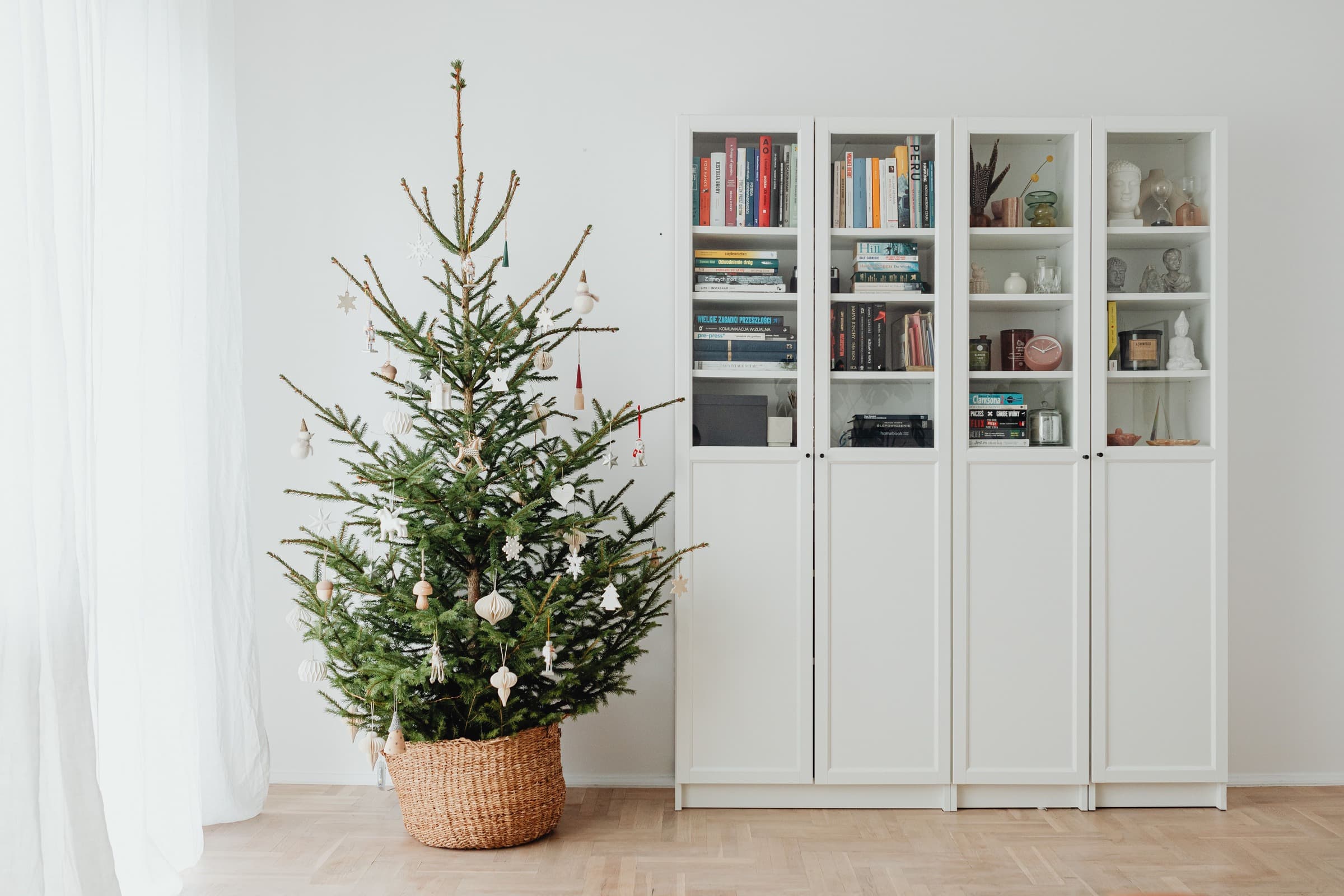
Words Hoard & Heath
Photography Stephen Leonardi, Ánh Đặng and Charlotte May
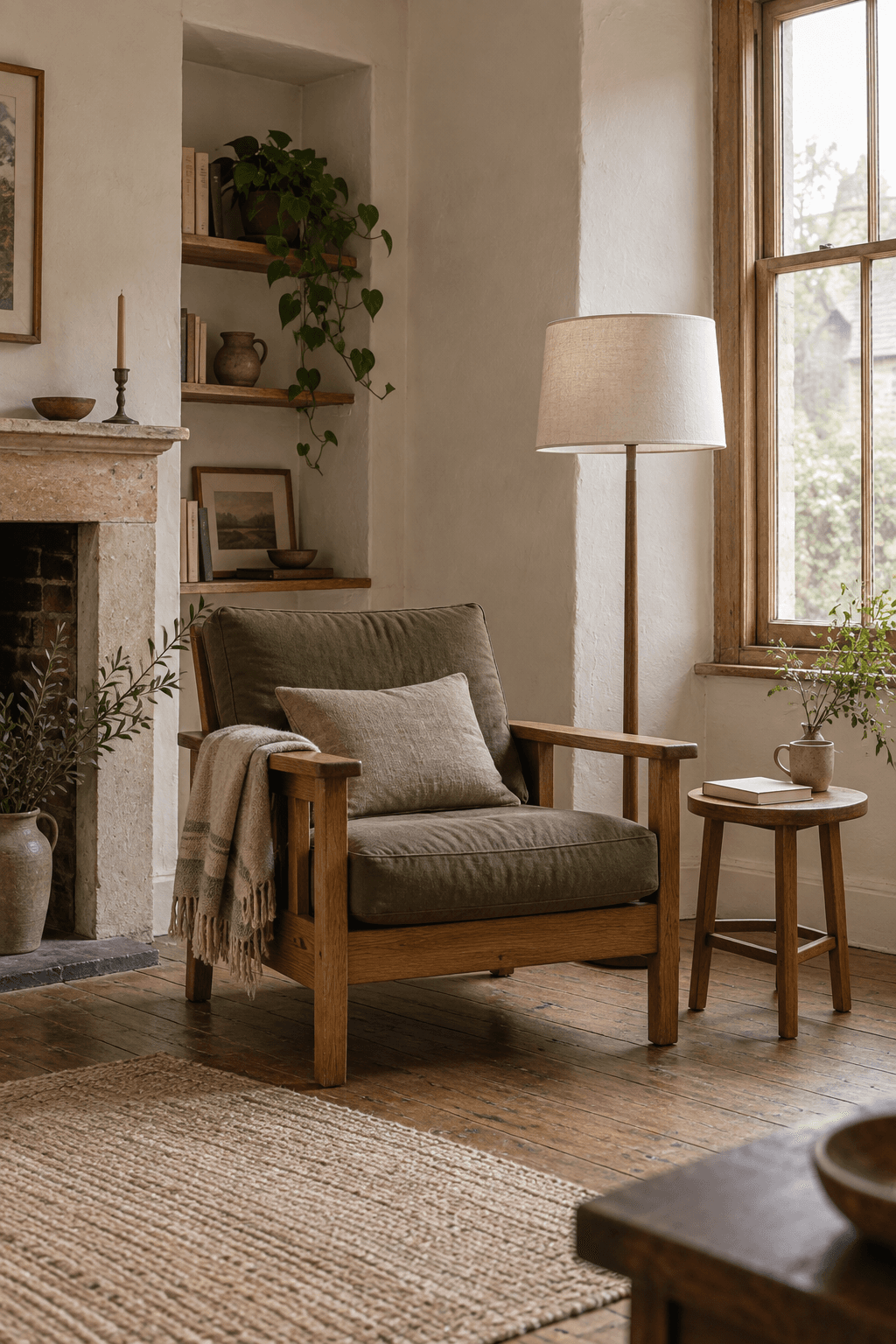
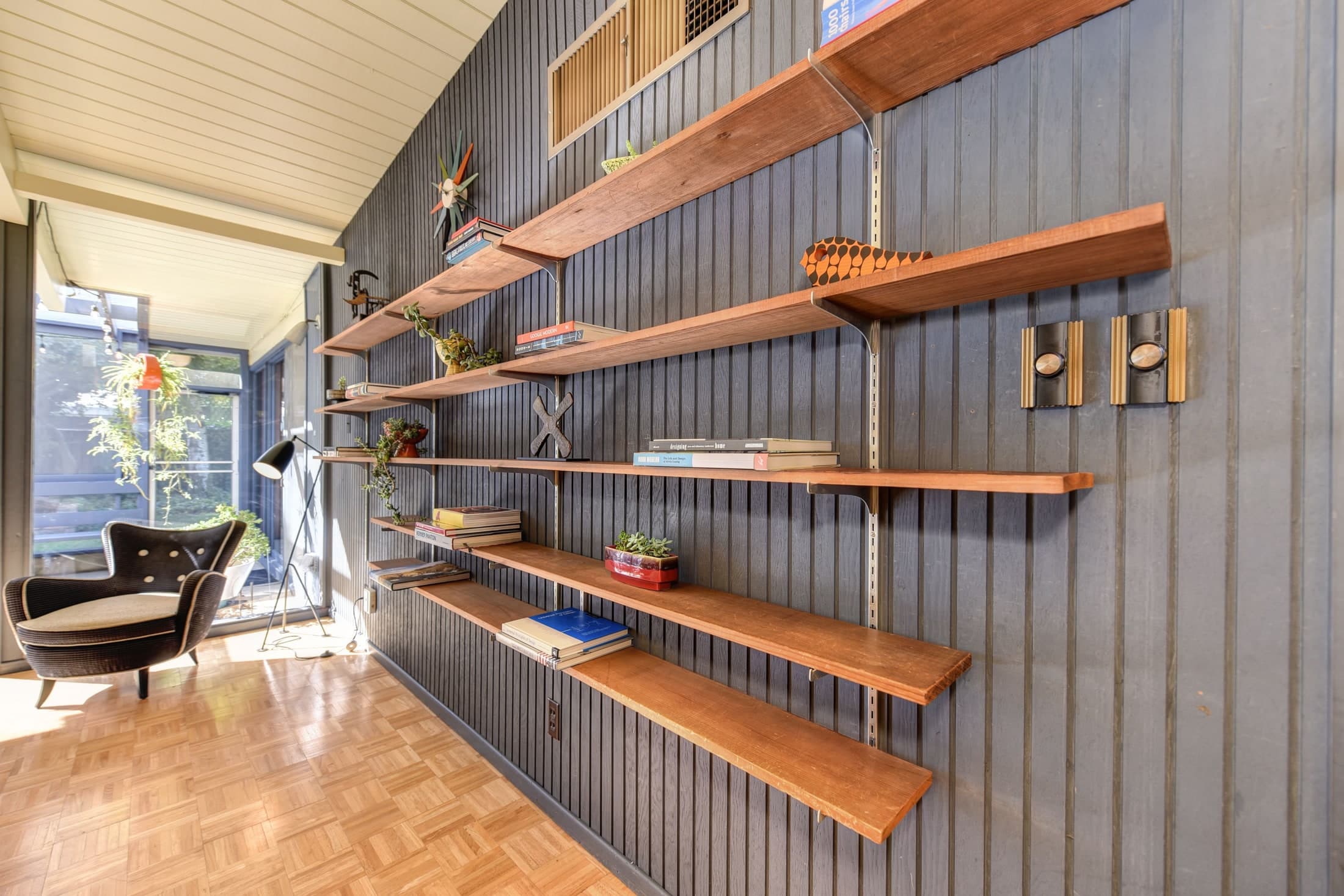
The shelves run almost the length of the wall, but books occupy only short stretches of them. In Stephen Leonardi’s photograph, low stacks sit among plants and small objects, with plenty of timber left bare. The shelving is as much a display as a store. A larger book collection would use the same wall quite differently.
Give the books their space
Count the shelf space your books need before choosing what else to put there. Tall volumes, small paperbacks and broad picture books make different groups. Try those groups on the shelves you already have, keeping the titles you look for together. Then see what room remains for a pot or a framed picture.
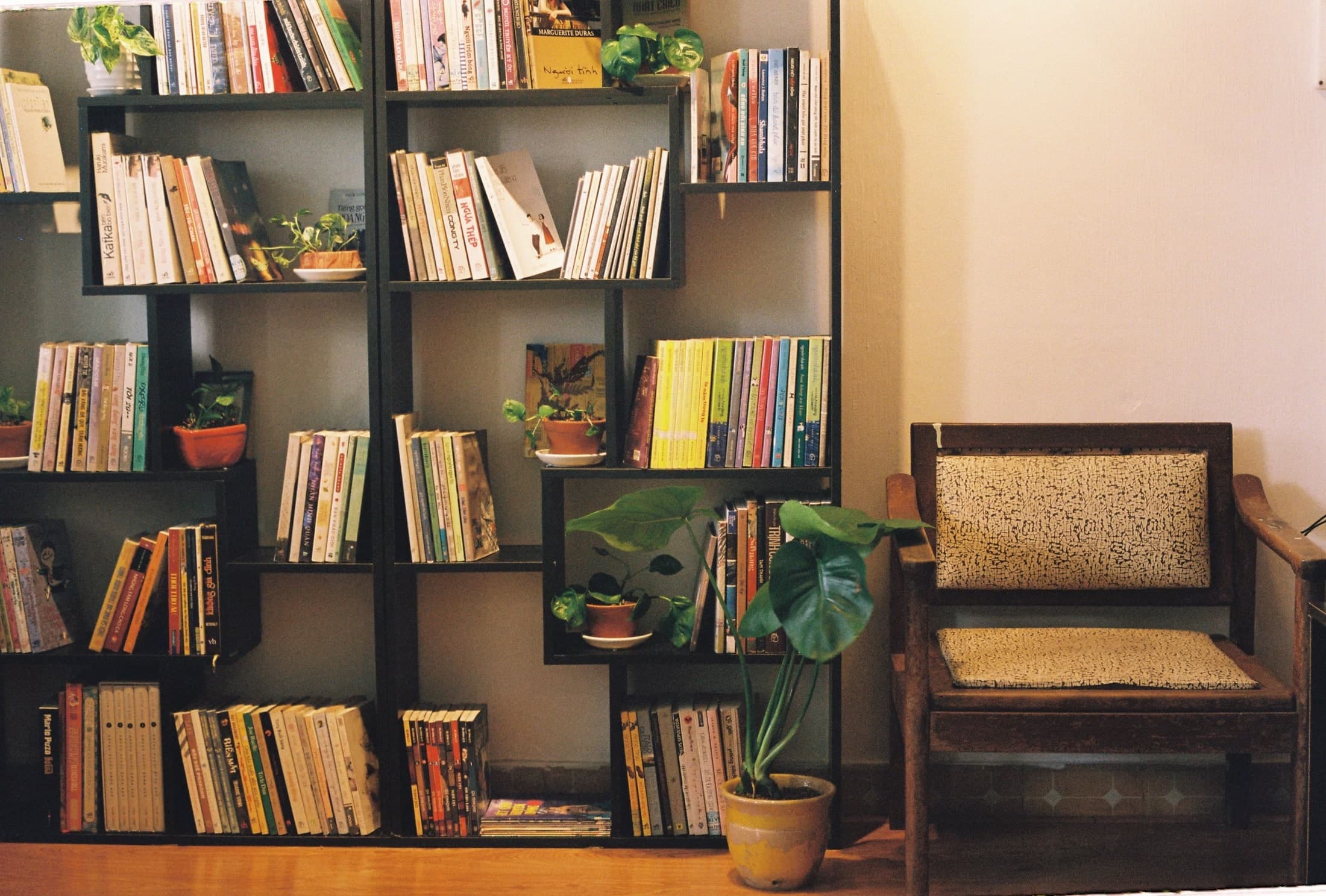
The dark frame in Ánh Đặng’s photograph makes a series of small compartments. Books stand in groups, with pots in the gaps; a broad-leaved plant reaches across the lower shelves. This is a fuller arrangement than the long timber shelves. The divisions give it a visible order without requiring every spine to be the same colour.
Some volumes in the dark bookcase lean sideways. For storage, the Library of Congress recommends upright books supported by similar-sized neighbours or bookends. Establish that support before arranging the objects around them; a plant pot need not become a bookend.
Broad books may be stored flat when the shelf supports them fully. Some stacks in the long timber arrangement project beyond an edge. Compare your largest volume with the shelf’s depth, including any adjustment needed to support its whole cover.
Look from the seat, then use the shelf
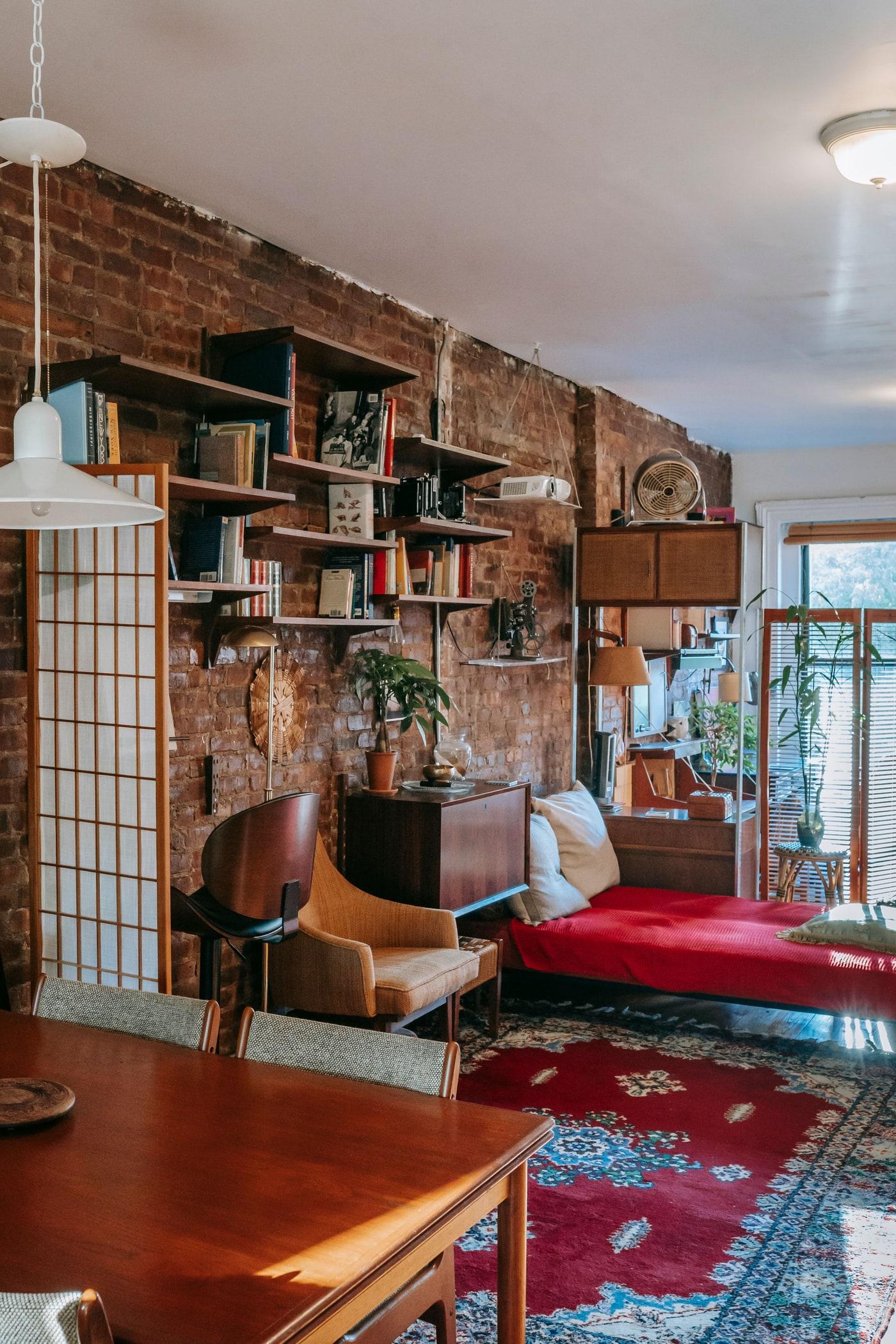
Above the seats in Charlotte May’s photograph, framed pictures and dark objects interrupt the rows of books. The brick wall remains visible between the shelves. The arrangement carries the room’s mix of shapes up the wall; it would lose some of that variety if every compartment held the same-sized row.
A chair in front of the bookcase is worth moving for this first check. Stand where you would choose a book and take one out. If the seat makes you lean across an arm or reach behind a cushion, keep the frequently used group on a clearer stretch of shelf. The display should work close up as well as from across the room.
Small plants sit between the book groups in the dark bookcase. At the bottom, a larger plant partly covers the spines. Greenery can have its own bay rather than spreading across the titles you use. Take a pot off the shelf to water it, keeping the books out of the way.
Check the light as well as the view. The Library of Congress advises keeping books out of direct or intense light. Watch where sunshine reaches the shelves before choosing a place for the collection; a bright photograph cannot establish how the light falls through the rest of the day.
On the long timber shelves, a small stack and a single object stand apart because there is bare wood between them. A fuller collection may need that space for books. Decide from the contents you have, then look from the chair again. There is no need to shop for the empty stretches.