Words Hoard & Heath
Photography Pavel Danilyuk and Lisett Kruusimäe / Pexels
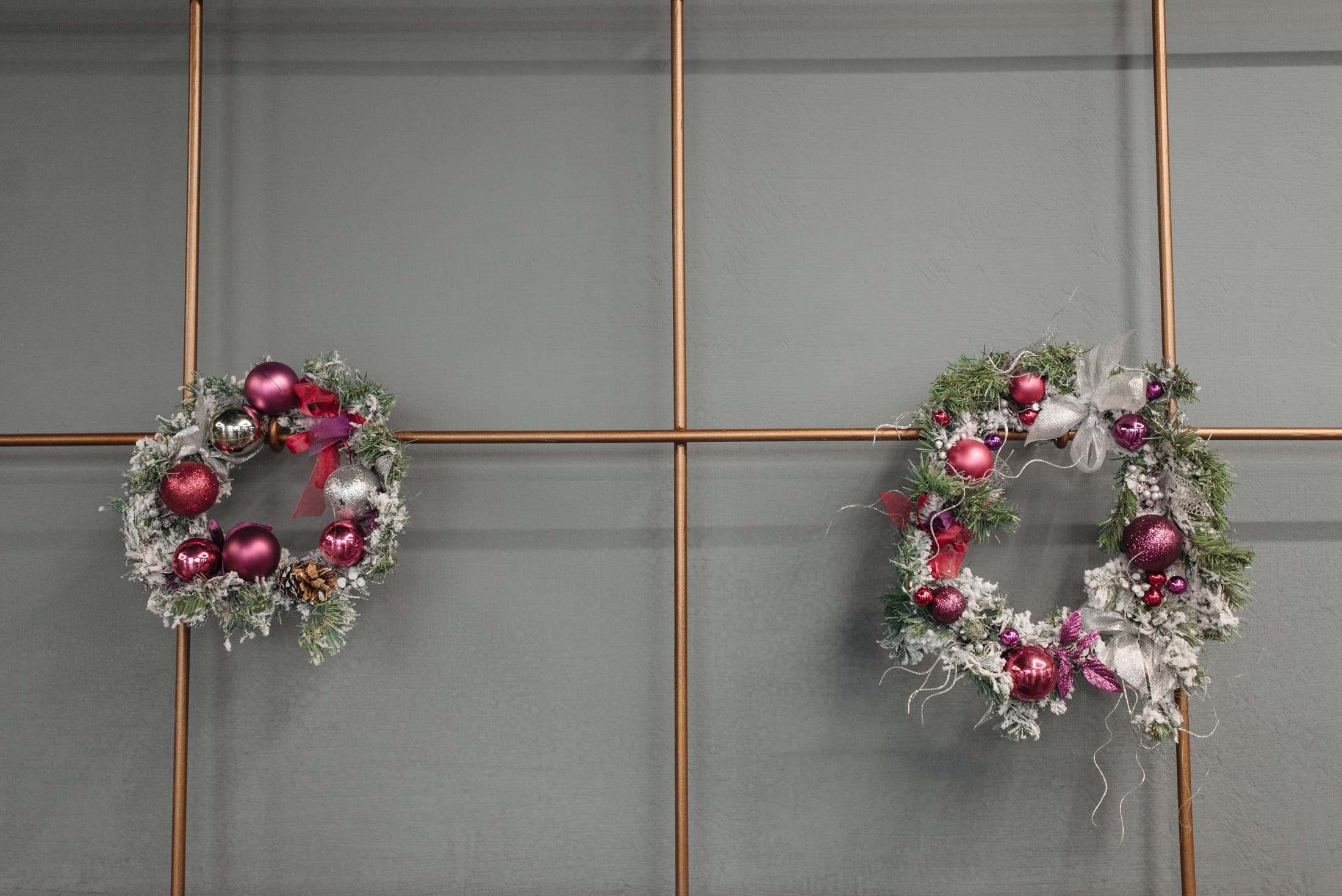
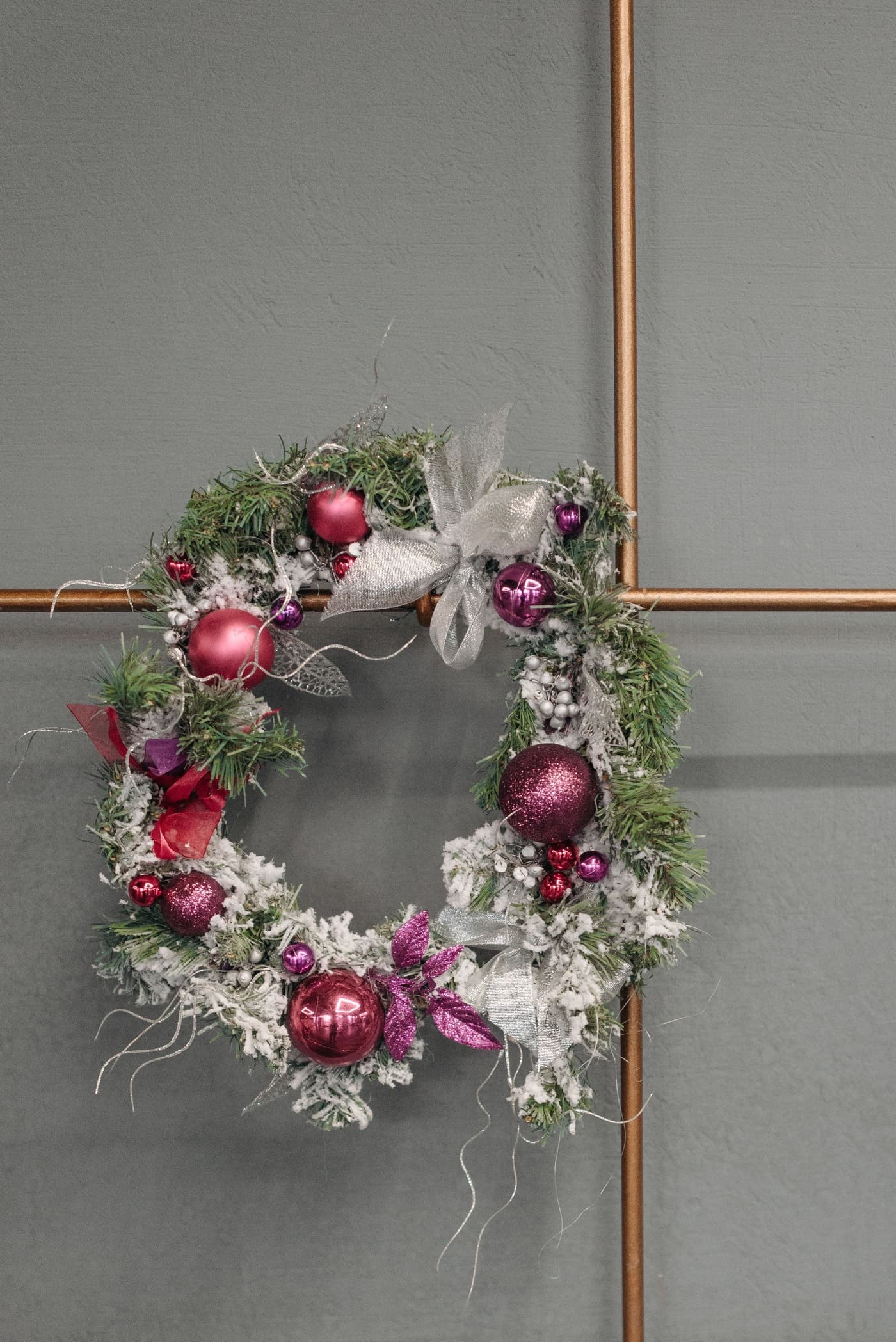
Grey wall fills the centres of these Christmas wreaths. Pink and silver baubles crowd their edges, with bows and loose strands interrupting the outlines. Behind them, a gold-coloured grid divides the wall into rectangles. In Pavel Danilyuk’s photograph, the wreaths leave plenty of that background exposed; their open centres are part of the decoration.
Start with the opening
A wreath’s outside measurement tells only part of the story. The smaller ring on the left carries several large baubles around a comparatively small opening. The larger wreath leaves more wall visible inside its outline. We prefer that more generous opening here: the baubles remain distinct, with space between the bow at the top and the decorations below. Compare the centre as well as the outer edge when choosing.
The decoration does not end neatly at the ring. In the closer view, fine silver-coloured strands and pale material reach beyond it, while a large bow projects into the opening at the top. Allow for those loose ends when judging a place between pictures or beneath a shelf. The main ring is only part of the finished outline.
Before buying, look at the proposed place from your usual seat. A paper circle of the outside size can help you judge its position, although a solid disc will look fuller than an open ring. If you already have the wreath, ask someone to hold it there while you stand back. Check the full spread, including the loosest leaves and ribbons.
Let the wall take part
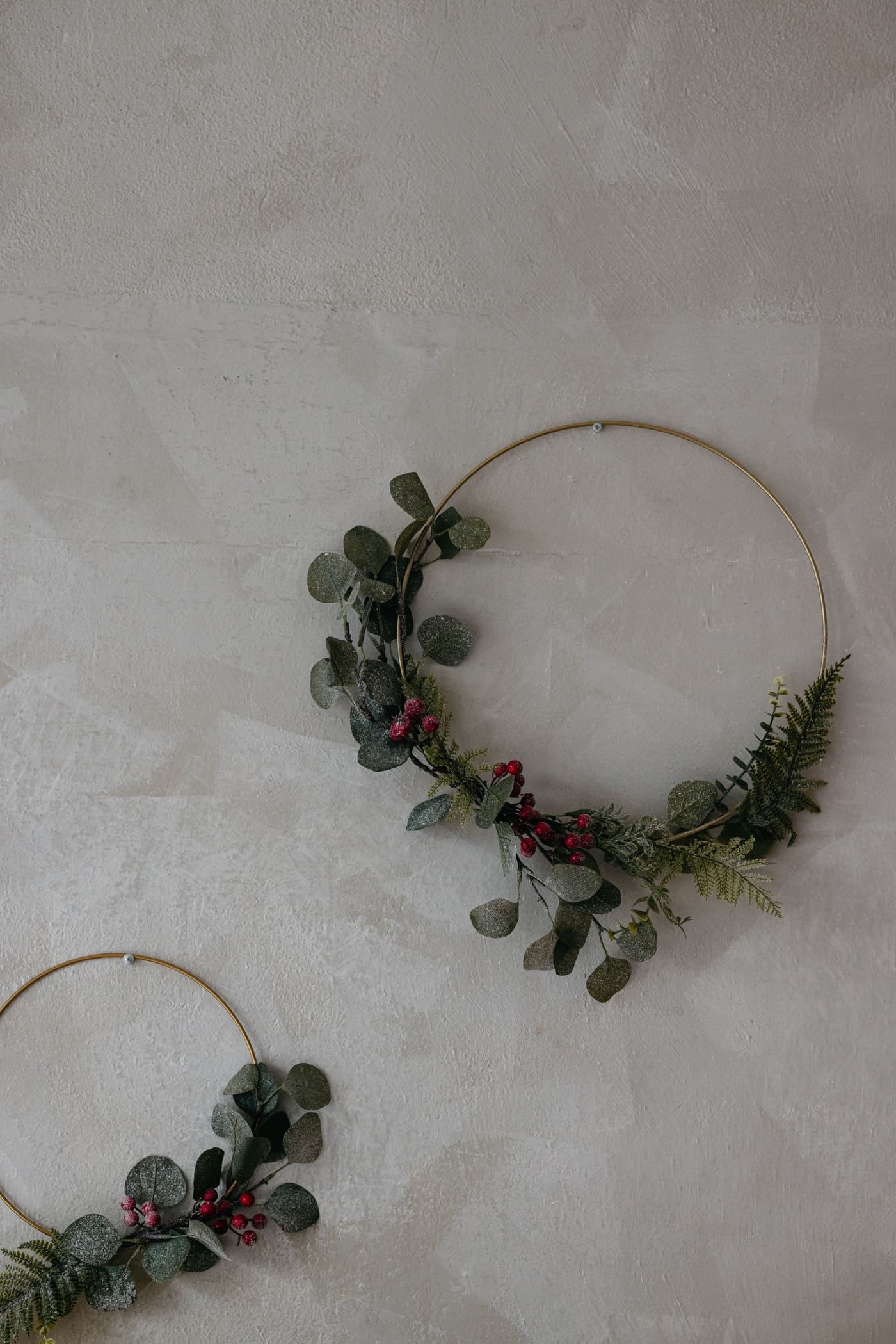
Lisett Kruusimäe’s sparse hoops leave most of their circumference uncovered. Rounded leaves and red berry-like details gather along the lower arc, with feathery sprigs reaching out. The thin gold-coloured line completes the circle. The pale wall is a large part of what you see, which makes its texture matter as much as the small decorations.
The sparse hoop suits this pale wall. Its fine line and open centre leave the uneven surface in view; the leaves gather below instead of covering the whole circle. Against a busy wallpaper, we would try a fuller wreath first, so its border can hold its own among the pattern. Look from across the room before deciding. A delicate outline that is clear close up can get lost at the other end of the room.
The wall also decides how the wreath can be supported. Choose a fixing for its finished weight and the actual surface, following the fixing and decoration makers’ instructions. For example, 3M’s Command guidance excludes delicate or paper wallpaper and describes its products as intended for smooth, solid, robust surfaces. A photograph of a wreath against a textured wall does not establish that an adhesive hook will work there.
Give a pair some space
Danilyuk’s pair repeat pink, purple and silver decorations, but the larger ring extends further down the wall. The grid behind them makes those different outlines easy to compare. Kruusimäe’s hoops repeat green leaves and red details at different heights, with a patch of bare wall between them. A shared colour gives a pair enough connection without making every detail identical.
For a group, judge the gap as part of the display. Projecting leaves and ribbons need their own outlines; put two wreaths too close and the shapes merge. Look at them with the nearby picture frames, lamp and furniture still in place. If a second wreath would fill the last clear patch between those things, leave it out.