Words Hoard & Heath
Photography Tim Douglas, Yan Krukau and Nicole Michalou / Pexels
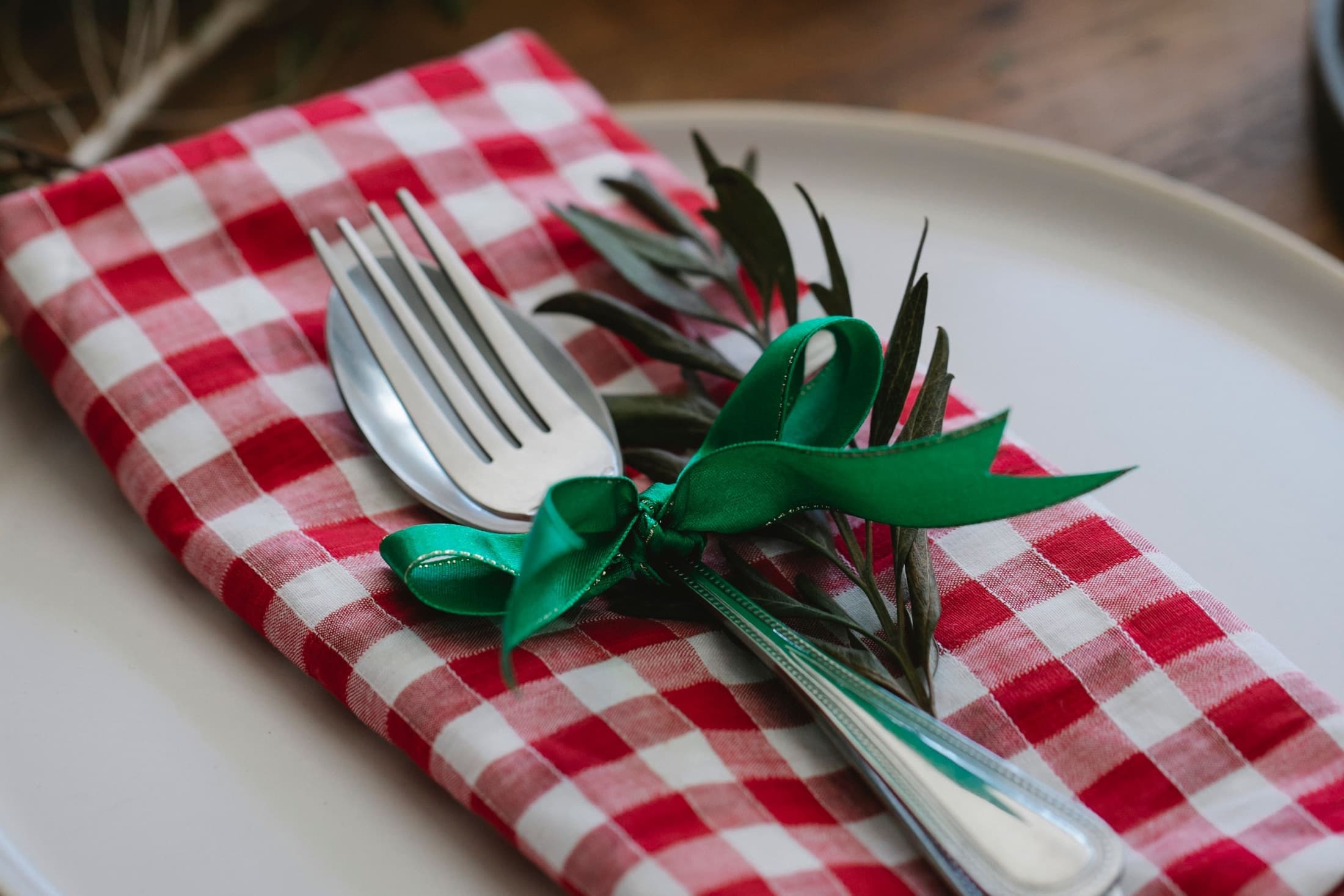
The white plate leaves the colour to everything laid on it. A red-and-white checked napkin, a green ribbon and a small leafy sprig make Tim Douglas’s place setting read as Christmas, although the plate itself carries no seasonal pattern. It is a useful place to start if the dinner service is already in the cupboard.
Try one place first
Set out one plate with the cutlery and glass you will use before choosing anything else. Put a napkin across it, then beside it. Across the middle, the cloth becomes the main patch of colour; beside it, the plate’s surface stays in view. A patterned rim deserves a different treatment from a plain white centre.
The red checks give this white plate plenty to carry. The green bow makes a distinct mark against them, while the narrow sprig adds a looser edge. We would stop there. With a patterned plate, try a plain napkin in one of its colours first; two strong patterns may hide the detail that made you keep the dishes in the first place.
A quieter version
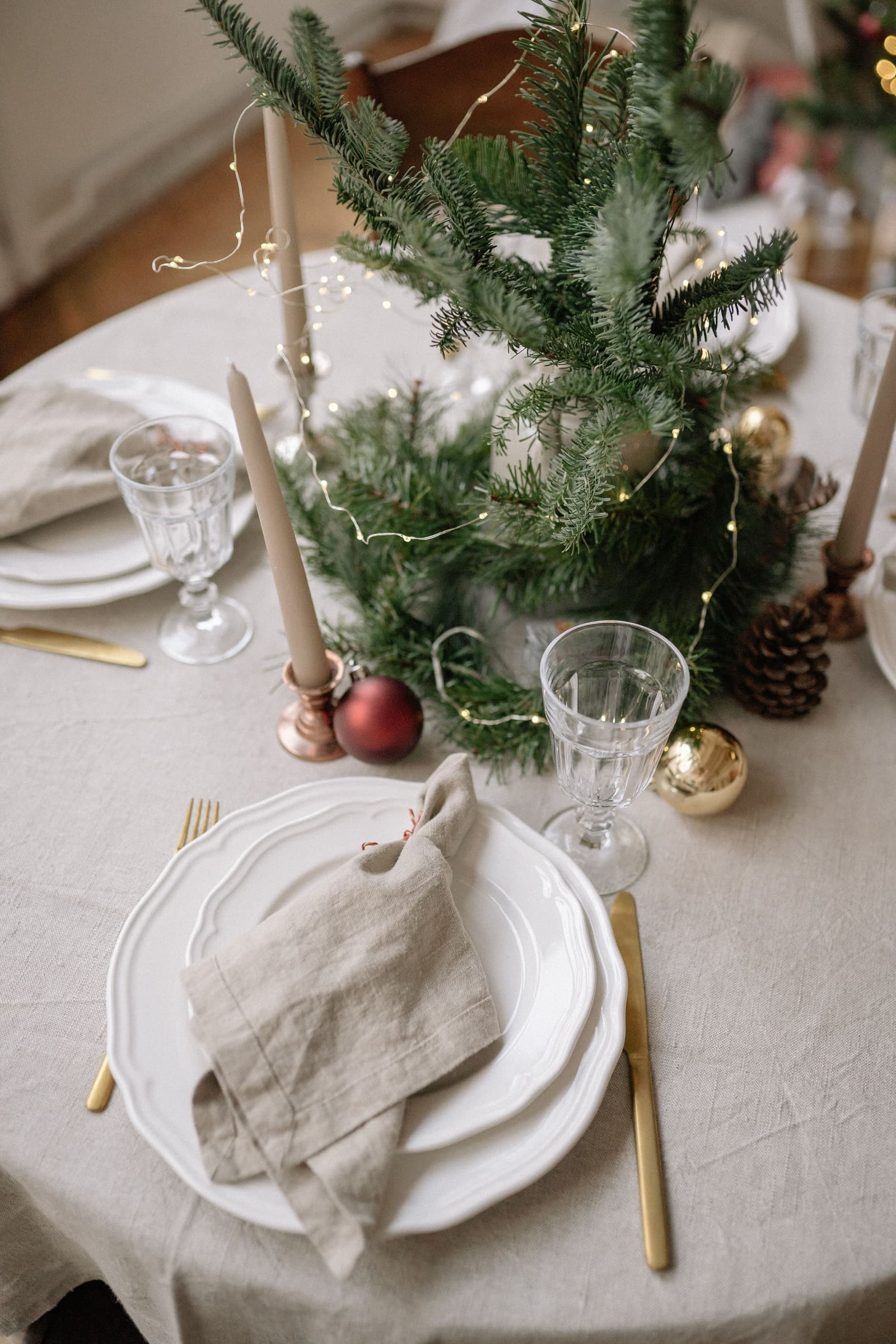
Yan Krukau’s setting keeps the napkin and tablecloth close in colour. The folded cloth lies within the white plate’s rim, leaving its shaped edge visible. This is the quieter choice: small differences in tone and the shadow of the fold take the place of the red checks. A red bauble beside the cutlery supplies a separate, compact note of colour.
Try that pale arrangement with your own glasses and cutlery in place. Clear glass and a reflective knife give the pale cloth some sharper edges. Look at it under the light you plan to eat by. The warm lighting in the dark-plate photograph gives its pale napkin a golden cast; a colour chosen in daylight will not necessarily look the same at supper.

Let the plate show
Dark plates give a pale napkin a sharper outline in Nicole Michalou’s photograph. The cloth runs beneath the smaller plate, so most of the glossy surface remains visible. A printed card and tied green ring sit on top. We like the way the light cloth crosses the dark circle; it has enough presence without another patterned layer underneath.
A repeated napkin colour or fold can connect places set with different plates. Lay out two neighbouring settings before committing to the whole table. If a broad rim disappears beneath the cloth, shift the fold; if the plates already supply plenty of pattern, let the napkins repeat a quieter colour. Keep the feature you want people to notice uncovered.
Keep decorations away from flames. The lit candles near greenery in the dark setting are not an arrangement to copy: London Fire Brigade advises keeping decorations away from naked flames and recommends flameless LED candles as a safer alternative. Choose those if you want candle-like light among a decorated table.
Before making another bow, sit down and take the napkin out. The green ribbon in the checked setting gathers the cutlery as well as the sprig, so it needs untying before the meal can begin. For an easier place to settle into, we would tie the napkin alone and leave the knife and fork loose beside the plate.