Words Hoard & Heath
Photography Kaboompics / Pexels
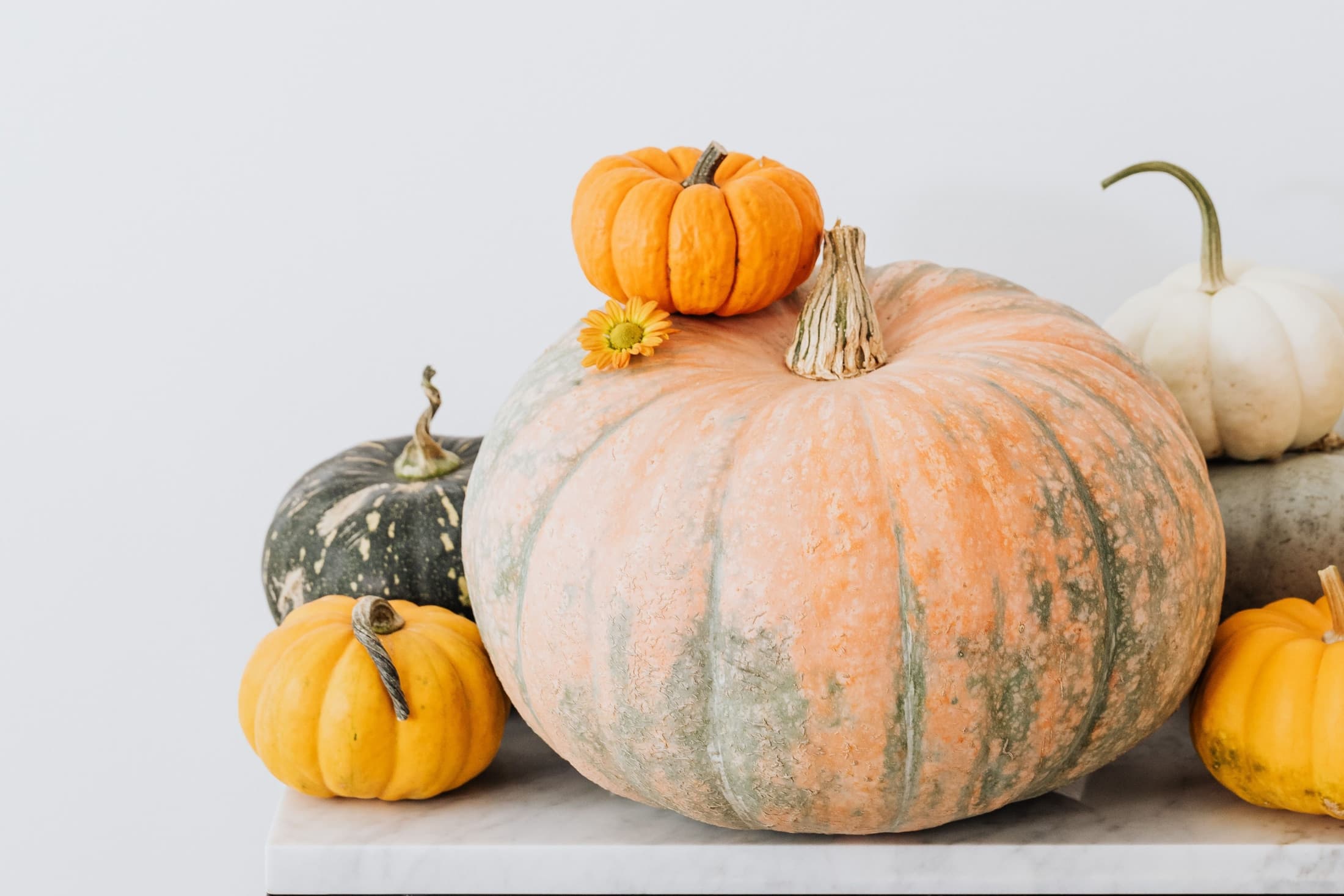
The small orange pumpkin gets the first glance. It sits on the shoulder of a much larger fruit, whose peach-coloured skin is washed with grey-green. Around them are pale, dark and yellow pumpkins, with a small flower tucked into the group. In this Kaboompics photograph, the strongest colour belongs to one of the smallest pieces.
Give one colour the lead
For a Halloween display without carving, choose which colour you want to notice first. The large pumpkin supplies most of the volume here, but its muted surface lets the brighter orange sit forward. To soften a group, remove its strongest orange first and see whether the remaining shapes still hold together. For a more distinctly Halloween arrangement, try one orange fruit among the paler ones.
Choose the background at the same time. On this pale table, the cream pumpkin nearly shares its colour with the surface; the green and orange skins have much clearer edges. Try a plain tray if the grain or pattern of your furniture competes with the fruit. Keep the choice reversible: a different surface may do more than another decoration.
A pair, or one
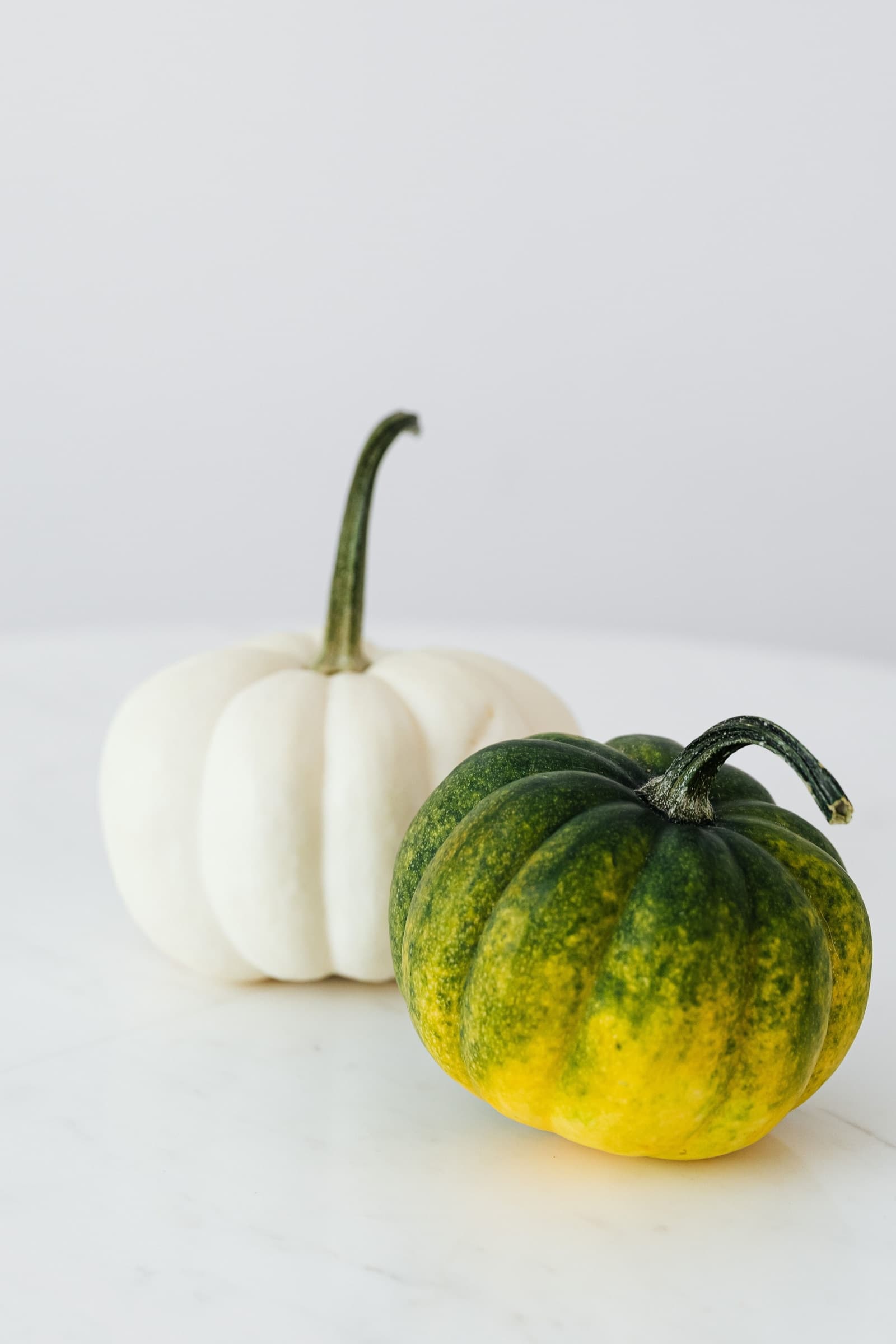
The green-and-yellow pumpkin brings plenty of pattern to a pair. Its mottled skin is full of small changes, while the pale fruit behind it has a more even surface. Their ribbed shapes connect them; their colours keep them separate. We prefer this pairing where the display needs to leave more of the surface visible.
Set the patterned fruit forward if you want it to lead. Put the two side by side to compare their outlines, then try the pale one behind again. Move the pair before adding a third: the different stems and the change from plain to mottled skin may already be enough.
One is enough
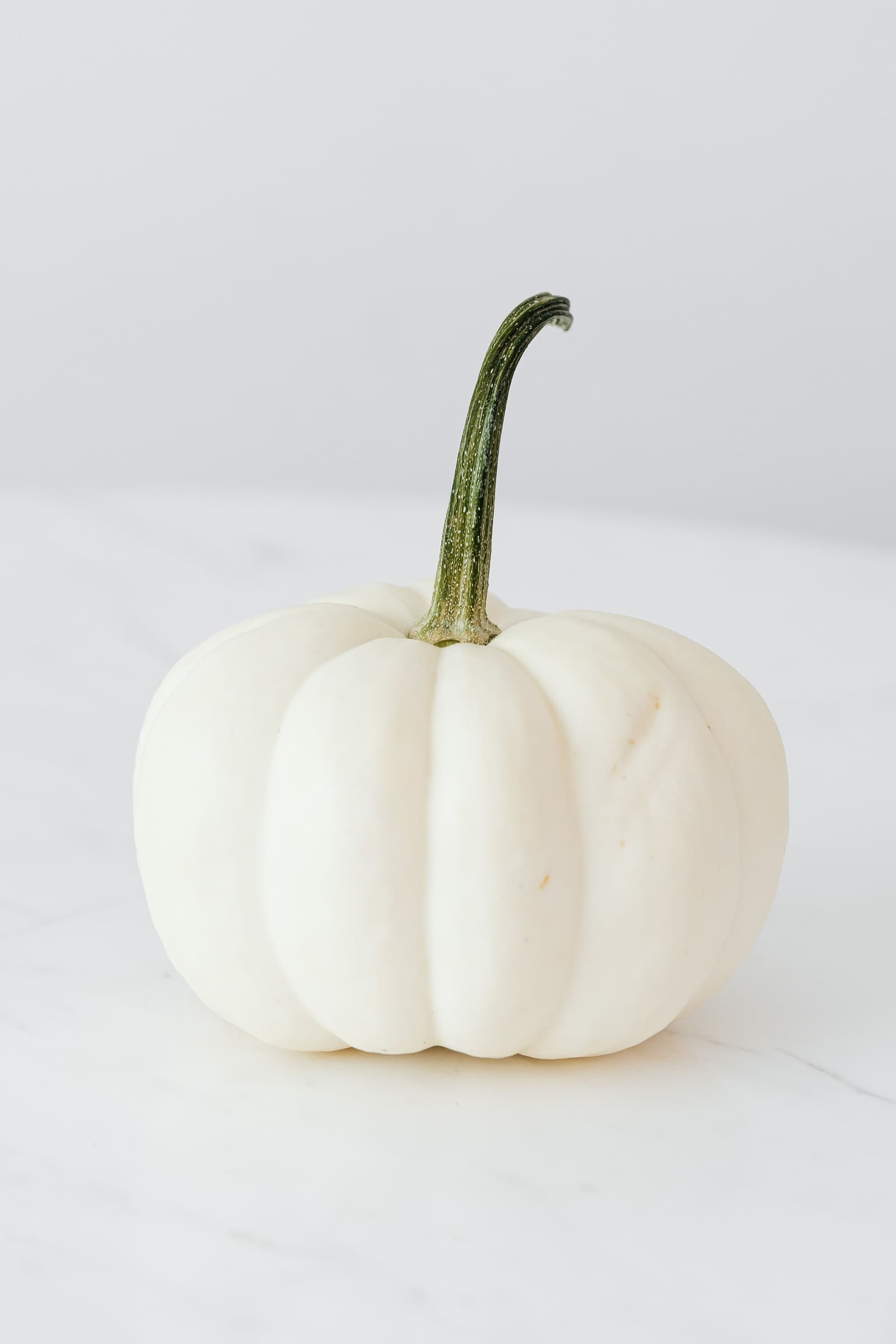
One pale pumpkin asks for a closer look. Against the light surface, its ribs appear through shallow shadows, while the curved green stem supplies the strongest line. We like it on its own: there is no decoration to compete with the bend of that stem. A large bow would cover the very detail that makes this fruit worth choosing.
The tightly gathered group is a useful colour study, but it is not a storage arrangement. The RHS recommends a well-ventilated place for storing pumpkins and winter squashes, and says to watch for rot and remove affected fruit. Keep a display accessible enough to lift and check each piece; do not assume that a warm room will give it the life of a properly stored crop.
When trying another position, support the body. The RHS warns against carrying a pumpkin by its stalk because this can damage the fruit. Turn the whole pumpkin until the stem has a clear outline, then set it down. Its crookedness is part of the display.