Words Hoard & Heath
Photography Galina Kolonitskaia, Sóc Năng Động and Tim Douglas
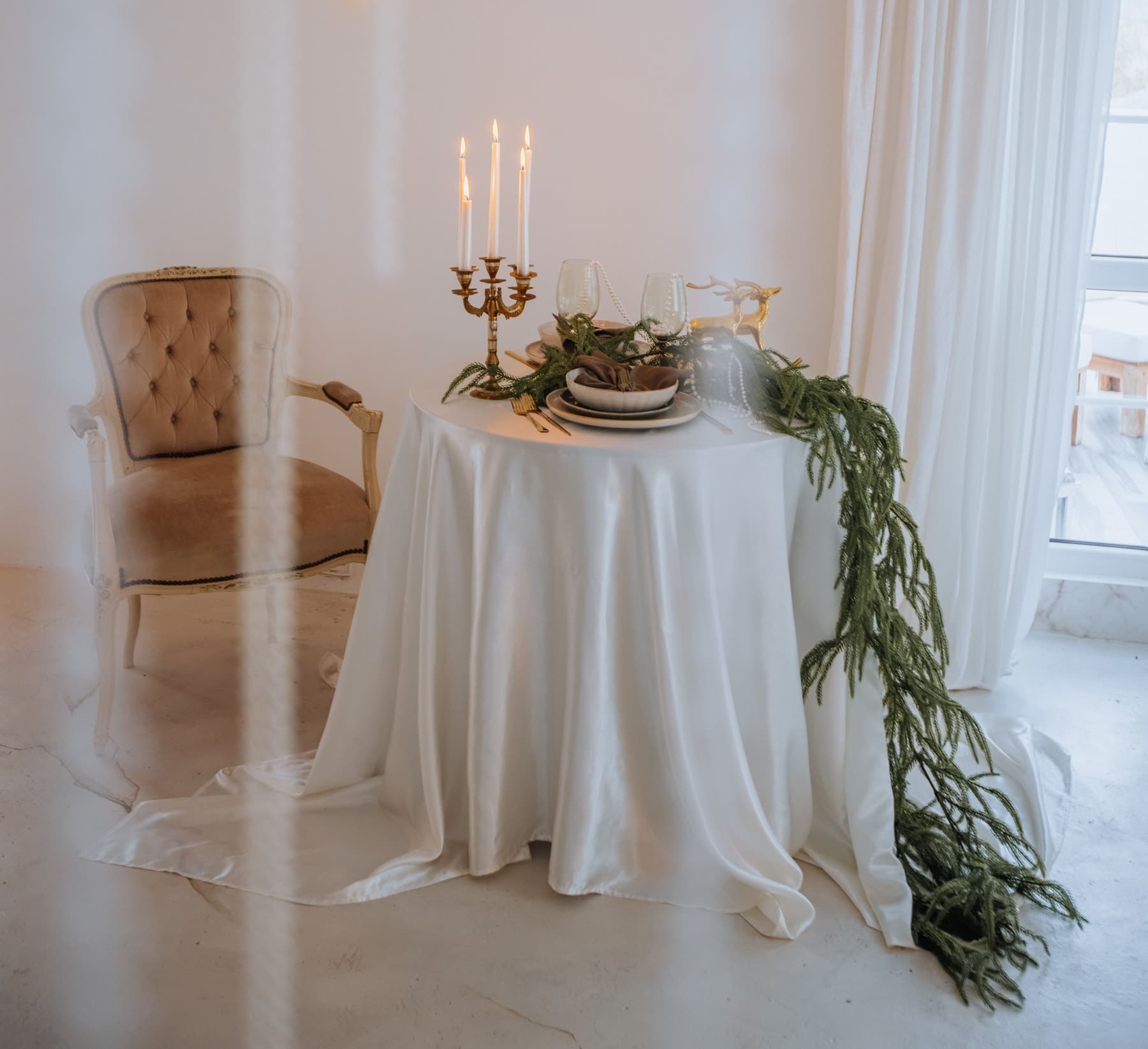
A pale cloth falls from a round table and gathers on the floor, with a long trail of greenery beside it. In Galina Kolonitskaia’s Christmas setting, the fabric hides the base and gives a small tabletop a much larger outline.
Try the drop
For a table used for dinner, we would lift the pale hem clear of the floor. Put the cloth in place, sit down and get up again. Check it at your knees and beside your feet, then pull the chair back as you would when leaving the table.
Choose the drop — the distance the fabric hangs over the edge — before shopping. Measure the table with any extension leaf in place. For a rectangular cloth, add the chosen drop twice to the tabletop’s length and twice to its width; for a round cloth, add it twice to the diameter. Try that hanging length at the chair before settling on a size.

Colour under the plates
Red covers the table and the neighbouring chair in Sóc Năng Động’s setting. The fabric makes them read as one large area of colour. We would keep the red on the table and leave the chair uncovered, so their outlines remain separate. The cloth can supply plenty of Christmas colour without everything beside it matching.
Judge the colour with one complete place laid. A cloth that dominates an empty table may become small patches between plates, glasses and cutlery. Use your own dishes for the trial, then move the serving bowls into position. Look at how much fabric remains visible.

Let some of the table show
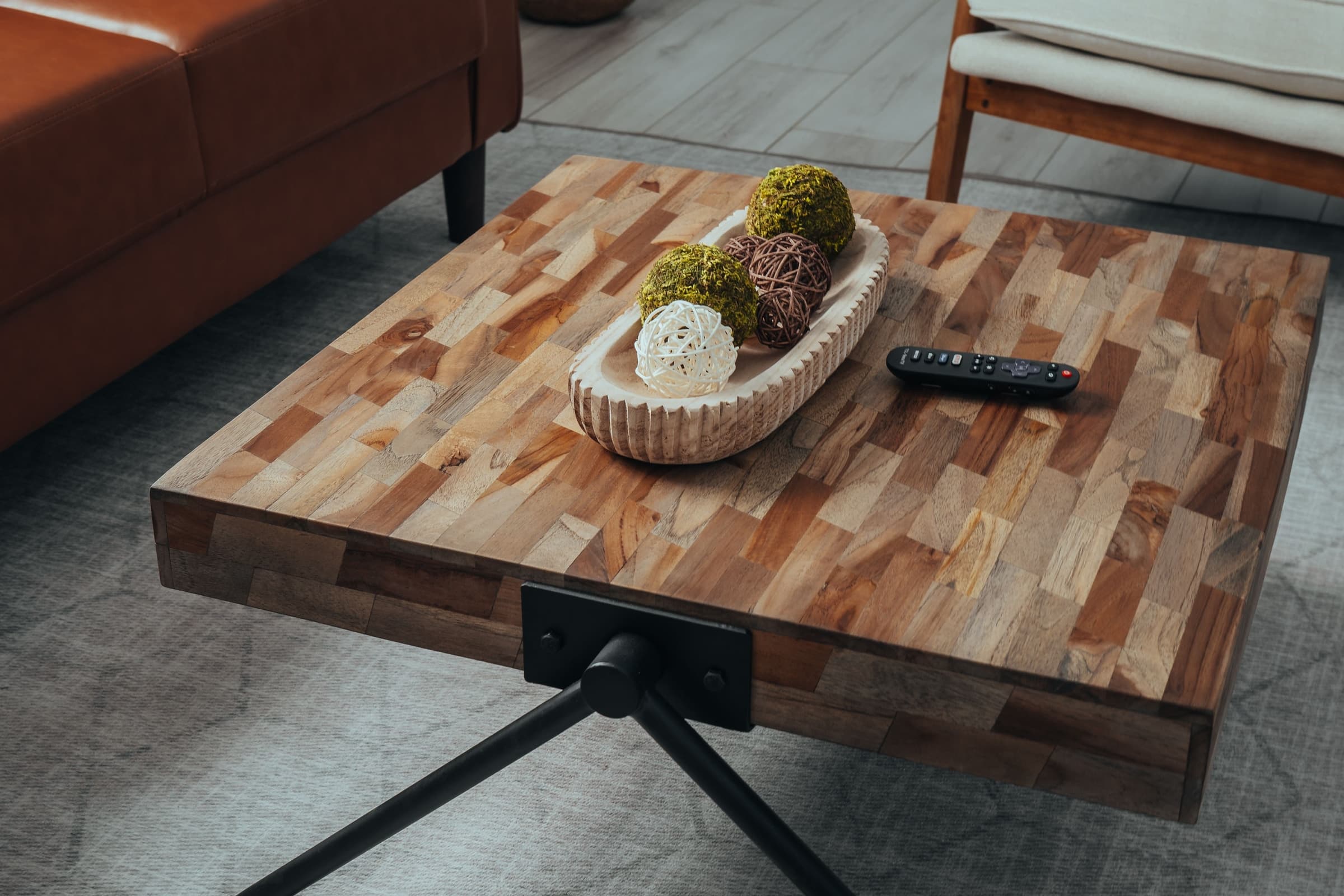
A wooden edge stays visible below the red fabric in Tim Douglas’s setting, while the pale plate stands out against the colour. The photograph does not show the fabric’s full extent. A runner offers a way to keep more of a tabletop visible while carrying a strip of colour through the setting.
Try a runner’s width with your actual plates and serving dishes. Decide which pieces will stand on the fabric and which will stand on the table. Check that glasses sit steadily, especially beside a folded edge or thick hem. Follow your table’s care instructions for protecting the exposed surface.
Keep table linen and decorations away from naked flames. London Fire Brigade recommends flameless alternatives to candles; choose one suited to its intended position when adding a candle effect among fabric and foliage.
Read the washing, drying and ironing instructions before choosing a cloth for repeated meals. LinenBeauty’s care guide says to tumble dry linen only if its label permits it. Consider how you will manage the whole cloth after dinner, including where it will dry.