Words Hoard & Heath
Photography Kateryna Hnidash, 27 1, Seferikalbiye
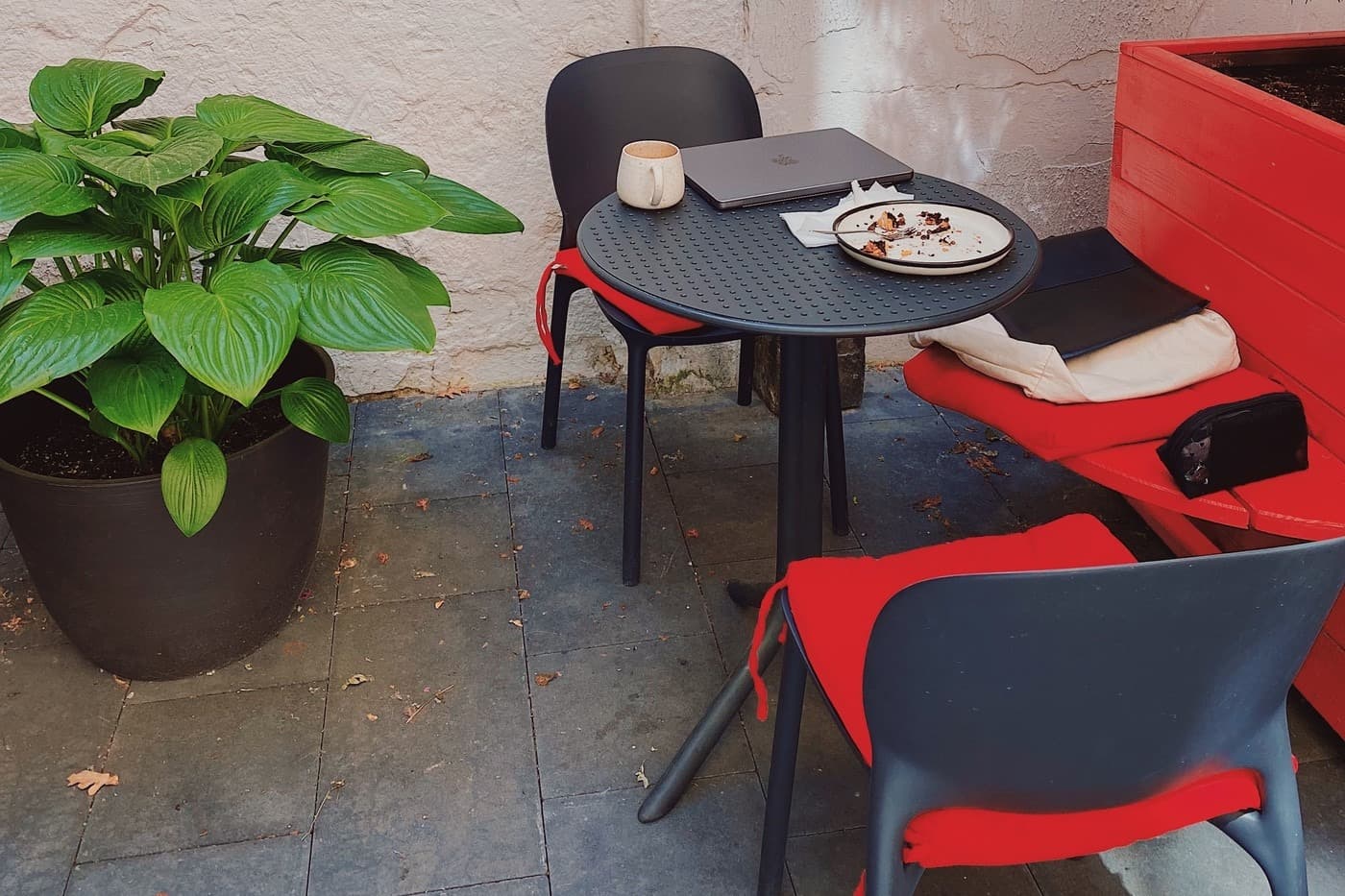
The round table is doing several jobs: there is a closed laptop, a mug and a plate with crumbs still on it. In Kateryna Hnidash’s photograph, three chairs gather between a large pot and a red planter. The tabletop occupies a small patch of the patio. The seats reach much further across the paving.
That difference is easy to miss when buying furniture for a small garden. The measurements in a catalogue look reassuring, with the chairs tucked beneath the table. Pull one back, sit down and the arrangement changes. The route that looked clear on a plan may now pass through somebody’s seat.
Mark out the table and chairs in their working positions before committing to a set. Then try the ordinary journeys: from the back door to the gate, round the end of the table, towards the pots with a watering can. Include anyone whose chair, walking aid or way of moving asks for more room. A gap is only useful if the people using this garden can pass through it.
For a patio mostly used by two people, choose the table for those two. An extra chair can come out when needed. Keeping four or six places permanently set up spends space on a gathering that may happen only occasionally.
The seat you use
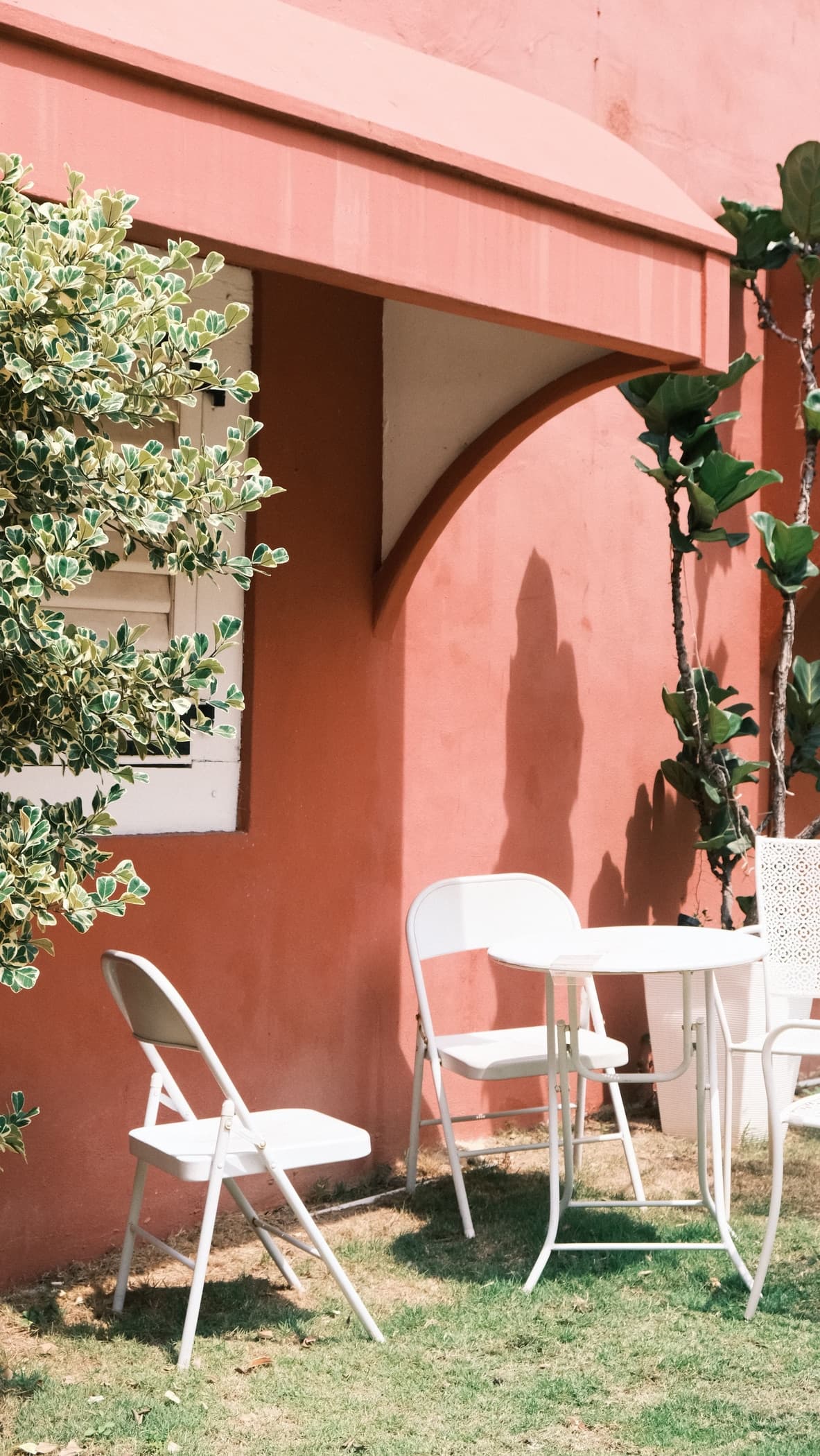
The white chairs against the pink wall have narrow frames, with grass visible between their legs. That makes the group look light, although the occupied chairs will still take up ground. A round table has no corners to catch you as you pass; it does not remove the need to get in and out of the seats.
There is also a decision to make before choosing a table at all. Eating outside calls for somewhere to set plates and sit upright. Reading may call for one chair with a back you like and a small surface beside it. Give the space to the activity you do most often. A dining set is quite a large purchase for somewhere you intend to sit alone with a book.
Try the chair in the garden at the time you expect to use it. The RHS garden-design guide recommends finding places to sit in sun or shade, with changing seasons in mind, and considering removable or foldaway seats for small spaces. A chair you can move lets you test a position before paying for a permanent arrangement. Check that its feet sit steadily on the surface you have, and that moving it is manageable for you.
Leave a way into the planting
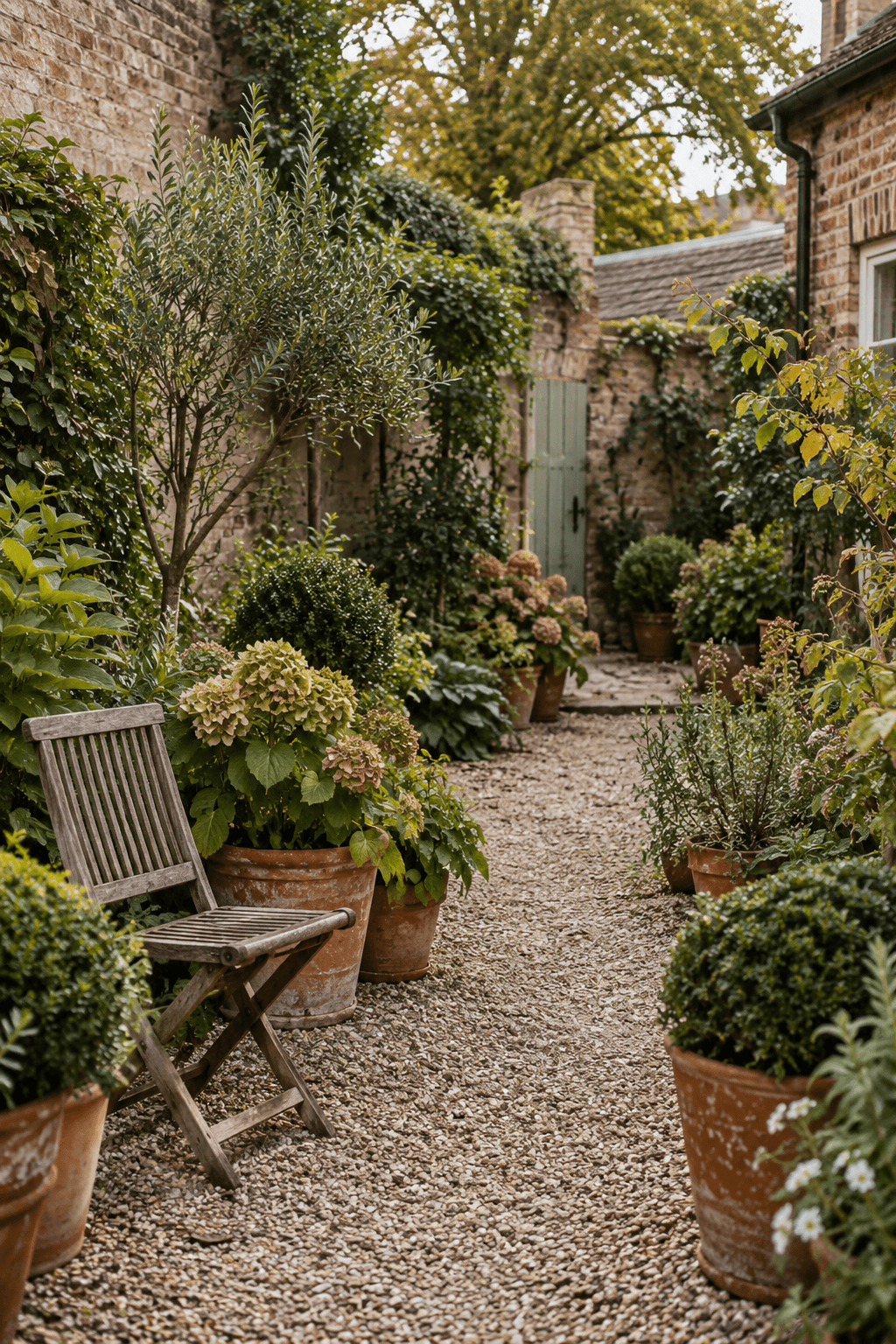
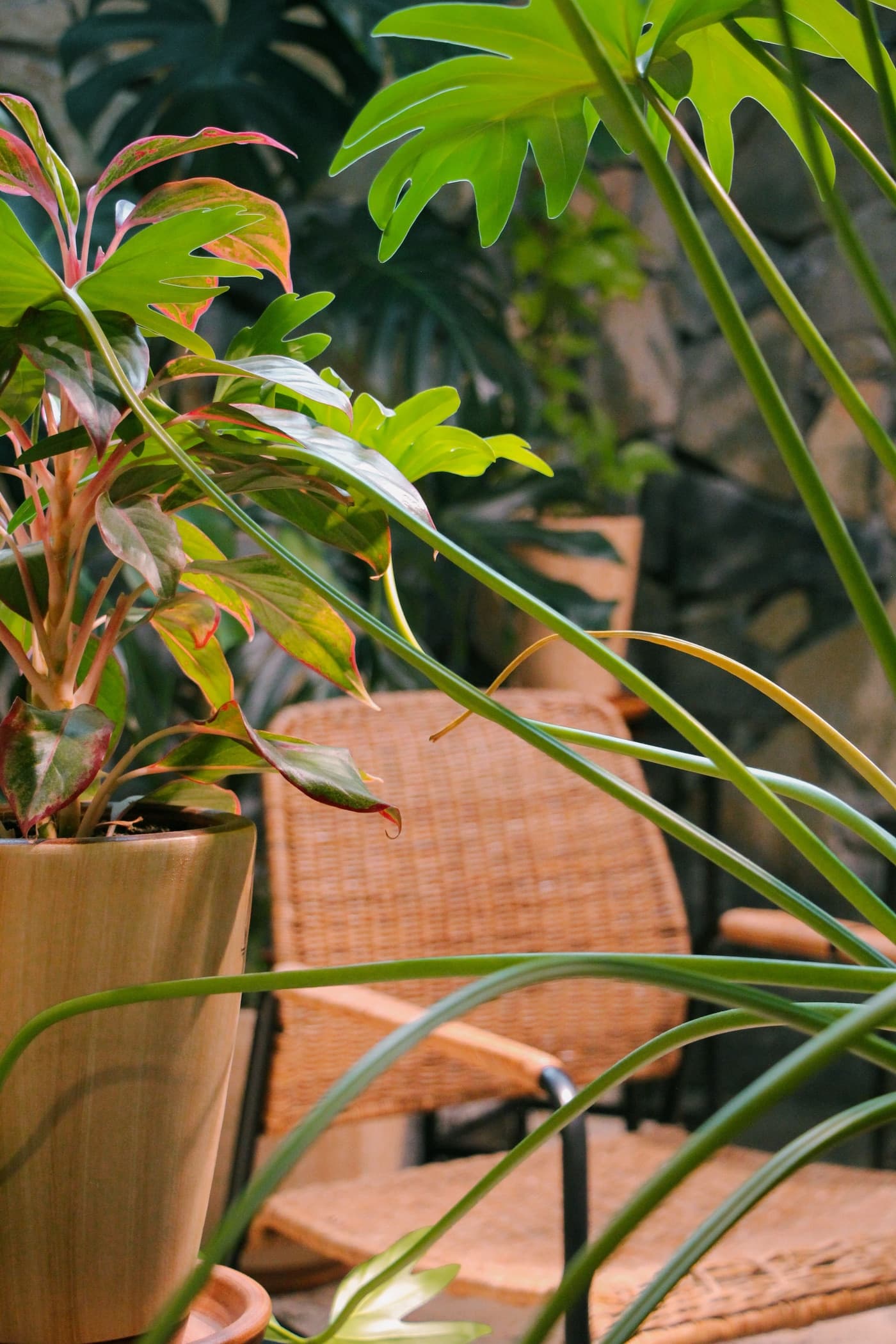
In Seferikalbiye’s photograph, broad leaves interrupt the view of a woven-looking chair. The pot is only part of the plant’s claim on the space: stems and leaves reach towards the seat. It is a useful distinction when arranging containers. Measure where the foliage will go as well as where the pot will stand.
Let a few pots sit beside the chair rather than along every available edge. Keep one clear approach to the seat and a way to reach the plants at the back. A group can look perfectly settled from the kitchen window while its last pot is awkward to water. Try reaching it before adding another in front.
Choose planting for your own conditions and check its eventual spread. These photographs offer arrangements to consider, not a planting prescription for a British garden. The large leaves are useful here for thinking about space; their appearance alone is no reason to choose the same plants.
The arrangement needs to work when you are indoors too. Decide where cushions and removable seats will be kept, following their care instructions. A folding chair still needs a place to stand once folded; a storage box takes a permanent share of the paving. Count that space before choosing furniture that depends on it.
Before buying another pot, sit in the chair and get up again. Carry the watering can past it. If both are easy, the empty bit of ground has already earned its place.